Krasnogorskaya Square in Sergiev Posad is one of those places where history isn’t just remembered—it lingers in the air, in the worn cobblestones underfoot, in the way the light falls on the old buildings. Tucked in the heart of the town, just a short walk from the Trinity Lavra of St. Sergius, the square feels like a quiet crossroads between past and present. Unlike the more crowded tourist spots, it doesn’t overwhelm with noise or spectacle, yet it’s far from forgotten. Here, the layers of time are visible in the architecture, in the stories embedded in the walls of the buildings that have stood through imperial Russia, revolution, and everything that came after.
The square hasn’t always been called Krasnogorskaya. Over the centuries, it’s worn many names—Trade Square, Cathedral Square, or simply the Main Square—each reflecting its role in the life of the town. The current name came during the Soviet era, when place names were often reshaped to fit new ideologies. But no matter what it was called, its purpose remained the same: a gathering place, a marketplace, a stage for the everyday rhythms of the town. In the past, merchants would set up stalls here, townspeople would exchange news, and pilgrims would pause before continuing to the lavra. Even now, the square retains that sense of being a living room for the city, where people come to talk, trade, or simply stand for a moment in the shadow of the cathedral.
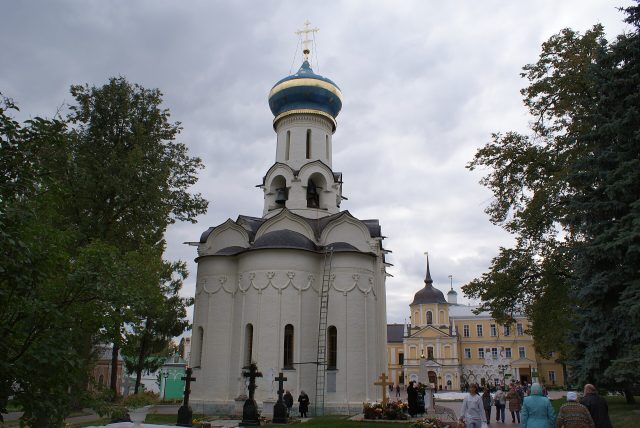
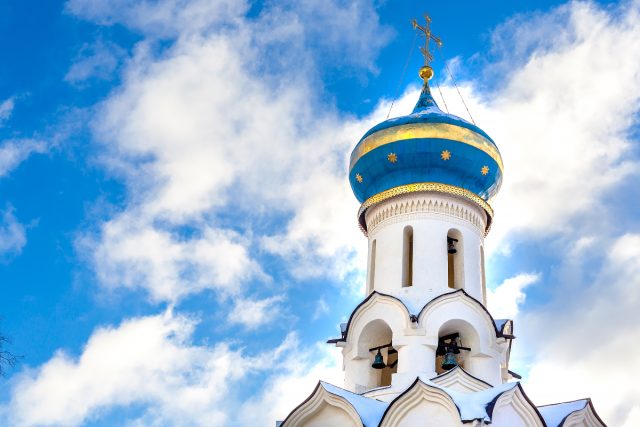
The most striking feature of the square is the Assumption Cathedral, its white stone walls and golden domes rising above the surrounding buildings. Built in the 18th century on the site of an older church, it blends Baroque and Neoclassical elements, a testament to the architectural tastes of the time. Inside, the frescoes and iconostasis are still intact, their colors and craftsmanship drawing the eye upward. Beside the cathedral stands a bell tower, offering one of the best views of Sergiev Posad—from here, the town unfolds like a patchwork of rooftops, hills, and forests, a landscape that has changed little over the centuries.
Around the cathedral, other buildings tell their own stories. The former theological seminary, where generations of priests and scholars once studied, now houses various institutions, though its facade remains largely unchanged. Nearby, the 19th-century trading rows still serve their original purpose, though the goods on offer have shifted with the times. Instead of just everyday necessities, you’ll find souvenirs, handmade crafts, and traditional Russian sweets—gingerbread, honey cakes, and the sticky-sweet churchkhela that pilgrims have been buying here for generations.
Krasnogorskaya Square isn’t just a collection of old buildings; it’s a place that still breathes. Throughout the year, it hosts fairs, concerts, and festivals, especially during major religious holidays when the square fills with pilgrims and visitors. Even on ordinary days, there’s a sense of life here—the chime of bells from the lavra, the murmur of vendors and shoppers, the occasional strains of music drifting from a street performance. In summer, benches appear, and locals sit in the shade, watching the world go by. The square has a way of slowing time, of making even a short visit feel like a pause in a much longer story.
Winter transforms the square entirely. Snow blankets the cobblestones, and strings of lights add a soft glow to the evening. The cold air carries the scent of pine and woodsmoke, and the pace of life seems to quiet even further. It’s a time when the town’s cozy charm is most apparent—when you can wander the narrow streets leading off the square, duck into a small café for tea and warm pastries, or simply stand in the middle of the square and listen to the silence between the bells.
For many, Krasnogorskaya Square marks the beginning of the journey to the Trinity Lavra. From here, the monastery’s main gates are visible, and it’s where pilgrims often pause before continuing their walk. But even if you’re not heading to the lavra, the square is worth lingering in. It has a way of making you stop, look around, and feel the weight of the centuries that have passed through this place. There’s no grand spectacle here, just the quiet accumulation of history in the stones, the walls, the very air.
What makes Krasnogorskaya Square special isn’t just its age or its architecture, but the way it connects the past to the present. It’s a place where the stories of merchants, pilgrims, students, and townspeople overlap, where the buildings have witnessed revolutions and quiet Sundays alike. The square changes with the seasons, with the years, but it never loses its character. To visit is to step into a living piece of history—one that doesn’t just exist in books or museums, but in the way the light hits the domes at dusk, in the sound of footsteps on the cobblestones, in the sense that this place has always been, and always will be, a part of Sergiev Posad.