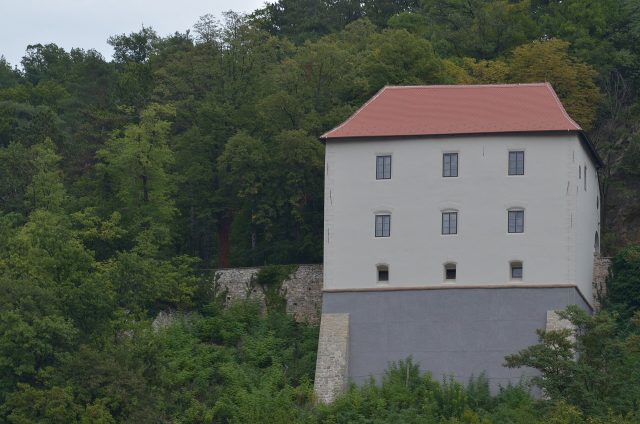
Nestled in the rolling hills of Hrvatsko Zagorje, just outside the quiet town of Krapina, the Krapina Ethno Park feels like a place where time has gently settled into a slower rhythm. This isn’t a typical open-air museum with roped-off exhibits and silent halls. Instead, it’s a carefully reconstructed village where the past isn’t just preserved—it’s lived in, touched, and even tasted. The air carries the scent of hay and woodsmoke, the wind rustles through the trees, and the distant clatter of a blacksmith’s hammer or the creak of a wooden cart wheel makes it easy to imagine that the last century never happened.
The park came to life in the mid-20th century, when the rapid modernization of Croatia threatened to erase the rural way of life that had shaped the region for generations. Old farmhouses, barns, and workshops were disappearing, replaced by concrete and asphalt. A group of historians and local enthusiasts decided to act, gathering authentic buildings from across the country and relocating them here. Each structure was painstakingly restored, from the humblest thatched cottage to the more substantial homes of wealthier families. The result isn’t a random collection of old buildings but a living village where every detail—from the hand-carved shutters to the stone walls overgrown with ivy—tells a story.
Walking through the park, you notice how the buildings aren’t just placed side by side but arranged as they would have been in a real village, with narrow paths winding between them. Inside, the homes are furnished exactly as they would have been a hundred years ago. One house might have a loom set up in the corner, its threads still taut, while another displays a table set with earthenware bowls and wooden spoons. The blacksmith’s forge is particularly fascinating—here, you can watch a craftsman shape hot metal with the same tools and techniques used for centuries. Nearby, a water-powered mill grinds grain into flour, its wooden gears turning with a steady, rhythmic groan. These aren’t just demonstrations; they’re glimpses into the daily labor that once sustained entire communities.
At the heart of the village stands the small wooden Church of St. Nicholas, moved here from a nearby settlement. Its simple, unadorned exterior gives way to a surprisingly warm interior, where the scent of beeswax candles lingers in the air. The iconostasis, with its intricate carvings, and the faded but still-vibrant icons tell of a faith that was central to rural life. The church isn’t just a museum piece—it’s still in use, hosting services on feast days and drawing locals who come to light candles and pray, just as their ancestors did.
What makes the Krapina Ethno Park different from other historical sites is its sense of immediacy. There are no "do not touch" signs here. Visitors are encouraged to step inside the houses, run their fingers over the rough-hewn furniture, and even try their hand at some of the old crafts. During festivals and workshops, the park comes alive with activity. You might learn to weave a basket from willow branches, shape clay into a pot, or bake bread in a wood-fired oven using recipes passed down through generations. The most vibrant events follow the old agricultural calendar—harvest festivals, St. Martin’s Day celebrations, and Christmas markets—when the village fills with music, dancing, and the rich aromas of traditional food. These aren’t staged performances but genuine expressions of a culture that refuses to fade.
For many, the park is more than a history lesson; it’s a connection to something deeper. Children chase each other through the narrow lanes, playing games their great-grandparents would have recognized, while adults find themselves recalling stories they heard as kids—tales of hard work, simple pleasures, and the close-knit communities that once defined rural life. The park doesn’t just show you how people lived; it lets you experience it, if only for a moment. That’s its real magic—not the buildings or the artifacts, but the way it makes the past feel tangible, almost within reach.
Hrvatsko Zagorje itself is a region that seems untouched by time. The landscape is a patchwork of vineyards, orchards, and dense forests, with villages clinging to the hillsides like something out of a folk tale. The people here have always been known for their warmth and resilience, shaped by the land and the influences of neighboring cultures. The park reflects that blend—you can see it in the architecture, where Alpine-style wooden balconies meet Hungarian-inspired embroidery on traditional clothing. Even the language carries traces of these connections, with words borrowed from German and Slovenian woven into the local dialect.
A visit to the park is also an invitation to explore the surrounding countryside. The hills around Krapina are crisscrossed with hiking trails, offering sweeping views of the Krapinica River valley below. In summer, the landscape is a lush green, dotted with wildflowers, while autumn turns the vineyards into a sea of gold and red. Winter brings a quiet beauty, with snow dusting the rooftops and the scent of burning firewood drifting through the air. The park is open year-round, and each season offers something different—whether it’s the bustle of harvest time or the hushed stillness of a winter morning.
What lingers after a visit to the Krapina Ethno Park isn’t just the memory of old buildings or craft demonstrations. It’s the feeling of stepping into a world that, despite its simplicity, feels rich in ways that modern life often isn’t. There are no grand monuments here, no dramatic historical events—just the quiet, enduring rhythm of rural existence. In a way, the park is a reminder that history isn’t just about kings and battles; it’s also about the people who tilled the soil, raised families, and found joy in small, everyday things. For anyone curious about the roots of Croatian culture, this is a place where those roots are still very much alive.