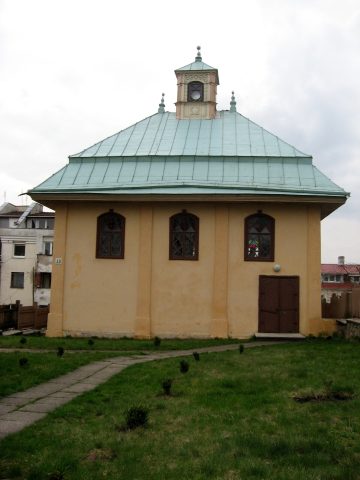
The Church of the Assumption of the Blessed Virgin Mary in Trakai is one of those rare places where time seems to stand still, preserving the quiet dignity of the past. Perched on a gentle hill in the heart of the town, it overlooks the shimmering lakes and the iconic island castle that has become a symbol of Lithuania. Though not as ancient as some of the country’s other churches, its history is deeply intertwined with Trakai itself—a place that has long been both a fortress and a spiritual center.
The building we see today dates back to the late eighteenth century, though the first records of a church on this site appear as early as the fifteenth. Back then, Trakai was the seat of Lithuania’s grand dukes, and the church served not only as a place of worship but also as a key element of the town’s architectural identity, reinforcing its status. The original structure suffered through fires and wars, and by the late 1700s, it was decided to rebuild it in a more enduring and majestic form. The result was the current late Baroque edifice, which blends seamlessly into Trakai’s skyline.
The church’s architecture is understated yet striking. Its facade is adorned with simple pilasters, niches, and a modest pediment crowned by a cross. Inside, the space feels airy and bright, with high vaulted ceilings, whitewashed walls, and wooden pews that invite quiet reflection. The main altar, crafted in the classical tradition, draws the eye with its balanced proportions and restrained elegance. The ceiling frescoes, painted in the nineteenth century, depict religious scenes in muted tones. They may not be as vivid as those in other churches, but their subtlety gives them a quiet charm.
For centuries, the Church of the Assumption has been at the heart of the local community. It has witnessed baptisms, weddings, and funerals, serving as a constant presence in the lives of Trakai’s residents. During the Soviet era, when religion was suppressed, the church remained open, though its role in public life diminished. Today, it has regained its place as a spiritual and cultural landmark, welcoming not only the faithful but also those who come to experience a sense of history. On Sundays, services are held in Lithuanian, while on weekdays, visitors are free to explore the interior or simply sit in silence.
The area around the church is as compelling as the building itself. From the hill, you can descend to the lakeside promenade, where locals and tourists gather in warmer months. The narrow streets of old Trakai, with their medieval layout, wind through the town, leading to a market where vendors sell smoked fish, fresh bread, and the famous Lithuanian *karavai* pastries. Behind the church, a short climb up a small hill rewards you with a view of Trakai Castle, its walls seemingly floating above the water. The sight is especially breathtaking at sunset, when the golden light reflects off the lake and bathes the fortress in warmth.
This church is more than just an architectural monument; it is a living testament to the history that permeates every corner of Trakai. It has endured wars, shifting regimes, and ideological changes, yet it remains a place where time moves at its own pace. Perhaps that’s why so many who visit once find themselves returning. There is nothing ostentatious about it, but within its walls, you can sense the authenticity that makes Lithuania’s past feel so tangible.
If you find yourself in Trakai, resist the urge to head straight for the castle. Instead, take a moment to step inside the church. Sit on one of the pews, listen to the stillness, and let your gaze wander over the faded frescoes. Here, you might begin to understand what makes Trakai special—not just as a tourist destination, but as a town with a soul, where the past and present coexist. Afterward, when you do visit the castle, you’ll see it not just with your eyes, but with a deeper appreciation for the history that surrounds it.