Mauthausen sits in Upper Austria, an hour from Linz. The hills slope toward the Danube, covered in pine and damp earth. The river moves slowly below. This place holds something heavier than its landscape.
In August 1938, months after Austria’s annexation, the Nazis built a concentration camp here. It began with political prisoners—dissidents, intellectuals, clergy. Soon, Jews, Romani people, gay men, and others the regime called undesirable arrived. Soviet prisoners of war followed. Mauthausen was not an extermination camp like Auschwitz or Treblinka. Death came differently: through work in the granite quarries, through starvation, through disease. Prisoners carried stone for Nazi projects until their bodies failed. Few survived.
The location was chosen for its isolation. The camp stood on a plateau above the Danube, surrounded by steep cliffs on three sides. The wind cut across open ground. Prisoners built the first barracks themselves, their hands raw, their breath visible in the cold. By the end of 1938, the camp was running. Over seven years, it grew into a complex with dozens of subcamps. Nearly two hundred thousand people passed through. Nearly half did not leave.
The memorial today is stark against the countryside. The original structures remain: barracks, crematorium, gas chamber, execution wall. The gate with *Arbeit macht frei* still stands. No reconstructions, no softened edges. The buildings are as they were, walls marked by time and suffering. Inside one barrack, a museum holds photographs, documents, personal items—glasses, shoes, letters. The past feels close here.
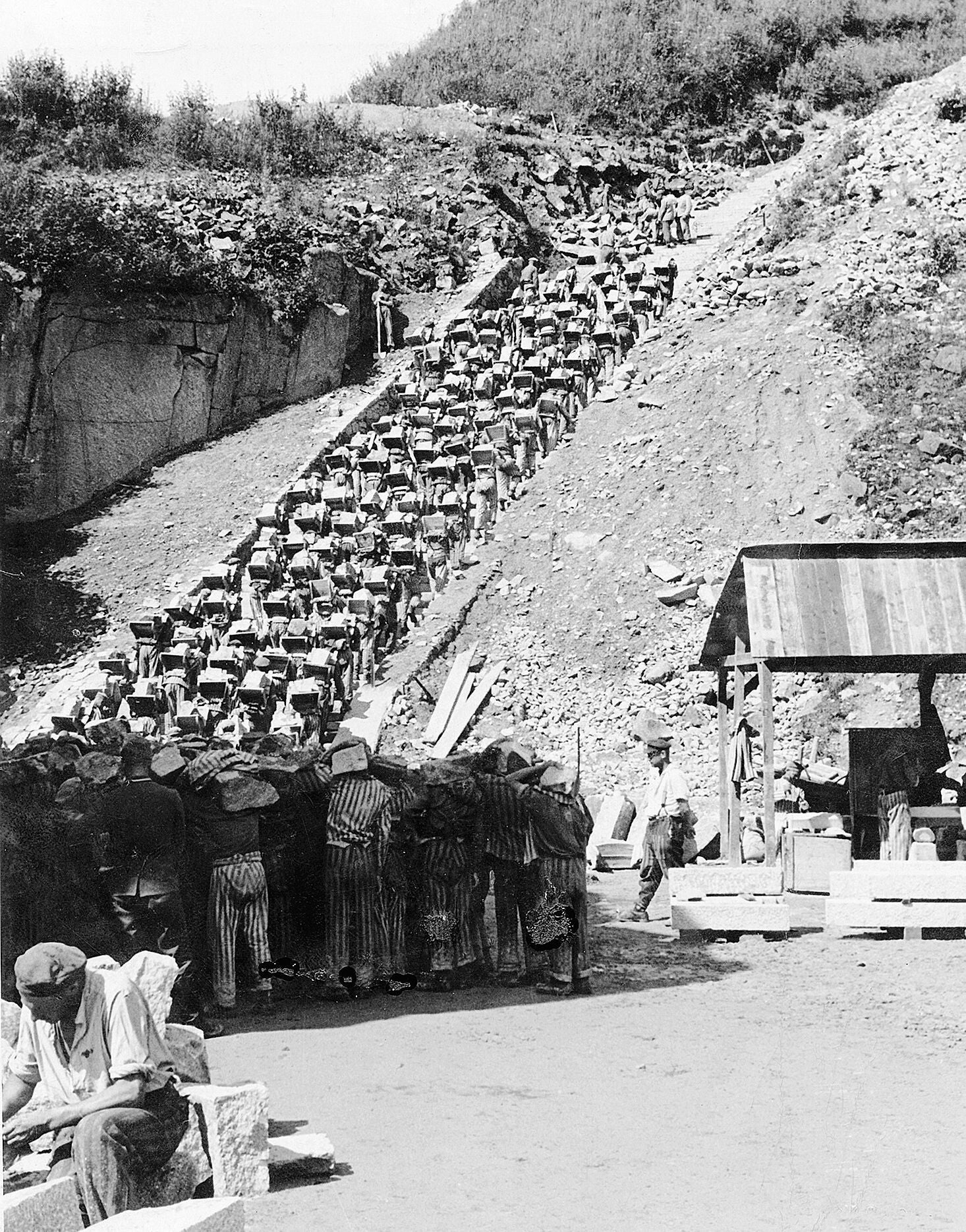
The Wiener-Graben quarry is where prisoners worked under armed guards. The labor was brutal: men carried granite blocks up the *Todesstiege*, 186 steps carved into rock. Many collapsed. Others were pushed or shot. The quarry still shows the scars—grooves in the stone, rusted rails, the sheer drop where prisoners stood at the edge. A granite plaque marks the spot, its inscription in multiple languages.
American forces liberated the camp in May 1945. For decades, Austria avoided confronting its role in the Nazi regime. The memorial was overlooked. In the 1970s, a new generation began to face the past. Today, the site is a place of education. Survivors share their stories. Students learn about the Holocaust. Ceremonies honor the dead.
Mauthausen does not feel like other historical sites. The cold of the barracks seeps into your bones. The silence is broken only by the wind. The names on the plaques were people—with lives, families, hopes. Every year, descendants, former prisoners, and visitors come here. For some, it is a pilgrimage. For others, a lesson. For all, a question: how could this happen, and how do we stop it from happening again?
What unsettles most about Mauthausen is its ordinariness. The camp was built by men who believed they were doing their duty. Guards, administrators, workers—they went home to their families at the end of the day. They told themselves they were just following orders. This is not a story of monsters. It is a story of people capable of cruelty and kindness alike. That is why this place matters. It shows how easily ordinary people can become part of something horrific.
Yet resilience also lives here. Prisoners resisted—smuggling food, sharing medicine, offering kindness. They came from different countries, spoke different languages, held different beliefs. In the face of dehumanization, they held onto dignity. Their stories, preserved in letters and testimonies, remind us that humanity persists even in darkness. The memorial is not only for mourning. It is for those who refused to be broken.