Mauthausen
Austria · 8 places
Photo: Unknown authorUnknown author, CC BY-SA 3.0 de
Mauthausen is a quiet town in Upper Austria, nestled along the edge of the Danube Valley, where the past lingers more heavily than in most places. It’s best known for the concentration camp that once stood here, one of the most brutal under Nazi rule, where tens of thousands perished during World War II. Today, the memorial site draws visitors from around the world—not for sightseeing, but to pay respects and reflect on the fragility of peace. Yet Mauthausen is more than its history. The town itself is small and unassuming, with narrow streets lined by neat houses, shaded cafés, and a pace of life that feels deliberately slow, as if the land itself is still catching its breath after what happened here.
The town’s location makes it a good base for exploring the region. Linz, Upper Austria’s cultural hub, is just a short trip away, while the Danube winds upstream through rolling hills and past medieval castles. Unlike tourist-heavy destinations, Mauthausen doesn’t rush its guests. There’s no hustle, no souvenir shops hawking trinkets—just a quiet hospitality, the kind that treats visitors as individuals rather than part of a crowd. Locals are used to those who come for the memorial, but they’ll also point you toward the town’s other side: the weekly market, the riverside walks, the small festivals that fill the square in summer.
The Mauthausen Memorial is the reason most people come. The camp was liberated in May 1945, and since then, its grounds have been preserved as a place of remembrance. You can walk through the barracks, see the crematoria, and stand before the Wall of Lament, where prisoners scratched final messages into the stone. The museum holds photographs and documents that tell the stories of those who suffered here, but this isn’t a typical tourist stop. There’s no chatter, no forced cheer—just silence, even when groups of students or veterans visit. The weight of what happened here is impossible to shake, and the memorial doesn’t try to soften it.
Beyond the memorial, Mauthausen carries on with its own rhythm. The town square is anchored by an old town hall and a church with a tall steeple that overlooks the valley. In summer, brass bands play at local festivals, and in winter, the streets glow with lights while the scent of mulled wine drifts from market stalls. The Danube here is wide and calm, a good place to walk when you need to clear your head. Locals don’t like it when outsiders reduce their town to its darkest chapter—they’ll tell you about the present, too, even if it’s quieter than what you’d find in more famous Austrian towns.
If you stay a while, there’s plenty to explore nearby. Enns, with its well-preserved medieval center, is a short drive away, as is Sankt Florian, home to an impressive Augustinian monastery. Or you could simply wander the forests around Mauthausen, where trails lead to viewpoints over the river. The town doesn’t offer endless entertainment, and that’s part of its appeal. Time moves differently here. A walk along the Danube or a coffee in a sunlit square isn’t just a way to pass the hours—it’s a chance to pause, to think, to let the past and present settle into something like understanding.
See & Do
All of them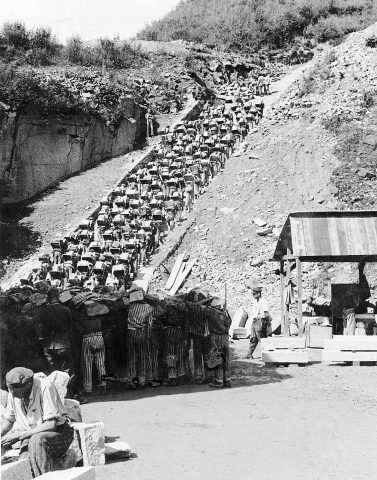


Places on the map
Marker colour follows the categoryClimate and weather
Detailed weather: Mauthausen- Average temperature
- 11 °C
- Precipitation per year
- 869 mm
- Average humidity
- 76 %
- Sunshine hours per day
- 8.2 h
- Time zone
- UTC+2 (GMT+2)
Average air temperature
°C
1
4
7
10
15
20
21
21
17
11
4
2
Jan
Feb
Mar
Apr
May
Jun
Jul
Aug
Sep
Oct
Nov
Dec