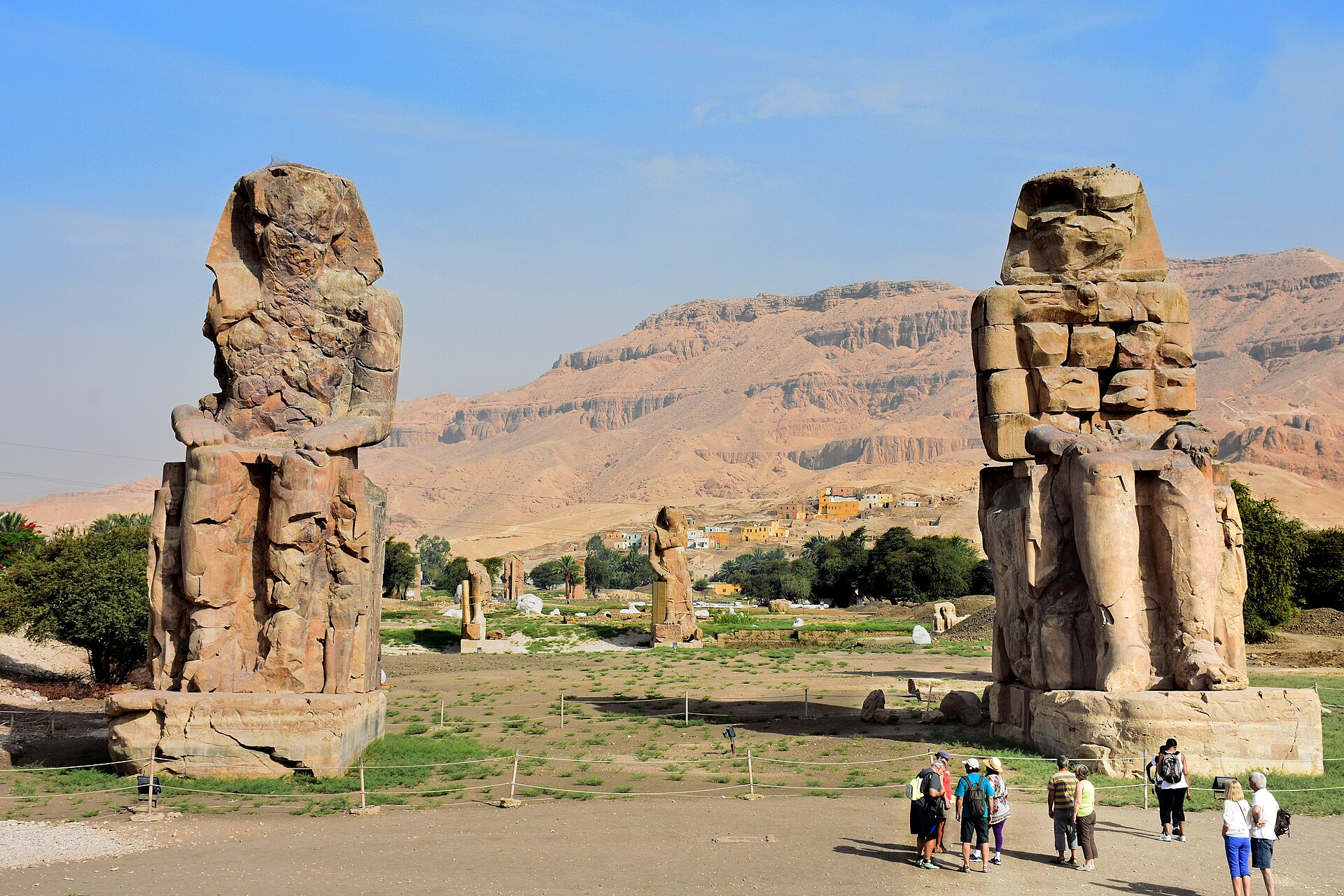
Standing sentinel on the west bank of the Nile, the Colossi of Memnon have watched the sun rise for over three thousand years. These two towering stone figures are all that remain of the mortuary temple of Amenhotep III, a pharaoh who ruled Egypt at the height of its power in the fourteenth century BCE. Though the temple itself was lost to earthquakes and floods, its stones repurposed for other buildings, the colossi endured—weathered but unbroken, their presence a quiet testament to the ambitions of an empire long gone.
The statues depict Amenhotep III seated on a throne, hands resting on his knees, his gaze fixed eastward toward the river and the rising sun. Carved from single blocks of quartzite, quarried hundreds of miles away near modern-day Cairo, they once stood at the entrance of a vast complex that included sphinx-lined avenues, courtyards, and sanctuaries. Now, they rise alone from the plain, their nearly twenty-meter height still commanding attention, even though one has lost its upper half. The sheer scale of the figures makes them feel almost alive, as if the pharaoh might stir at any moment.
The name Memnon was never used by the ancient Egyptians. It was the Greeks who gave them this identity, linking the statues to the mythical hero Memnon, son of the dawn goddess Eos. According to legend, Memnon died in the Trojan War, and his mother wept for him each morning, her tears becoming the morning dew. The Greeks believed that one of the statues emitted a sound at dawn—a sigh, a song, or a groan—and they interpreted it as Memnon’s voice greeting his mother. The truth was likely more prosaic: temperature shifts and moisture in the stone’s cracks may have caused the eerie noises. But the myth gave the colossi an air of mystery that endures even now.
Over the centuries, the statues became a pilgrimage site for travelers and scholars. Roman emperors like Hadrian and Septimius Severus visited, hoping to hear the famous "voice of Memnon." Severus even ordered repairs to the damaged statue, but the sounds ceased afterward—perhaps because the restoration disrupted the natural processes that had created the acoustic effect. Today, the colossi are silent, but their stillness speaks volumes, a reminder of how easily human belief can shape the way we perceive the world.
The colossi were more than just monumental sculptures; they were part of a carefully constructed symbolic system. Positioned at the entrance of the temple, they embodied the pharaoh’s divine authority and his connection to the cycles of nature. Amenhotep III saw himself as the earthly manifestation of Amun-Ra, and his temple was meant to be a place where the mortal and divine realms intersected. The statues, facing the Nile, represented not just the pharaoh’s power but also the life-giving forces of the sun and the river’s annual flood, which sustained Egypt’s prosperity.
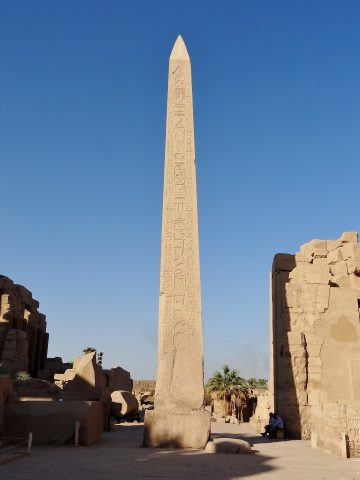
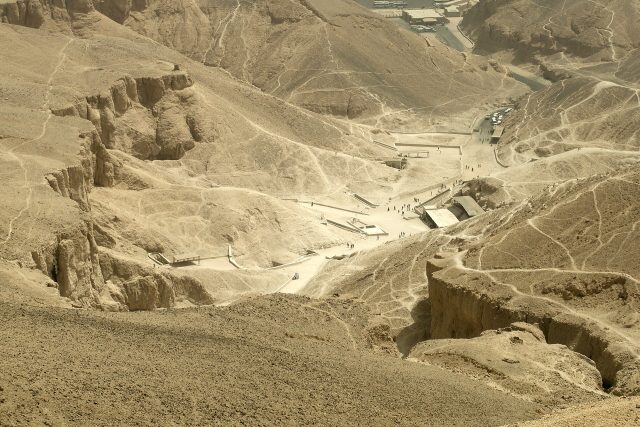
Visiting the Colossi of Memnon today is a chance to step into a landscape where history feels tangible. Up close, the effects of time are visible in the cracks, the erosion, and even the ancient graffiti carved into the stone by travelers from millennia past. Some of these inscriptions, written in Greek and Latin, still survive, offering a glimpse into the awe and curiosity of those who stood here two thousand years ago. Unlike the crowded sites of the Valley of the Kings or Karnak Temple, the colossi offer a quieter experience, allowing visitors to approach them almost in solitude.
The best time to see the statues is at dawn, when the first light bathes them in gold and deepens the shadows of their weathered features. The early morning air is still, and it’s easy to imagine the priests and pilgrims who once gathered here, beginning their day with rituals at the feet of these giants. In the evening, as the sun sets behind the Nile, the colossi take on a different character—their outlines soften, their presence becoming more subdued, as if they are slowly dissolving into the twilight.
The Colossi of Memnon are often visited alongside other monuments on the west bank of the Nile, such as the Temple of Medinet Habu, the Valley of the Kings, or the Temple of Hatshepsut at Deir el-Bahri. But even on their own, they are worth the journey. They stand as a reminder that while civilizations rise and fall, some human creations endure, bearing witness to the passage of time. And though the sands around them have shifted and the river has flowed for millennia, the colossi remain, silent but unyielding, their secrets still buried beneath the earth.