Karnak is a place where time feels both vast and intimate. Stretching across two thousand years of history, this sprawling temple complex began as a modest sanctuary around 2000 BCE and grew into the religious heart of ancient Egypt under the pharaohs of the New Kingdom. Thebes, as the city was then known, became the center of power, and Karnak its grandest expression. Rulers like Senusret I and Ramesses II left their mark here, each adding layers to its stone narrative, expanding halls, erecting obelisks, and carving their legacies into the walls. What remains today is not just ruins, but a living record of devotion, ambition, and artistry.
At the core of Karnak stands the Temple of Amun-Ra, a sanctuary so immense it defies easy comprehension. The Great Hypostyle Hall is its most breathtaking feature—a forest of 134 towering columns, some as tall as six-story buildings, their capitals shaped like blooming papyrus. The ceiling, once painted with celestial symbols, has long since faded, but the columns still hold the weight of history. At dusk, the stone glows golden, as if warmed by the same sun that illuminated the rituals performed here millennia ago. Priests once chanted in these halls, and pharaohs walked among the columns, asserting their divine authority. The scale of the space is overwhelming, yet there’s a strange intimacy in the way the light filters through the gaps, casting shifting patterns on the worn stone.
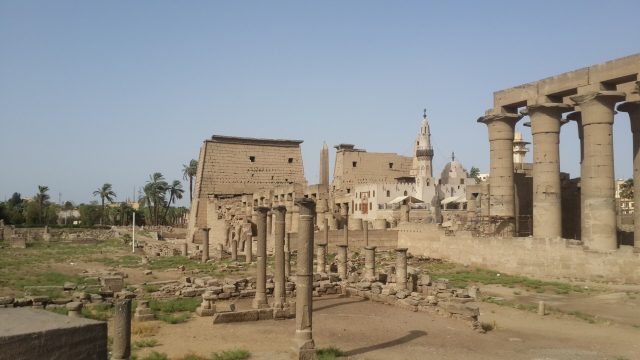
Karnak is more than just the Temple of Amun-Ra. The complex branches out into smaller sanctuaries, each dedicated to different deities. The Temple of Mut, the mother goddess, sits beside a sacred lake, its waters long since still but no less evocative. Nearby, the Temple of Montu honors the god of war, its walls bearing the scars of time. Connecting these spaces are avenues of sphinxes, their stone bodies lined up like silent sentinels. These processional paths once linked Karnak to the Luxor Temple, a route used during religious festivals when statues of the gods were carried in grand ceremonies. Walking among them now, it’s easy to imagine the crowds, the music, and the incense that would have filled the air.
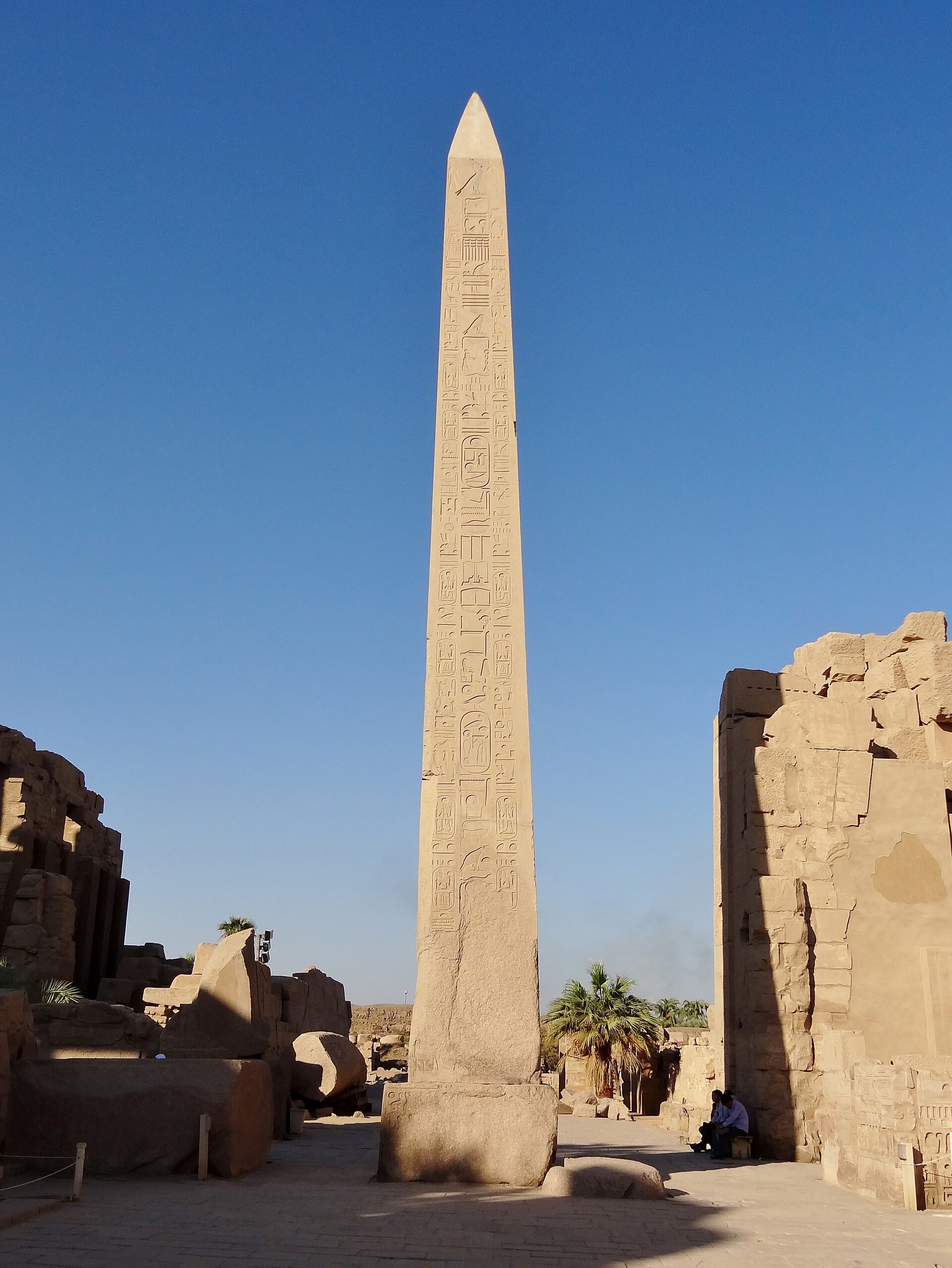
One of the most striking remnants of Karnak’s past is the obelisk of Hatshepsut, one of the few surviving monuments to Egypt’s female pharaoh. Its surfaces are covered in hieroglyphs praising her reign, a rare testament to a woman who ruled as a king. The tip, once gilded in gold, would have caught the sunlight, a beacon visible for miles. Not far away stands the Temple of Ramesses III, its walls adorned with reliefs depicting battles against the Libyans and the Sea Peoples. These carvings are more than just art—they’re propaganda, a visual record of victories meant to reinforce the pharaoh’s power. The details are astonishing: soldiers in formation, prisoners in chains, the chaos of combat frozen in stone.
What makes Karnak feel alive, even now, is the sense that it was never truly abandoned. After the fall of the New Kingdom, the site remained a place of reverence. Christian hermits sought solitude among its ruins, and later, Muslims prayed within its walls. The layers of history are palpable—ancient rituals, forgotten languages, and the quiet persistence of human belief. Even with the hum of modern tourism, there’s a hush here, a feeling that the past is still present. The echoes of priests’ voices, the scent of lotus flowers, the crackle of sacred fires—it’s all gone, yet somehow still lingering in the air.
The architecture of Karnak tells its own story of evolution. The earliest structures, from the Middle Kingdom, are austere, their lines clean and purposeful. Later additions, particularly from the New Kingdom, are more ornate, crowded with statues, obelisks, and intricate reliefs. The columns of the Hypostyle Hall, with their papyrus-shaped capitals, were designed to evoke the marshes of the Nile, a sacred landscape where the gods were believed to dwell. The effect is both natural and otherworldly, as if the temple itself is a bridge between the earthly and the divine.
There’s a quiet magic in the way Karnak reveals itself. It doesn’t give up its secrets all at once. You might spend hours tracing the hieroglyphs on a single wall, or sitting on the steps of a forgotten shrine, watching how the light shifts across the stone. Some carvings are so worn they’re barely visible, while others retain faint traces of their original paint, a reminder that these walls were once vibrant with color. The longer you stay, the more details emerge—the way a column’s shadow stretches at noon, the texture of the stone under your fingertips, the way the wind carries the sound of distant voices.
For scholars, Karnak is an unparalleled archive of ancient Egyptian religion, politics, and art. But you don’t need to be an Egyptologist to feel its pull. There’s something primal about standing in a place where, for centuries, people believed the gods walked among them. It’s a reminder of how deeply humans have always sought connection—to the divine, to the past, to something greater than themselves. Karnak was built to endure, and it has. The stones may be weathered, but the sense of awe they inspire is as strong as ever. This is a place where the earth meets the sky, where the boundaries between the sacred and the ordinary blur. And that, perhaps, is why it still feels alive.