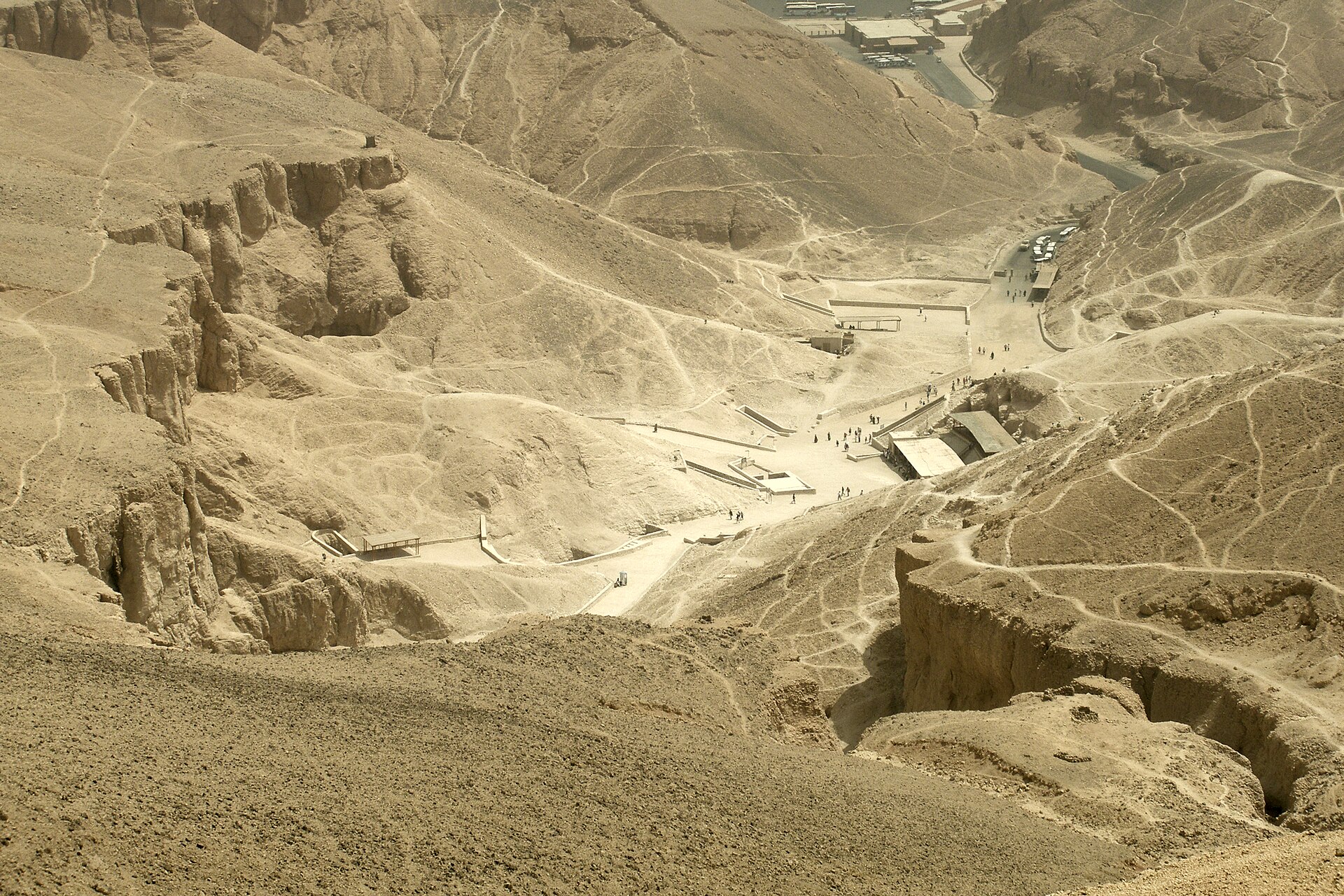
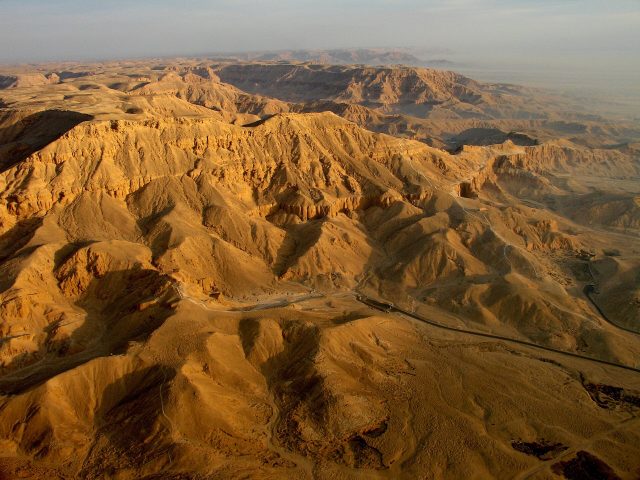
The Valley of the Kings is one of those rare places where time seems to stand still, leaving behind only the silence of the desert and the grandeur of ancient tombs. Tucked into the rocky cliffs on the west bank of the Nile, across from modern-day Luxor, this valley served as the final resting place for pharaohs of the New Kingdom for nearly five centuries. Here, hidden within the folds of the mountains, lie the burial chambers of rulers whose names still echo through history—Tutankhamun, Ramses, Seti. The choice of location was no accident. The ancient Egyptians believed the west, where the sun sets, symbolized the realm of the dead, and the pyramid-shaped peak of El-Qurn looming over the valley resembled the sacred mountain through which a pharaoh’s soul could ascend to the gods.
The first tombs appeared here in the 16th century BCE, when Pharaoh Thutmose I abandoned the construction of pyramids in favor of concealed burials. The reason was practical: pyramids attracted looters, while the Valley of the Kings, with its narrow gorges and rugged terrain, seemed the perfect place to preserve the peace of the dead. Yet even here, security was not guaranteed. Most tombs were plundered in antiquity, long before archaeologists began their work. Only Tutankhamun’s tomb, discovered by Howard Carter in 1922, remained nearly intact, offering the world a rare glimpse into the past.
The architecture of these tombs is as impressive as it is intricate. Each one is a labyrinth of corridors, staircases, and chambers carved deep into the rock. The walls are adorned with paintings and hieroglyphs depicting the pharaoh’s journey into the afterlife, his encounters with the gods, and his hopes for eternal existence. Among the most significant features are the so-called Books of the Dead—collections of spells and prayers meant to guide the soul through the perils of the underworld. Some tombs still retain traces of their original colors, though the pigments have faded over millennia, leaving behind only ghostly impressions of what once was.
Today, the Valley of the Kings is an open-air museum, where each tomb is numbered and holds its own story. Over sixty have been discovered, though only a handful are open to visitors. Among them is the tomb of Ramses VI, famous for its astronomical ceiling, where constellations and deities govern the passage of time. Then there is the tomb of Seti I, one of the deepest and most spacious, its walls covered in exquisite reliefs that still showcase the skill of ancient artisans. Stepping inside any of these tombs is like entering another world—dimly lit, with sand crunching underfoot and the faint glow of flashlights revealing the figures of gods and kings frozen in time.
Visiting the Valley of the Kings is more than just a tour; it’s an encounter with the past that feels almost tangible. The heat, the dry air, and the silence of the cliffs create an atmosphere where it’s easy to imagine the laborers chiseling away at the stone or the priests performing burial rites thousands of years ago. There are no trees or grass here, only sand, rock, and the endless sky under which the fate of an empire was once decided. Even now, with tourists crowding the entrances, the place retains an air of mystery, as if the walls themselves hold secrets yet to be uncovered.
The Valley of the Kings is not just a burial ground but a symbol of both the power and the decline of ancient Egypt. Here lie the rulers of an empire that stretched from Nubia to Syria, yet it is also here that the fleeting nature of glory becomes painfully clear. Many tombs were looted within generations of their construction, and the names of some pharaohs have been forgotten entirely. There is a harsh poetry in this—an echo of the ancient Egyptians’ own awareness that nothing lasts forever, except perhaps humanity’s relentless pursuit of immortality.
Now, the valley draws not only archaeologists but anyone who wishes to touch history. Excavations continue sporadically, and who knows what other secrets these cliffs might still hold. Perhaps somewhere beneath the sand, another tomb waits to be discovered, one that could reshape our understanding of the ancient world. For now, the Valley of the Kings remains a place where the breath of eternity lingers—quiet but unyielding, like the desert that slowly reclaims the footsteps of the past.