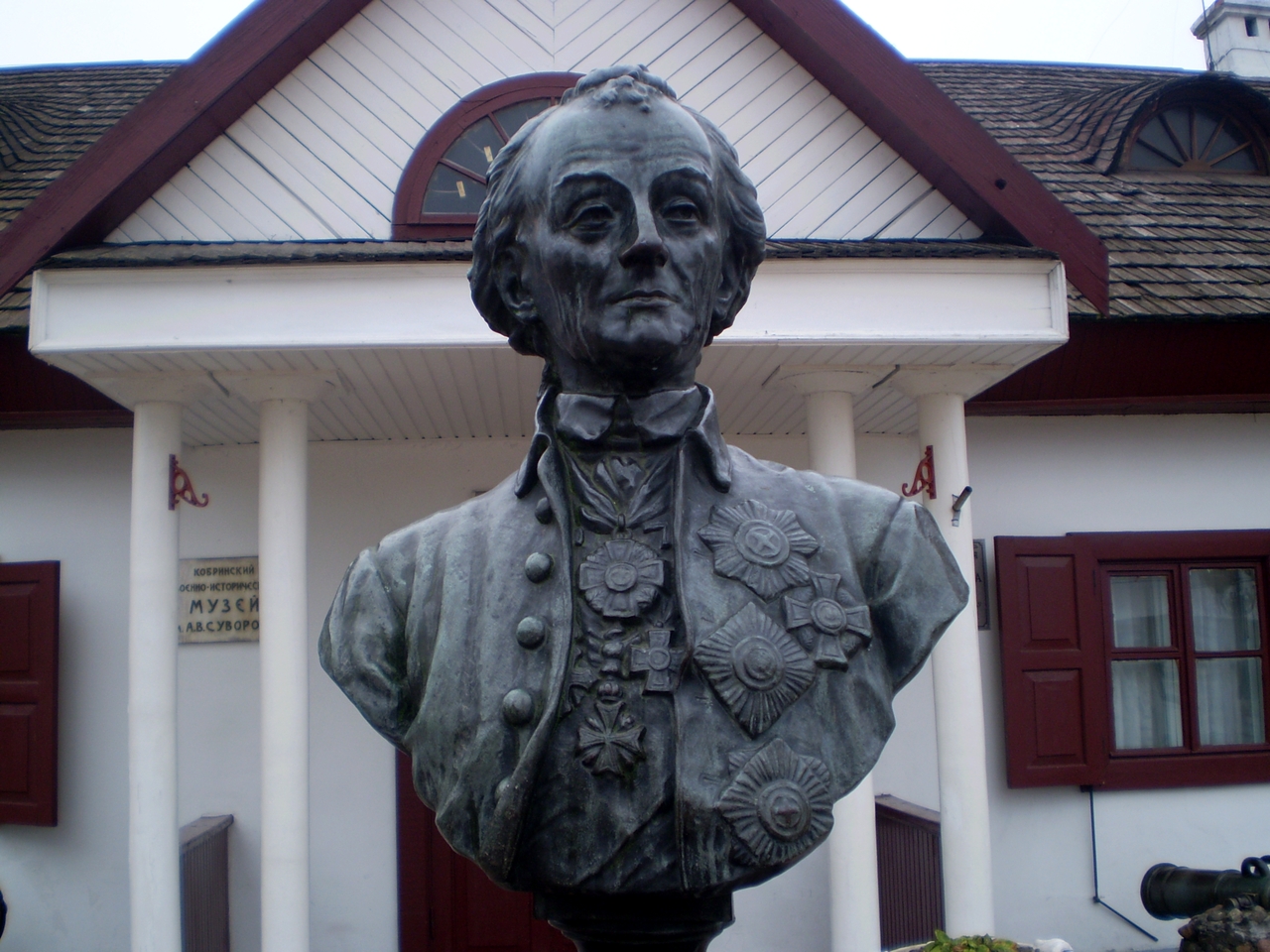
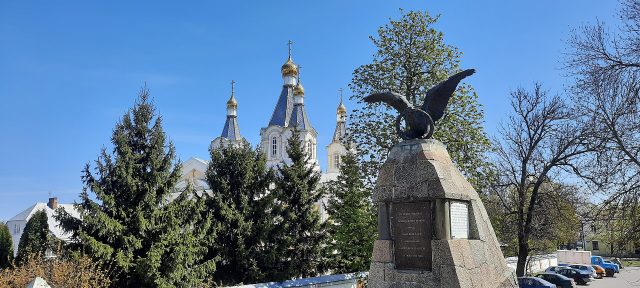
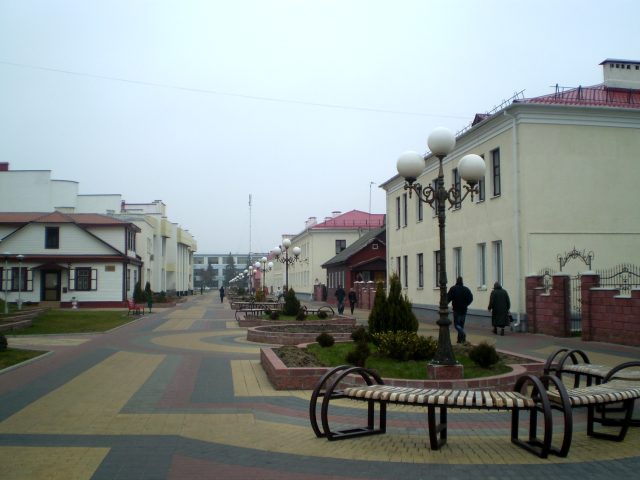
Kobryn’s Military History Museum named after Alexander Suvorov sits quietly on Suvorova Street, in a building that has witnessed more than its share of history. The museum occupies what was once the Puslovsky Palace, a 19th-century noble estate that served as a cultural hub for the town. The architecture is unassuming but carries weight—tall ceilings, heavy wooden doors, and delicate plasterwork hint at the gatherings that once took place here, when local landowners and distinguished guests, including Suvorov himself, walked these halls. The connection to the famed Russian general runs deep. It was in Kobryn that Catherine the Great gifted him an estate, where he spent his final years. Though Suvorov’s original house no longer stands, the museum preserves the legacy of his time in this corner of Belarus.
The exhibits begin with the distant past, tracing the story of the Polesia region through artifacts that feel almost alive. Tools, weapons, and jewelry from the era of Kievan Rus lay the foundation, while coins and relics unearthed in local digs offer glimpses into daily life centuries ago. The museum doesn’t shy away from the complexities of the region’s history, either. Exhibits on the Grand Duchy of Lithuania and the Polish-Lithuanian Commonwealth include old maps, documents in Latin and Polish, and weapons that tell of the wars and shifting borders that shaped these lands. There’s a sense of continuity here, as if history never truly ended—it simply took new forms.
Suvorov’s presence looms large in a dedicated hall, where personal belongings, copies of his letters, and portraits bring the general to life. The collection of 18th-century weaponry—sabers, pistols, muskets—feels particularly vivid, as if the hands that once wielded them have only just stepped away. Suvorov wasn’t born here, but Kobryn became a place of respite for him after decades of military campaigns. The museum carefully documents his time in the town: the transfer of his estate, his efforts to manage the land, and even his final days. It’s a rare portrayal of the man behind the legend, showing a commander who valued simplicity as much as strategy.
The 19th century is framed through the lens of conflict, with exhibits on the Napoleonic Wars and the 1863 uprising. A highlight is the display on the Battle of Kobryn in 1812, when Russian forces under General Tormasov defeated a French detachment. Uniforms, weapons, and battle maps recreate the scene, but the focus isn’t just on military tactics—it’s on how war disrupted ordinary lives, how it destroyed homes and yet forged resilience in those who endured. The artifacts here aren’t just relics; they’re fragments of stories that refuse to be forgotten.
The 20th century, of course, is dominated by the Second World War. Kobryn was occupied by Nazi forces almost immediately after the invasion of the Soviet Union and remained under their control until 1944. The museum’s exhibits on this period are stark and unflinching. They document the partisan resistance in the Polesia region, the underground networks, and the locals who risked everything to aid Soviet soldiers. Photographs, documents, and personal items belonging to resistance fighters create a powerful narrative, while weapons and equipment used in the fighting ground the story in harsh reality. The materials on Khatyn, the village whose name became synonymous with Nazi atrocities, are particularly moving. These displays don’t just inform—they demand reflection.
Beyond its permanent collection, the museum hosts temporary exhibitions that delve into specific themes or anniversaries. Sometimes it’s a photography exhibit, other times a focused look at a particular battle or historical figure. The halls often echo with the voices of veterans, historians, and local researchers who come to share their memories and insights. For students, the museum offers guided tours that go beyond dates and facts, exploring how history shapes the present. It’s a place where learning feels personal, not academic.
What makes this museum special isn’t its size or grandeur, but its quiet authenticity. There’s no rush here, no pressure to move quickly from one exhibit to the next. The atmosphere invites you to linger, to examine details, to ask questions. The staff doesn’t perform for tourists—they simply share what they know, letting the exhibits speak for themselves. It’s a refreshing contrast to larger, more commercialized museums, where history can sometimes feel packaged for consumption. Here, the past isn’t polished or simplified; it’s presented with honesty and care.
Kobryn’s Military History Museum isn’t just for history buffs. It’s for anyone who wants to understand how this region came to be what it is today. There’s no pomp or pretension, just a deep respect for the stories that have shaped these lands. The museum doesn’t offer easy answers or dramatic revelations—it offers something more valuable: a chance to pause, to look closely, and to remember. After all, history isn’t just about events; it’s about the people who lived through them. And in this small but significant museum, their voices still echo.