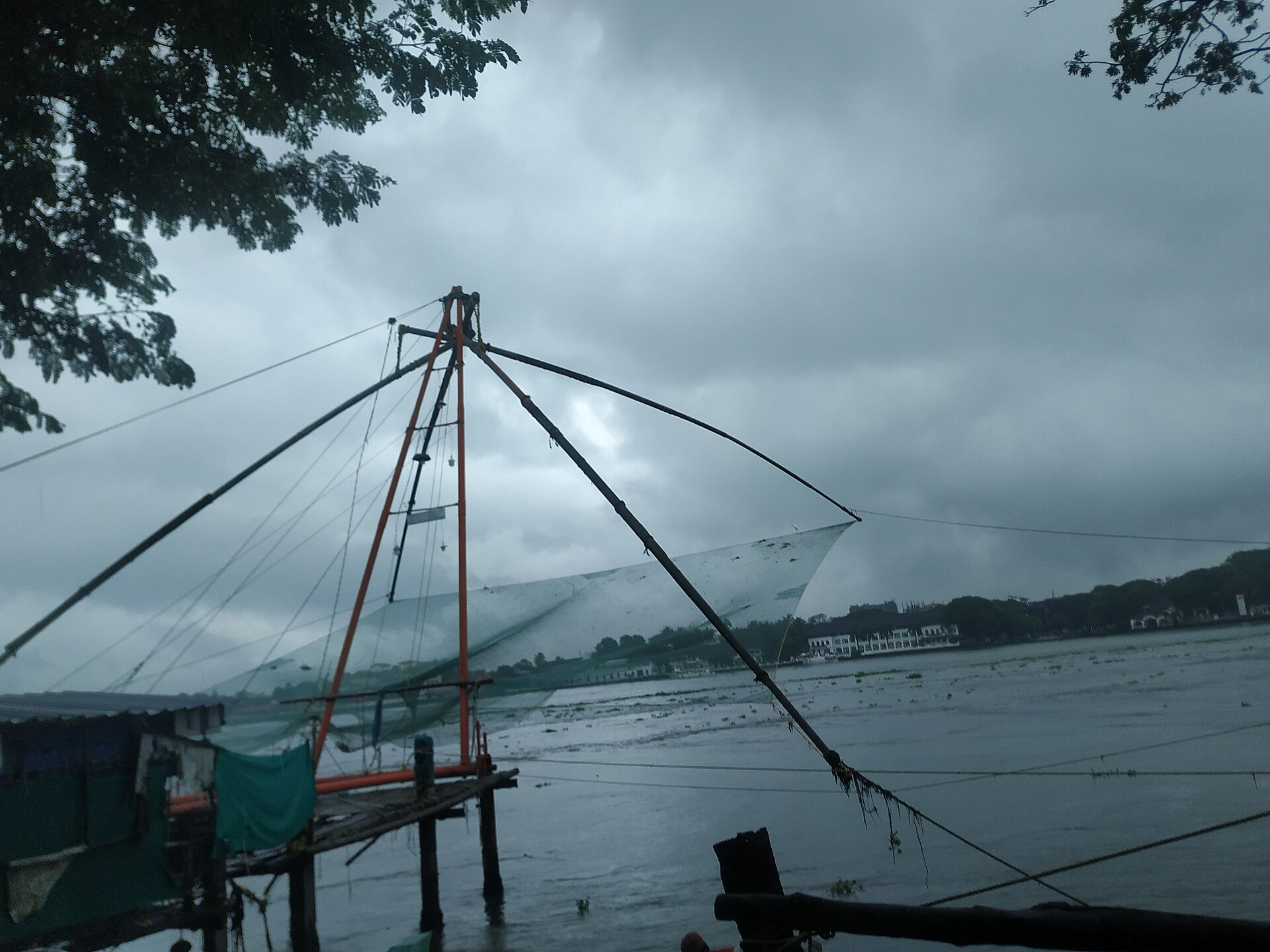
Kochi is a city where the Indian Ocean meets centuries of trade, culture, and tradition. Along the coast of Kerala, one of its most striking sights is the Chinese fishing nets—massive, crane-like structures that have become an iconic part of the city’s identity. Their origins remain debated, but they stand as a testament to Kochi’s long history as a crossroads of the world.
The nets are believed to have arrived in the 14th century, brought by Chinese explorers led by Admiral Zheng He during his legendary voyages. Local fishermen quickly adopted the technology, recognizing its efficiency. Unlike traditional fishing methods, these nets allowed for large catches without venturing far into the sea. The design is simple yet ingenious: long bamboo poles, ropes, and stone counterweights work together in a delicate balance. Fishermen operate them in teams, using a system of levers to lower and raise the nets—a process that has become a spectacle in itself.
The most famous of these nets line the shores of Fort Kochi, where they are more than just tools; they are part of the landscape. At dusk, when the fishermen begin their work, the waterfront comes alive. The creaking of wooden mechanisms mixes with the murmur of voices and the gentle lapping of waves. The air carries the scent of salt and fresh fish, while lanterns cast flickering reflections on the dark water. It’s a scene that lingers in memory long after you’ve left.
The architecture of the nets is a marvel of practicality. Each structure weighs several tons, yet when lifted, it appears almost weightless against the sky. The bamboo is sourced from nearby regions, and the stones for counterweights are gathered from the shore. Everything is held together without nails—just ropes and the skill of those who know how to balance such a massive contraption. The nets require constant maintenance: ropes must be tightened, worn parts replaced, and the bamboo poles repaired. This is a craft passed down through generations, and for the fishermen who operate them, the nets are more than just a means of livelihood—they are a way of life.
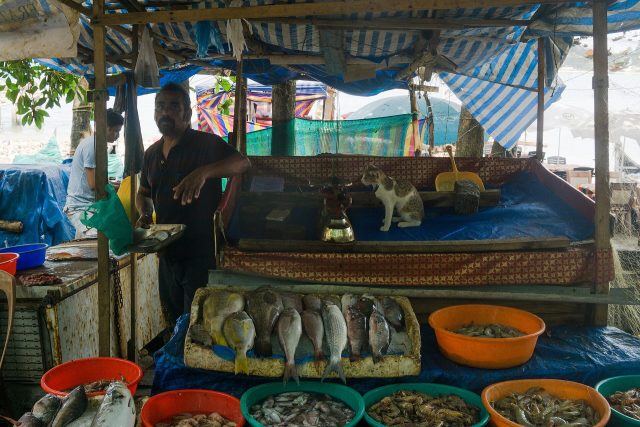
For Kochi’s residents, the nets are a working tradition, not just a tourist attraction. The fish caught here end up in local markets and restaurants, prepared according to Kerala’s time-honored recipes. Watching the fishermen at work offers more than just a photo opportunity; it’s a chance to taste the fresh catch—perhaps fried fish in coconut sauce or a rich seafood curry. The nets are a living link between the past and present, a reminder of how deeply the city’s culture is tied to the sea.
The area around the nets has its own rhythm. During the day, tourists wander along the shore, children play in the sand, and locals stroll along the promenade. In the evening, as the nets dip into the water, fishermen light lanterns to attract fish, creating a scene that feels both ancient and timeless. It’s a place where modernity and tradition coexist, where the ocean remains the lifeblood of the city.
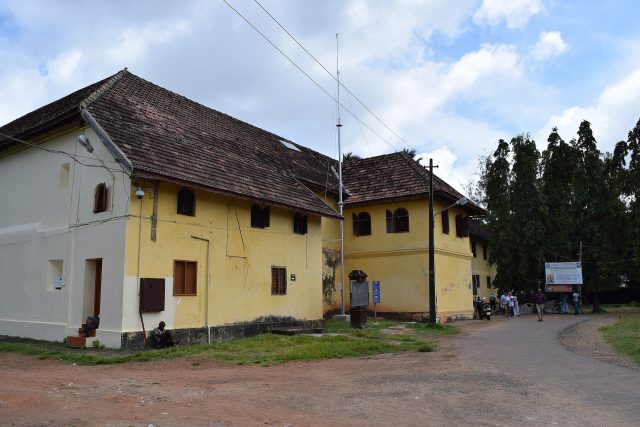
Fort Kochi is home to other historical landmarks—colonial buildings, Portuguese churches, Jewish quarters, and Dutch cemeteries—but the Chinese fishing nets give the area its unique character. They stand as a bridge between eras, a symbol of Kochi’s openness to the world. The city has always absorbed influences from distant lands, and the nets are a physical reminder of that legacy.
If you visit Kochi, take your time. Stand by the nets, watch the fishermen at work, listen to the waves, and let the place settle into your senses. You might see a net rise from the water, heavy with glistening fish, and in that moment, you’ll understand why these structures have become more than just a landmark. They are a living tradition, one that continues to shape the city’s identity.