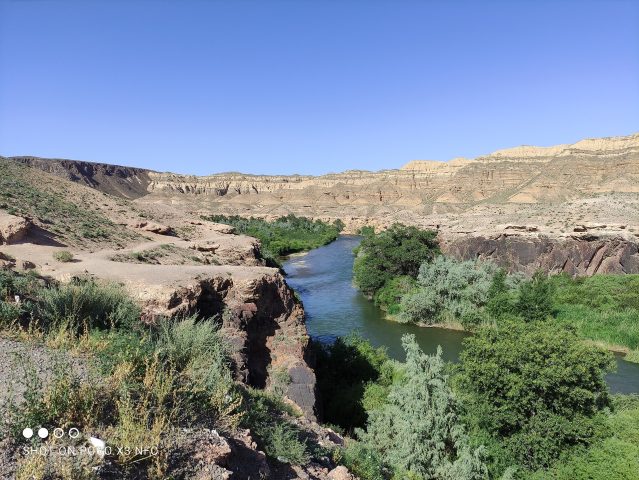
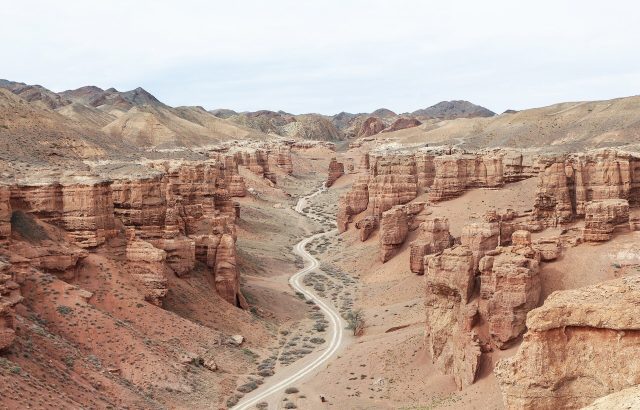
Charyn Canyon is often called Kazakhstan’s answer to the Grand Canyon, though on a smaller scale. The comparison isn’t entirely fair—this place has its own quiet grandeur. Stretching for miles along the Charyn River, the canyon’s red rock formations rise in jagged layers, carved by time and water into shapes that feel almost otherworldly. The landscape shifts with the light, from deep russet at dawn to a warm, glowing bronze by sunset. It’s easy to forget you’re still in Central Asia; the scenery feels borrowed from another planet, one where nature has spent millions of years perfecting its design.
At the foot of the canyon, where the river bends between the cliffs, the Sharyn River campsite offers a place to stay without the fuss of a hotel. There are no luxury suites here, just simple wooden cabins with sturdy beds, spacious tents with proper mattresses, and open areas for those who bring their own gear. In summer, the site buzzes with visitors—locals from Almaty, international travelers, families with kids splashing in the shallows. By winter, the crowds thin out, leaving only the hardy few who come to see the canyon dusted with frost, the river’s surface glazed with ice. The cold quiets everything, turning the place into a private world of silence and stark beauty.
The Charyn River is the lifeblood of the canyon. In summer, its waters run cool and clear, slow enough for swimming or lazy boat rides. The current is gentle, the depth manageable, making it safe even for those who aren’t strong swimmers. Locals often gather on the banks for picnics, building fires to grill fish caught that same afternoon. Come autumn, the river takes on a different mood. The trees along its edges turn gold and crimson, their leaves floating on the water’s surface like scattered coins. The air grows crisp, and the light softens, casting long shadows across the rocks.
The canyon isn’t just a geological wonder—it’s a record of deep time. Millions of years ago, this was the floor of an ancient sea, its sediments compressed into the towering cliffs that now line the river. Some of these rock layers date back thirty million years, their striations telling stories of shifting climates and vanished landscapes. Humans, too, have left their mark here. Archaeologists have uncovered traces of early settlements in the area, and local legends speak of the canyon as a refuge for Silk Road travelers and nomadic tribes. Even now, the place feels like a crossroads, where the past lingers in the wind that whistles through the rocks.
Exploring the canyon is best done on foot. The most popular trails start near the campsite, winding along the river or climbing into the higher reaches of the cliffs. A short walk might take you to a quiet overlook where the river bends sharply, its waters reflecting the red walls. For those who want more, there are longer hikes, including one that leads to the Valley Castle—a rock formation that resembles the ruins of a medieval fortress. From its heights, the canyon spreads out below like a vast, sunken bowl, its layers of stone glowing in the afternoon light. The air up here is thinner, the silence deeper, broken only by the occasional cry of a bird circling overhead.
Nightfall transforms the campsite. The distant hum of the city is gone, replaced by the crackle of a fire and the soft rush of the river. The sky overhead is a spectacle in itself. With no light pollution to dull the view, the stars appear close enough to touch, their brightness almost overwhelming. On clear nights, the Milky Way stretches from one horizon to the other, a luminous band cutting through the darkness. Locals and visitors often gather around the fire, swapping stories or simply sitting in comfortable silence, watching the embers glow. If you’re lucky, a shooting star will streak across the sky, a fleeting reminder of how small we are in the grand scheme of things.
Charyn Canyon moves to its own rhythm. There’s no rush here, no need to fill the hours with distractions. The days unfold slowly, shaped by the sun’s arc and the changing light on the rocks. Summer brings heat and long, golden evenings, while autumn wraps the canyon in a blanket of red and gold. Winter turns the landscape stark and silent, the river’s surface frozen in places, the cliffs dusted with snow. Spring arrives with a roar, the melting snows swelling the river until it spills over its banks, filling the air with the sound of rushing water. Each season reveals something new, even to those who’ve visited before.
What makes Charyn special isn’t just its beauty—it’s the way it makes you feel. There’s a sense of stepping outside of time, of being part of something larger than yourself. The campsite strikes a rare balance: it’s remote enough to feel like an escape, yet comfortable enough that you don’t have to rough it. You can wake up to the sound of the river, drink your coffee on the bank as the sun rises, or spend the afternoon wandering the trails without another soul in sight. There are no flashy attractions here, no crowds jostling for the best view. Instead, there’s space—space to breathe, to think, to simply be.
For many, Charyn becomes a place to return to. Not because it offers anything extravagant, but because it offers something real. It’s a reminder of how little we need to feel content: a fire, a river, a sky full of stars. The canyon doesn’t demand your attention; it earns it, slowly, through the quiet persistence of its beauty. And in a world that moves too fast, that’s a rare gift.