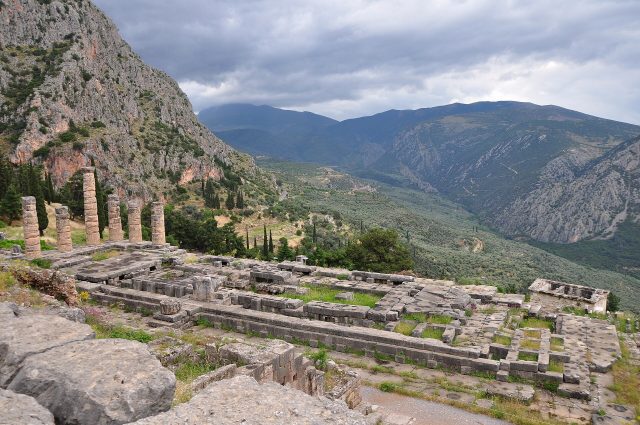
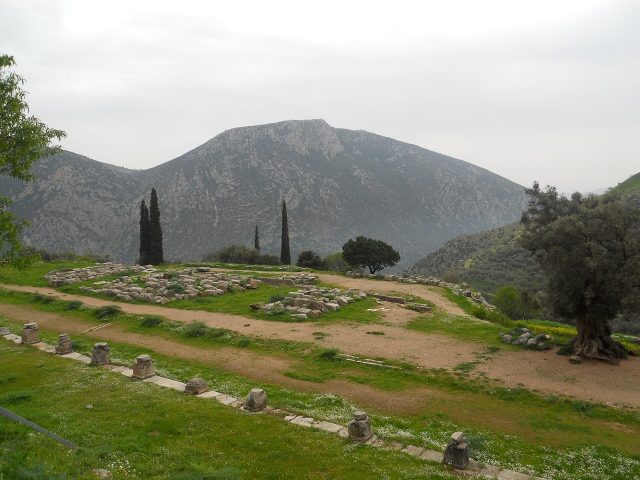
Nestled at the foot of Mount Parnassus, where the rocky slopes give way to a quiet grove of olive trees, the Castalian Spring feels like a place where time has settled into stillness. This is not just another ancient site in Delphi, but one of those rare spots where myth and reality blur so seamlessly that it becomes difficult to tell where one ends and the other begins. The spring has been flowing here for millennia, its waters cold and clear, with a faint metallic tang that lingers on the tongue—a subtle reminder that the earth beneath Delphi holds more than just stories.
The Greeks of antiquity believed these waters carried the power to inspire and purify. Poets, pilgrims, and oracles would stop here before ascending to the Temple of Apollo, drinking from the spring to cleanse their minds and spirits. The name itself comes from the nymph Castalia, who, according to legend, threw herself into the waters to escape Apollo’s pursuit. Whether the tale is true or not, the spring’s significance is undeniable. Archaeologists have uncovered remnants of ancient aqueducts and basins, evidence that the water was once channeled to temples, theaters, and stadiums across Delphi. Even in the driest years, the spring never ran dry, a fact that only deepened its reputation as a divine gift.
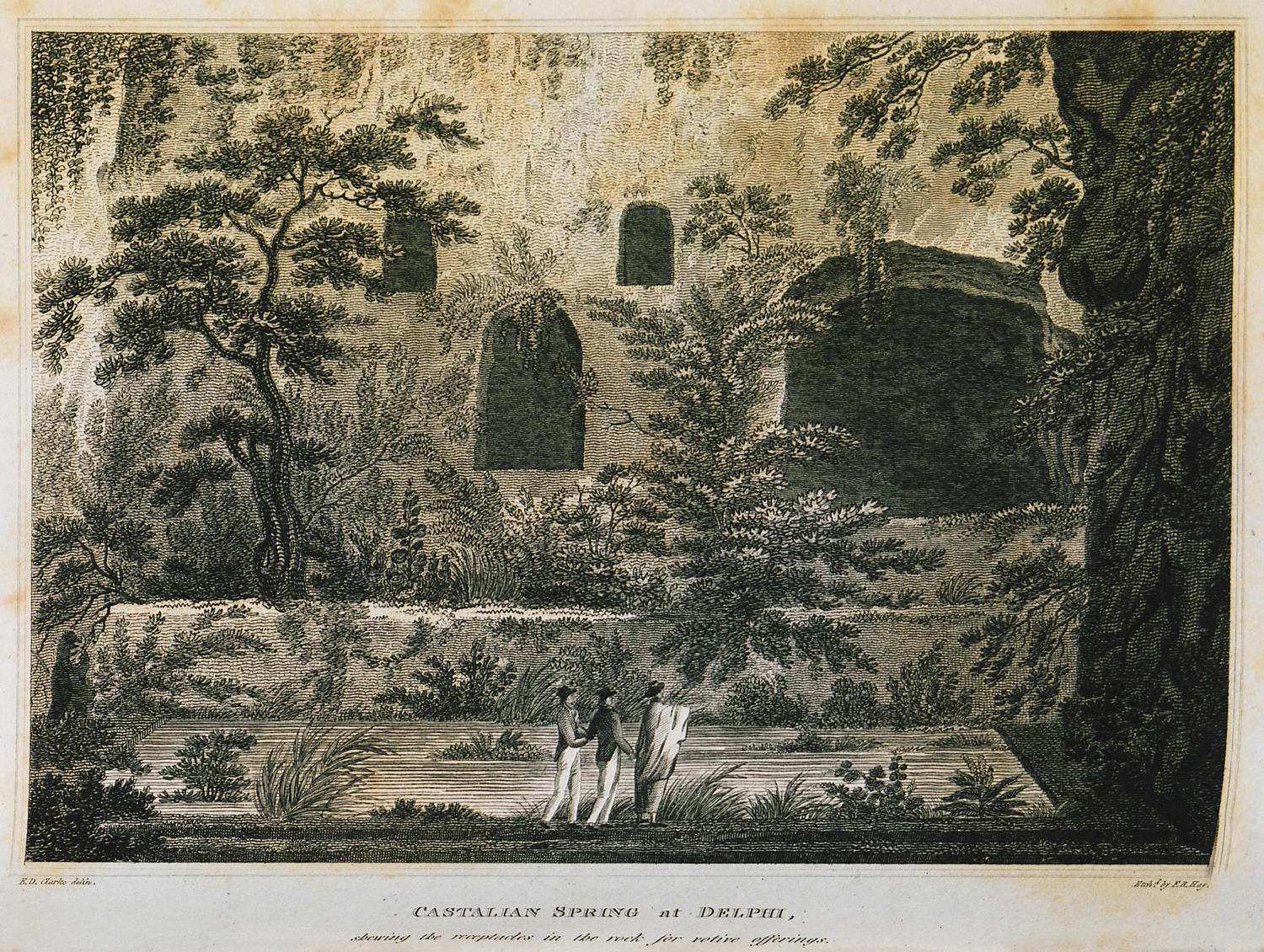
Today, the Castalian Spring appears unassuming—a small stone basin framed by worn marble slabs, with a thin stream of water trickling down the rock face. Yet there is something enduring about it, something that resists the passage of centuries. Sit on one of the old steps leading to the spring, and it’s easy to imagine the voices that once filled this space: poets reciting verses, priests murmuring prayers, the soft rustle of robes as visitors prepared for rituals. The modern world feels distant here, reduced to a faint hum of traffic from the road below. The only sounds that matter are the whisper of wind through the olive trees and the occasional chime of goat bells in the distance.
What makes the spring particularly compelling is its sense of continuity. Unlike the grand ruins of the Temple of Apollo or the Delphi theater, which stand as silent witnesses to the past, the Castalian Spring feels alive. The water still flows, still cold and pure, just as it did when Socrates walked these paths or when the Pythia delivered her prophecies. There are no barriers, no signs warning visitors to keep their distance—just a few marble slabs inscribed with ancient text, a quiet nod to the generations who once revered this place. Some traditions endure: travelers still cup their hands to drink from the spring, just as they have for thousands of years, or fill bottles to take home, as if the water might carry a fragment of Delphi’s magic with it.
The spring is also a reminder of how deeply nature and history are intertwined in this landscape. Delphi was never just a collection of temples and monuments; it was a living sanctuary, shaped by the land as much as by the people who worshipped here. The Castalian Spring, with its unbroken flow, embodies that connection. It has seen empires rise and fall, witnessed the birth of philosophy and the decline of oracles, yet it remains unchanged in its essence. The water still tastes the same, the rocks still bear the marks of countless hands that have touched them over the centuries, and the air still carries the scent of wild thyme and pine.
There is a peculiar intimacy to the spring that sets it apart from other sites in Delphi. While the ruins of the temple or the stadium demand admiration from a distance, the Castalian Spring invites you to engage with it. You can sit on the steps, run your fingers through the water, or simply listen to its quiet murmur. It doesn’t ask for reverence in the way a grand monument might; instead, it offers a moment of reflection, a pause in the rush of travel. Early mornings are particularly magical, when the first light catches the dew on the olive leaves and the water glows faintly in the dawn. Evenings, too, have their own charm, as the shadows lengthen and the air cools, carrying the earthy scent of the mountains.
Of course, the spring is also steeped in legend. Some say that drinking from its waters grants poetic inspiration or the gift of prophecy. While few today take such claims literally, the tradition persists. Visitors still gather around the basin, some filling bottles, others simply standing in silence, watching the water cascade down the rock. There is no fanfare, no grand ceremony—just the quiet acknowledgment of a place that has meant something to people for thousands of years. It’s a humbling experience, in a way, to realize that you are standing where so many others have stood before, drawn by the same sense of wonder.
If you visit Delphi, it’s worth taking the time to seek out the Castalian Spring before making your way to the more famous ruins. The path is easy to miss, tucked away from the main route, but that only adds to its allure. Sit on the steps, close your eyes, and listen to the sound of the water. You might not leave with a prophecy or a sudden burst of poetic genius, but you’ll carry something else with you—a sense of connection to a place that has endured, unchanged, through the rise and fall of civilizations. And perhaps, like the pilgrims of old, you’ll dip your hands into the water, feeling its coolness against your skin, a small but tangible link to the past.