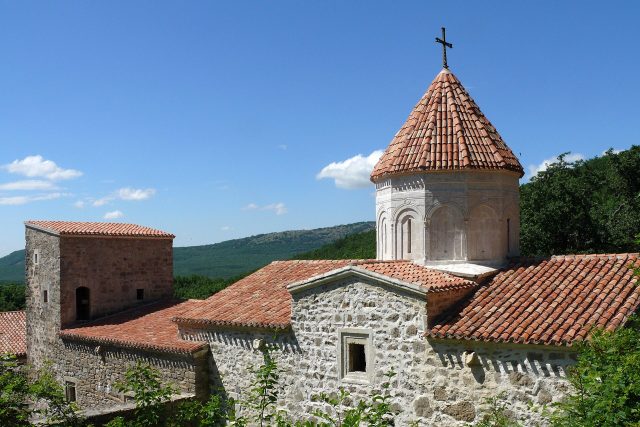
Old Crimea is one of those places where history feels tangible, not just preserved in museums but woven into the very fabric of the town. The Karaite Kenesa, the quiet courtyards, and the crumbling walls of ancient mosques all whisper of a time when this was a crossroads of cultures. But perhaps the most striking remnant of that era is the caravanserai, a structure that once served as a vital stop for merchants traveling along the Silk Road. Today, it stands as a silent witness to the bustling trade that once defined this region, its stone walls holding stories of travelers, goods, and the slow passage of time.
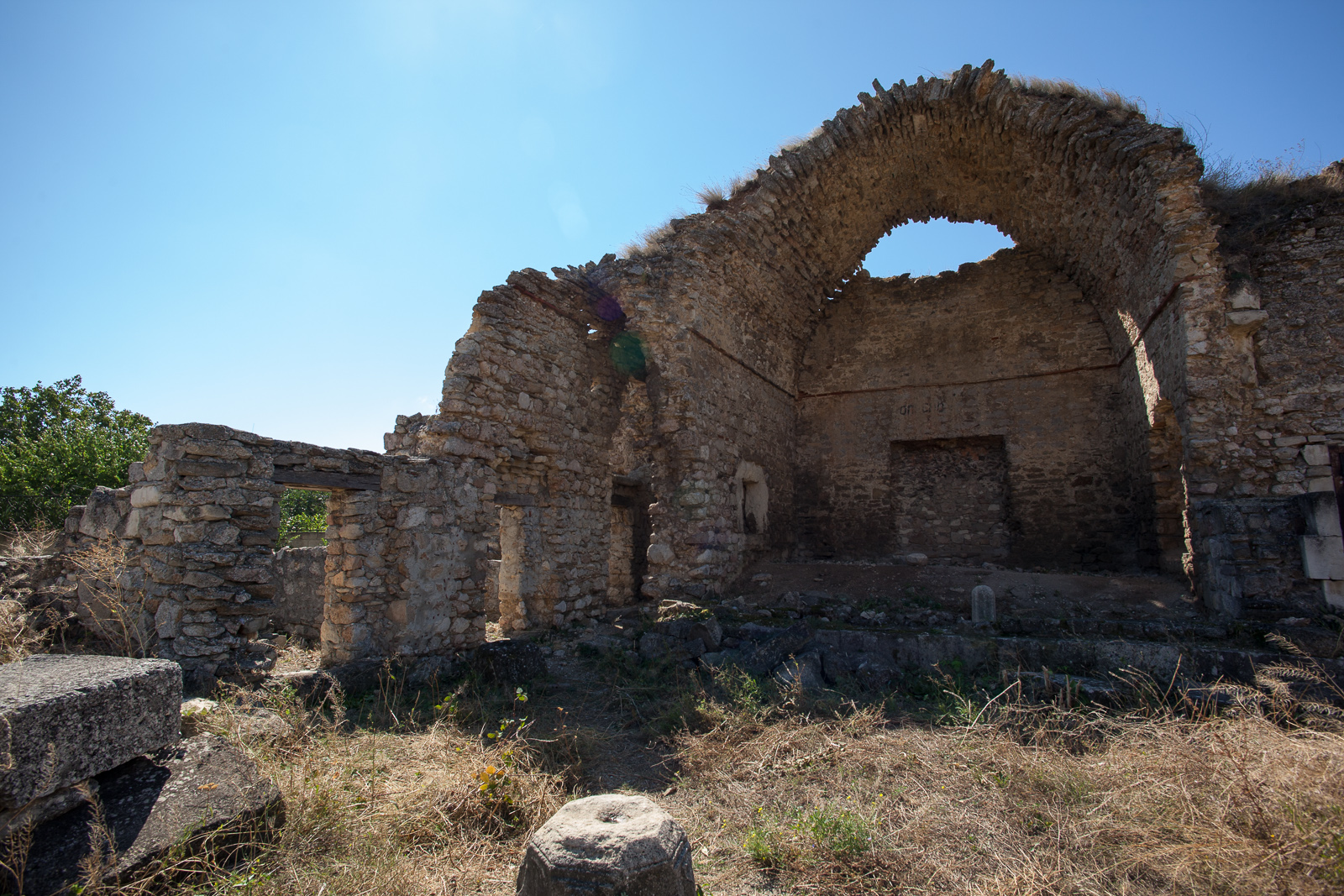
The caravanserai in Old Crimea dates back to the 14th century, a period when the Golden Horde controlled much of the Eurasian steppe. Built to accommodate merchants and their caravans, it was more than just a roadside inn—it was a small, self-sufficient world. The structure follows the classic layout of such buildings: a large central courtyard surrounded by two-story galleries, where travelers could rest, store their goods, and trade with one another. The thick stone walls provided shelter from the elements and protection from bandits, while the arched doorways and windows gave the place a sense of grandeur, despite its practical purpose.
What makes this caravanserai particularly interesting is its location. Old Crimea, known in medieval times as Solkhat, was a thriving city under the Golden Horde, serving as a key administrative and commercial center. The caravanserai was likely built near the city’s bazaar, where merchants from Persia, Central Asia, and the Caucasus would gather to exchange silk, spices, ceramics, and other goods. The town’s position on the trade routes meant that it was always alive with activity, and the caravanserai was at the heart of it all. Even today, you can imagine the clatter of hooves, the murmur of different languages, and the scent of exotic spices filling the air.
The architecture of the caravanserai reflects the blend of influences that shaped Old Crimea. The stonework is sturdy and functional, typical of Golden Horde construction, but there are also hints of Seljuk and Persian styles in the arched windows and decorative details. The building was designed to be both practical and imposing, a fortress-like structure that could withstand the harsh steppe climate while also signaling the wealth and importance of the city. Over the centuries, it has weathered earthquakes, wars, and neglect, yet much of its original form remains intact, a testament to the skill of its builders.
Walking through the caravanserai today, you can still sense its past life. The central courtyard, though overgrown with weeds, retains its spaciousness, and the galleries above offer a quiet place to sit and imagine the scene centuries ago. The lower level, where animals were once stabled and goods stored, now feels cool and dim, the thick walls blocking out the heat of the Crimean sun. The upper floors, where travelers would have slept and conducted business, are more open, with windows that frame views of the surrounding hills and the distant sea. It’s easy to picture merchants bargaining over bolts of silk or sharing stories of their journeys under the shade of the galleries.
The caravanserai’s decline began in the 15th century, as the power of the Golden Horde waned and trade routes shifted. By the time the Ottoman Empire took control of Crimea, Old Crimea had lost much of its former importance, and the caravanserai was gradually abandoned. For centuries, it stood empty, its stones slowly eroding, until it was rediscovered by historians and archaeologists in the 19th and 20th centuries. Today, it is one of the few surviving examples of a Golden Horde caravanserai, a rare glimpse into a time when this region was a hub of commerce and cultural exchange.
Visiting the caravanserai is a quiet experience, far removed from the crowds of more famous historical sites. There are no guided tours or souvenir stands here, just the building itself and the stories it holds. The surrounding area is equally unassuming—narrow streets lined with old houses, a few small cafes, and the occasional stray cat sunning itself on a windowsill. It’s a place where you can wander at your own pace, letting your imagination fill in the gaps left by time. The caravanserai doesn’t demand attention; it simply exists, a silent monument to a world that once was.
For those interested in history, the caravanserai offers a tangible connection to the past. It’s not just a ruin but a place where you can stand in the same spot where merchants once haggled over prices or where a weary traveler might have rested after weeks on the road. The building’s simplicity is part of its charm—there are no grand frescoes or intricate mosaics, just the raw, enduring presence of stone and time. It’s a reminder that history isn’t always about grand events or famous names; sometimes, it’s about the everyday lives of ordinary people, preserved in the walls of a forgotten inn.
Old Crimea itself is a town that rewards slow exploration. Beyond the caravanserai, there are other traces of its past—the ruins of a medieval mosque, the remains of a Genoese fortress, and the Karaite Kenesa, a place of worship for the Karaite Jews who once lived here. The town is small enough to explore on foot, and its quiet streets invite you to linger. There’s a sense of timelessness here, as if the past and present coexist without conflict. The caravanserai is just one piece of that puzzle, but it’s a piece that tells a story of movement, trade, and the connections that once bound distant lands together.
If you find yourself in Old Crimea, the caravanserai is worth seeking out—not for its grandeur, but for its authenticity. It’s a place where history feels close enough to touch, where the echoes of the past are still audible if you listen carefully. And in a world where so much of our heritage has been polished and packaged for tourists, that kind of unfiltered connection to the past is increasingly rare. The caravanserai doesn’t need to be restored to perfection; its imperfections are part of what makes it real. It’s a reminder that history isn’t just something we read about—it’s something we can walk through, stand in, and feel.