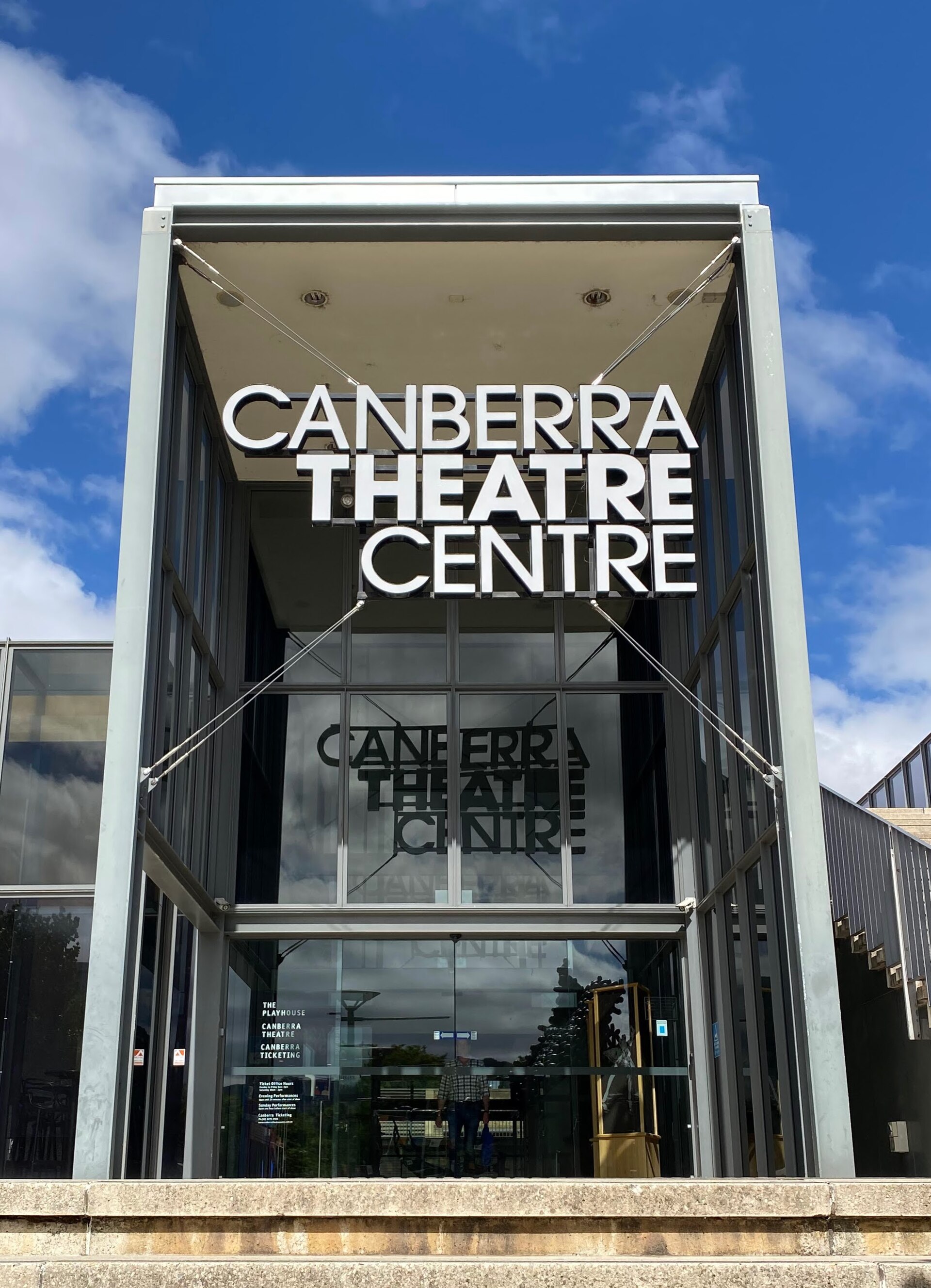
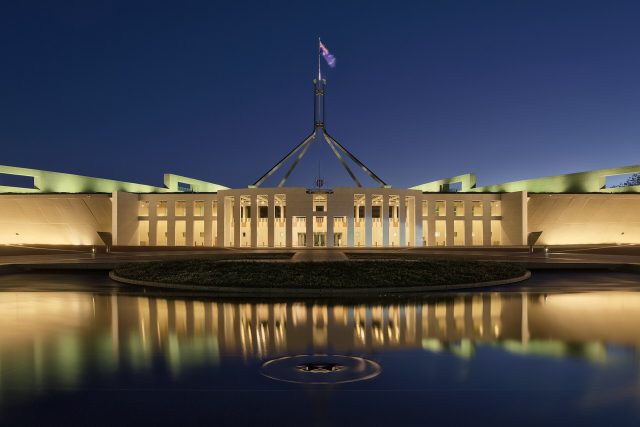
Canberra Theatre isn’t just a building—it’s where the city and art quietly intersect. Tucked in the heart of Australia’s capital, it feels like a witness to Canberra’s early days, when the city was still taking shape. Opened in the mid-20th century, it was one of the first major cultural landmarks in a place that was, at the time, more of an ambitious blueprint than a real city. Designed by Walter and Marion Griffin, Canberra was still a work in progress, and the theatre’s arrival marked a moment of optimism, a belief in the future of a capital—and a country—still finding its identity.
The architecture doesn’t demand attention, but it has a quiet confidence. Unlike grand cultural centres in other capitals, it doesn’t overwhelm with scale or ornamentation. Instead, it blends into the landscape, as if it grew there naturally rather than being imposed on it. The façade is made of local stone, weathered over the years into a warm, golden hue, while large windows let in soft, diffused light. Inside, the space feels open and uncluttered, even though the main auditorium seats over a thousand people. There’s no sense of pretension, just a thoughtful design that puts the audience at ease.
From the beginning, the theatre was meant to be versatile—a stage for everything from opera and ballet to contemporary plays and live music. Over the decades, it has hosted performers from around the world, while also giving Australian companies a reliable home for their premieres. One of its most praised features is the acoustics; the sound carries naturally, without distortion, making every note or spoken word feel intimate. Musicians often remark on how pleasant it is to perform here, and audiences notice the difference too.
But the theatre is more than just its stage and seats. Over time, it has cultivated an atmosphere that draws not only art lovers but anyone looking for a moment of quiet beauty. In front of the building, a small park offers benches where people sit with books or coffee, especially in warmer months. During summer, the space comes alive with outdoor concerts and festivals, music spilling into the open air. In winter, the theatre becomes a warm refuge from the crisp Canberra evenings, a place to linger before or after a show.
Canberra isn’t always seen as a cultural hub—many think of it as a city of government offices and formalities. But the Canberra Theatre reminds visitors that the capital has another side. There’s no rush here, no crowds of tourists hurrying from one attraction to the next. Instead, there’s a steady rhythm, where art feels like part of everyday life rather than a rare spectacle. That might be why locals hold it in such affection: it doesn’t try to be anything more than what it is—a place where people can step away from routine for a little while.
The theatre has also been a silent observer of Canberra’s evolution. When it opened, the city was still sparse, with more empty spaces than buildings. Today, it’s surrounded by modern offices, cafes, and parks, yet it hasn’t lost its character. It feels like a bridge between the past and present, a place where a classic Shakespeare production can share the stage with an experimental work by emerging artists. That contrast keeps it alive, relevant, and always a little unpredictable.
For first-time visitors, the theatre can be a pleasant surprise. Unlike Sydney’s Opera House or Melbourne’s Arts Centre, it isn’t a global landmark, and that’s part of its charm. There are no long queues, no tourist crowds, no sense of being part of a mass event. Instead, there’s an intimacy to it, where every performance feels like a small, special occasion. Even if you’re not a regular theatregoer, it’s worth a visit just to experience the unhurried pulse of the city, which here feels particularly tangible.
What makes the Canberra Theatre memorable isn’t grandeur or spectacle, but something rarer: authenticity. It doesn’t try to impress or overwhelm—it simply offers art in its purest form. There’s no unnecessary pomp, no attempt to be anything other than what it is. And perhaps that’s why it continues to thrive, remaining a vital part of a city that, while still young, has already begun to write its own story.