The Australian War Memorial in Canberra is more than a museum or a monument. It’s a place where the nation’s history unfolds through the lives of those who shaped it—through courage, sacrifice, and loss. There’s no grand rhetoric here, no forced solemnity. Instead, the space invites quiet reflection, a pause from the noise of everyday life. The weight of what happened isn’t carried by speeches or dramatic displays, but by the stories embedded in every object, every name, every silent corner.
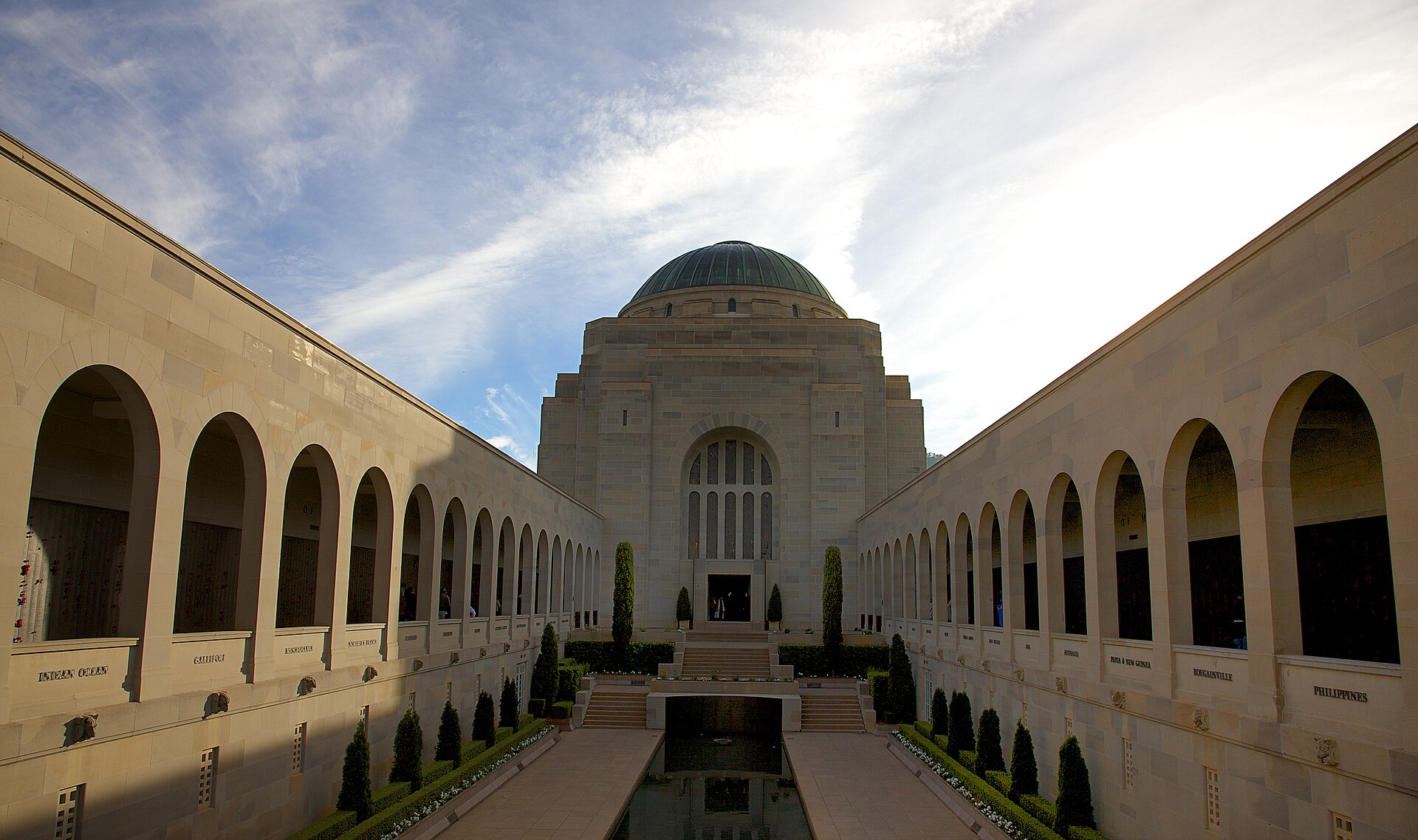
The idea for the memorial took root during the First World War, when Australian soldiers fought far from home in Europe and the Middle East. Even then, families and comrades began preserving fragments of those years—letters, photographs, personal belongings—anything that might keep the memory of the fallen alive. But it wasn’t until 1941, after decades of debate over its purpose and design, that the memorial finally opened. Its architecture strikes a balance between the timeless and the modern. The building resembles an ancient temple, though stripped of ornamentation, its clean lines and stone surfaces creating a sense of restraint, as if the structure itself is asking for silence.
Inside, the memorial guides visitors from the collective to the deeply personal. The heart of the space is the Hall of Memory, where an eternal flame burns beneath a dome inscribed with the names of over 100,000 Australians who have died in wars since 1885. There are no flowers here, no softening touches—just bronze and stone, a stark reminder of lives cut short. Beyond the hall lies the museum, filled with military equipment, uniforms, weapons, and documents. Yet the most powerful exhibits aren’t the objects themselves, but the human stories behind them. A soldier’s diary, scribbled on scraps of paper in the trenches. A mother’s letter, never answered. A photograph of a nurse tending to the wounded under fire. These aren’t just relics; they’re fragments of lives that once were.
Outside, the memorial’s collection of aircraft and armored vehicles stands under the open sky. Here, you can see the legendary fighters of the Second World War, tanks that rolled across battlefields, even a submarine. Each machine is more than an exhibit—it’s a witness to history, its metal still echoing with the sounds of conflict. Plaques offer brief explanations, but the real story is in the atmosphere. You can almost hear the roar of engines, the distant crack of gunfire, the voices of those who once operated these machines.
The memorial isn’t just about the past. It remains a living space, where ceremonies honor those who have served in more recent conflicts. Every year on April 25, Anzac Day, thousands gather here to remember the fallen. The Last Post sounds at dusk, and veterans march through Canberra’s streets. But even on ordinary days, the memorial draws visitors—school groups, tourists, families tracing the names on the walls. For many, it’s not just a place to learn history, but to connect with it, to feel the weight of what their country has endured.
Beyond the main building, the memorial’s grounds include a sculpture garden, where monuments stand in quiet tribute to soldiers from different eras. Nearby, the Memorial Parade leads to the entrance, lined with trees planted in memory of specific individuals. Each tree is a living monument, growing and changing with time. The garden doesn’t feel somber or overly formal. Instead, it suggests that memory isn’t just about grief—it’s also about resilience, about the way life continues.
What makes the Australian War Memorial different from other historical sites is its ability to make the past feel immediate. There’s no detachment here, no sense of history as something distant or abstract. Every exhibit, every inscription, every corner of the complex serves as a reminder of the cost of peace. This isn’t a place you can rush through. It demands attention, a moment of stillness, a willingness to listen. That’s why, despite Canberra’s reputation as a city of politicians and bureaucrats, the memorial remains one of its most visited sites. Those who come here often return—not just to see the names on the walls or the aircraft on display, but to feel, once again, that history isn’t just something that happened. It’s part of who we are.