Kachanivka is one of those rare places where the past doesn’t just linger in memories—it breathes. Tucked away in the rolling landscapes of northern Ukraine, this estate feels like a world suspended in time, where the rustle of leaves and the quiet grandeur of old manor houses carry echoes of conversations once held in candlelit drawing rooms. It’s not a place you visit in a hurry. Here, the hours stretch differently, as if the very air slows to let you step into another era.
The story of Kachanivka begins in the late 18th century, when the Tarnovsky family first established the estate. But its golden age came later, under Vasyl Tarnovsky the Younger, a man whose passion for art and culture turned Kachanivka into a magnet for Ukraine’s creative minds. Writers, painters, and musicians flocked here, drawn by the promise of intellectual exchange and the quiet beauty of the estate. Among them were figures whose names still resonate today—Nikolai Gogol, who wandered these paths, Taras Shevchenko, who left behind more than just his signature in a first-edition *Kobzar*, and composer Mykola Lysenko, who found inspiration in the estate’s serene surroundings. For a time, Kachanivka wasn’t just a retreat; it was a crucible where Ukrainian identity took shape.
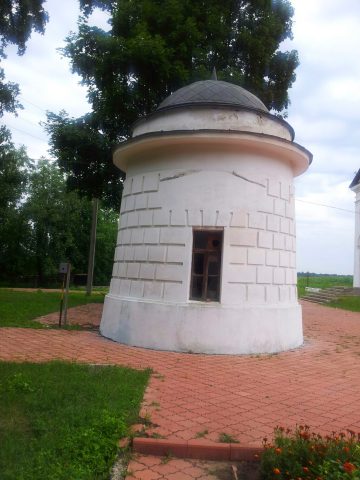
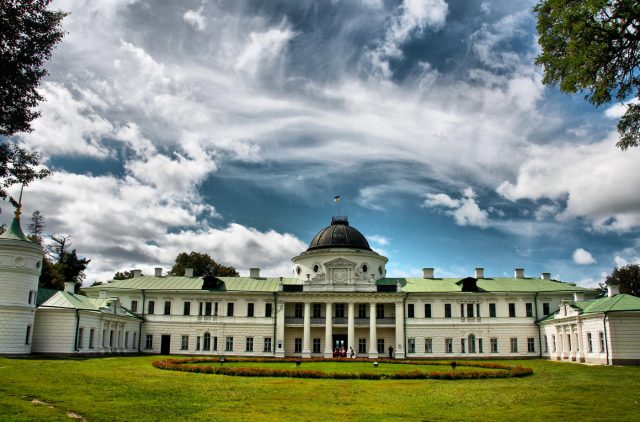
The architecture of Kachanivka tells its own story, layer by layer. The main manor house, built in the neoclassical style, stands as a testament to understated elegance—its columns and symmetrical facade giving way to interiors that have barely changed since the 19th century. High ceilings, intricate moldings, and furniture that has witnessed generations of gatherings all remain intact. Nearby, the outbuildings, greenhouses, and servants’ quarters speak to the estate’s self-sufficient past. But the most striking structure is the Church of St. George, a Gothic Revival masterpiece with pointed arches and stained glass that seems to belong to a fairy tale rather than a Ukrainian village. Its presence adds a touch of the mystical, as if the estate exists in two worlds at once.
The park surrounding Kachanivka is where nature and human design blend seamlessly. Laid out in the English landscape style, it meanders with winding paths, hidden clearings, and ponds that mirror the sky. Ancient oaks and lindens stand like silent sentinels, their branches forming canopies over benches and statues that have weathered centuries. One of the most enchanting spots is the pond with its small island, where a pavilion once stood in the shape of a classical temple. Walking here, it’s easy to imagine the estate’s guests strolling along these same paths, debating poetry or politics, their voices carried away by the breeze.
Taras Shevchenko’s connection to Kachanivka runs deep. The poet visited several times, and in 1843, he painted a portrait of Vasyl Tarnovsky that still hangs in the manor. But perhaps the most tangible link is the first edition of *Kobzar* with Shevchenko’s own inscription, a relic that underscores the estate’s role in preserving Ukrainian culture. Kachanivka wasn’t just a place where art was admired—it was where it was nurtured, where ideas took root and grew into something lasting. Even now, the estate feels like a guardian of that legacy, each room and artifact a thread in the tapestry of Ukraine’s cultural history.
Today, Kachanivka operates as a museum-reserve, a place where the past isn’t just displayed but lived. The manor house remains largely as it was in the 19th century, with original furnishings, family portraits, and personal belongings that offer a glimpse into the daily lives of the Tarnovskys. Visitors can wander through the drawing rooms, the library, and the study, where books and papers still lie as if their owners just stepped out. The park, too, is part of the experience, with guided walks that weave together the stories of the estate’s inhabitants and their famous guests. There’s no rush here—just the quiet invitation to linger, to sit on a bench by the pond or beneath a centuries-old tree, and let the weight of history settle around you.
What makes Kachanivka special isn’t just its age or its beauty, but the way it makes the past feel immediate. It’s not a place of dusty relics; it’s a place where history feels alive, where every stone and every shadow seems to whisper. The estate reminds you that culture isn’t just something you read about in books—it’s something you can touch, something that shapes the way people think and create. Kachanivka doesn’t just preserve the past; it bridges the gap between then and now, showing how the ideas and passions of one era can ripple through time.
If you come to Kachanivka, leave your watch behind. This isn’t a place for schedules or quick snapshots. It’s a place for slow walks along tree-lined paths, for quiet moments by the water, for letting your gaze linger on the details—the carving on a doorframe, the pattern of light through a window. The estate has a way of making you pause, of making you realize that the past isn’t something distant and abstract. It’s here, in the creak of a floorboard, in the scent of old wood and fresh grass, in the way the light falls across a room just as it did two hundred years ago.
Kachanivka doesn’t demand your attention—it earns it. There’s no fanfare, no grand spectacle, just the quiet power of a place that has seen history unfold. For those who take the time to listen, it offers something rare: a chance to step outside the present and into a world where the echoes of the past are still very much alive. It’s a reminder that some places aren’t just visited—they’re experienced. And once you’ve walked its paths, you’ll carry a piece of Kachanivka with you, long after you’ve left.