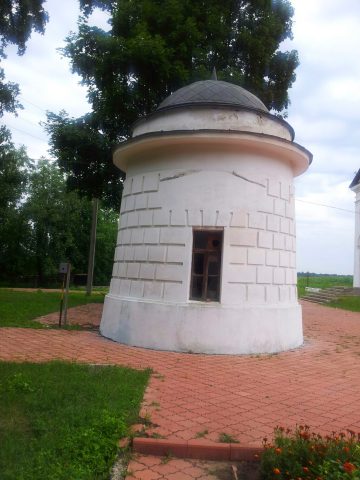
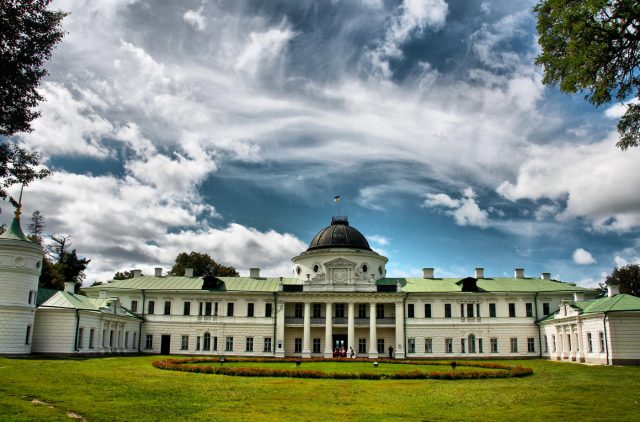
Kachanivka is one of those rare places where the past doesn’t just linger—it breathes. Tucked away in the quiet countryside of northern Ukraine, far from the well-trodden paths of tourists and the hum of modern life, this small village holds a treasure that feels untouched by time. The Tarnovsky Palace stands on a bluff overlooking the Smosh River, its elegant silhouette framed by an old park where the seasons change with a slow, deliberate grace. There’s nothing ostentatious about it—no towering facades or gilded excess. Instead, the palace has a quiet dignity, a sense that its walls have absorbed the stories of those who lived, loved, and created within them over the centuries.
The palace began taking shape in the late 1700s, commissioned by Petro Tarnovsky, a scion of one of Left-Bank Ukraine’s most prominent Cossack-noble families. The Tarnovskys were more than just landowners; they were patrons of the arts, thinkers, and connectors of people. Their estate wasn’t merely a retreat but a cultural hub, a place where ideas could flourish. While the architect’s name is often linked to Maksym Moshchepanov, records are scarce, and the palace’s design evolved over decades, reflecting the tastes and ambitions of its owners. What remains today is a harmonious blend of styles—classical proportions softened by Gothic flourishes, romantic balconies, and tall windows that once let in the light for grand gatherings. It’s the kind of building that feels lived-in, as if the people who shaped it are still present in its details.
Inside, the palace once housed a world of refinement. The Tarnovskys filled its rooms with art, rare books, antique weapons, and a library that was the envy of scholars. Thousands of volumes lined the shelves, including manuscripts and first editions that spoke of a family deeply engaged with the intellectual currents of their time. Evenings here were alive with music, literature, and conversation, drawing guests from across Ukraine and beyond. Much of that collection was lost in the upheavals of the 20th century, but the fragments that remain—original furnishings, a grand staircase, a fireplace in the drawing room—hint at the splendor that once filled these halls. Walking through the rooms today, you can almost hear the murmur of voices, the clink of glasses, the rustle of silk gowns.
The park surrounding the palace is a masterpiece in its own right. Planted alongside the estate in the 19th century, it’s considered one of Ukraine’s finest examples of landscape design from that era. There’s a deliberate artistry to it, a sense of discovery at every turn. Winding paths lead past shaded groves, over arched bridges, and around ponds where swans glide like something out of a painting. Artificial grottos and a small waterfall add a touch of drama, while the changing seasons paint the scene in different hues—golden in autumn, lush and green in summer, or dusted with frost in winter. The park was designed to surprise, to evoke emotion, and it still does, whether you’re strolling along a sunlit avenue or pausing by the riverbank to watch the light play on the water.
Kachanivka’s legacy is woven into the lives of some of Ukraine’s most celebrated figures. The poet Taras Shevchenko, a close friend of the Tarnovsky family, spent time here and immortalized the estate in his paintings. Composers like Mykola Lysenko and artists like Vasyl Sternberg also found inspiration in these surroundings. In the 19th century, the estate was a magnet for creative minds, a place where ideas were exchanged over tea or during long walks through the park. Today, plaques and museum exhibits pay tribute to those connections, reminding visitors that this was more than just a noble family’s home—it was a crossroads of culture.
The 20th century brought hardship to Kachanivka. After the revolution, the palace was repurposed—first as a sanatorium, then a rest home, and later a children’s camp. Its interiors were altered, its collections scattered, and for decades, its significance faded from public memory. Restoration began in the 1990s, and while much of the original grandeur has been lost, the palace now serves as a museum, offering glimpses into its past. Some rooms have been restored to their former elegance, while others tell the story of the Tarnovskys and the people who passed through these doors. It’s not a perfect preservation—time and neglect have left their marks—but that only adds to the sense of authenticity.
What makes Kachanivka special isn’t just its history or architecture, but the way it makes you feel. There are no crowds here, no souvenir stalls or guided tours rushing you along. The palace and its park exist at their own pace, as if waiting for the next chapter to unfold. The air is still, the light soft, and the silence is the kind that invites reflection. Locals treat the estate with reverence, as if it’s a living part of their heritage, and that care is palpable in the way the paths are kept, the benches are placed, the flowers are tended. Even if you’re not a history buff or an architecture enthusiast, Kachanivka has a way of slowing you down, of making you pause and notice the details—the way the wind moves through the trees, the play of shadows on the palace walls, the quiet rhythm of a place that has seen centuries come and go.
Visiting Kachanivka is like stepping into a different era, one where time moves more gently. It’s the kind of place that stays with you long after you’ve left, not because of any grand spectacle, but because of the quiet moments it offers. A bench by the river, a hidden corner of the park, the echo of footsteps in an empty hall—these are the things that make it unforgettable. Here, the past isn’t just remembered; it’s felt. And in a world that often feels too fast, too loud, that’s a rare and precious gift.