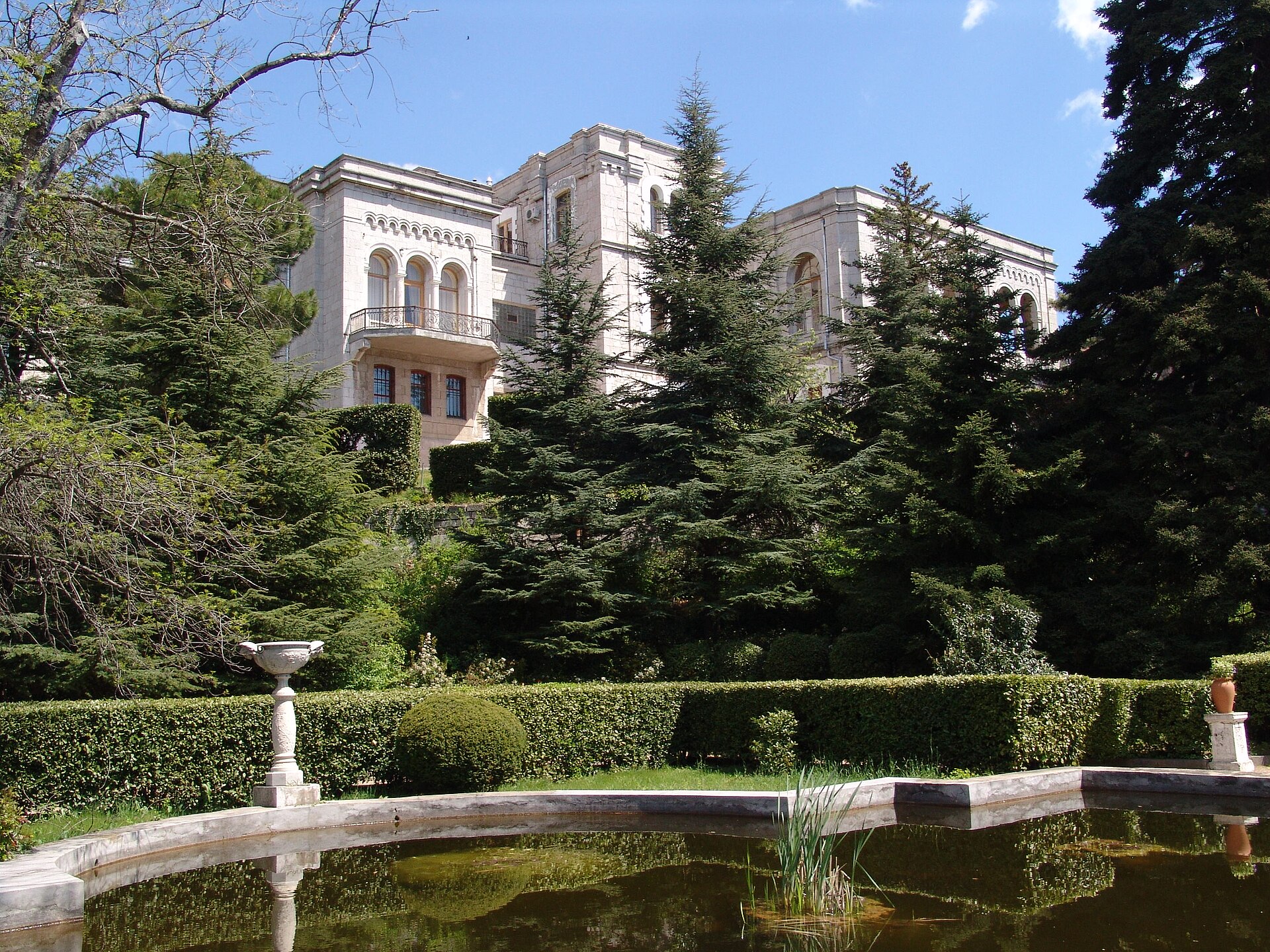
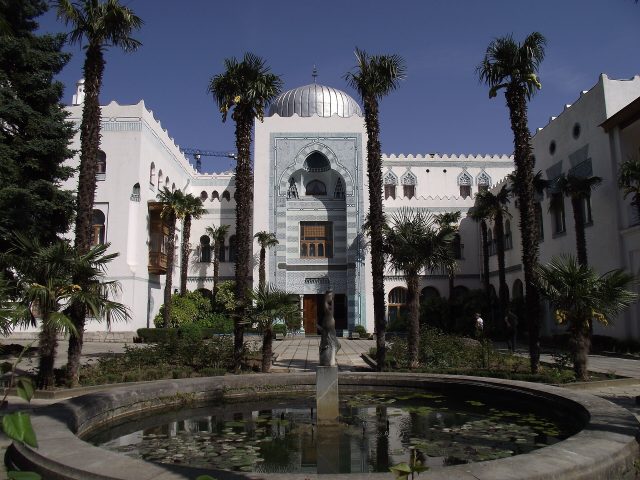
The Yusupov Palace in Koreiz is one of those rare places where history isn’t just recorded in books or remembered through dates—it lingers in the stone, the trees, and the salt-tinged breeze off the Black Sea. Perched on a hillside along Crimea’s southern coast, it overlooks the shimmering waters and the distant silhouette of Yalta, as if designed to blur the line between human ambition and the quiet grandeur of nature. Unlike the more ostentatious Livadia or Vorontsov Palaces, this one feels lived-in, almost intimate, despite its size. There’s no gilded excess here, just a sense of understated elegance, as though the building itself has settled comfortably into the landscape over time.
The palace was commissioned in the late 19th century by Prince Felix Yusupov the Elder, a scion of one of Russia’s wealthiest and most powerful families. The architect, Nikolai Krasnov—best known for his work in Yalta—crafted the structure in the style of the Italian Renaissance, with subtle Art Nouveau flourishes. Krasnov had a gift for making buildings feel like natural extensions of their surroundings, and the Yusupov Palace is a perfect example. Its terraces, balconies, and galleries seem to grow organically from the rocky slope, while the whitewashed walls and terracotta roof blend seamlessly with the greenery and the sea beyond. The result is a place that doesn’t dominate the landscape but rather becomes part of it.
The palace grounds are just as remarkable as the building itself. Covering around 16 hectares, the park cascades down the hillside in a series of terraces, evoking the villas of the Mediterranean. Cypresses, pines, magnolias, and palms line winding paths that meander past boulders and grottoes. Hidden among the foliage are old fountains, gazebos, and even a small amphitheater where concerts were once held. Spring brings a riot of rhododendron blooms, while autumn turns the leaves to gold. In summer, the park offers cool shade, and in winter, it’s a place of quiet, broken only by the sound of waves crashing against the shore. Walking through it feels like stepping into another era, one where time moves at the pace of a leisurely stroll.
Inside, some of the original interiors have survived, though much was lost after the revolution and the upheavals of war. Still, you can get a sense of how the Yusupovs lived: high-ceilinged halls with marble fireplaces, intricately carved furniture, and paintings in gilded frames. The palace wasn’t just a residence—it was a cultural hub. Artists, musicians, and writers gathered here, drawn by the family’s patronage and the beauty of the place. Anton Chekhov, a guest of the Yusupovs, is said to have worked on his stories while staying here, inspired by the sea views and the crisp mountain air.
After the revolution, the palace was nationalized and repurposed over the years. It served as a sanatorium, a wartime hospital, and later a rest home. Soviet-era restorations were sometimes heavy-handed, but the building endured. Today, it’s still part of a sanatorium, with only certain areas open to visitors. You can’t wander through the rooms on your own—access is by guided tour—but the park is free to explore, inviting you to lose yourself in its paths or sit by the sea.
What makes the Yusupov Palace special is its lack of fame. Unlike other Crimean palaces, it doesn’t draw crowds, and that’s part of its charm. There’s no rush here, no need to pose for photos or follow a set itinerary. You can spend hours on one of the terraces, watching the sea change color with the light, imagining the conversations that once took place over tea or the quiet moments when someone simply stood here, lost in thought. The palace doesn’t try to impress with opulence—it offers something rarer: a sense of connection to a time when Crimea was a place where culture, nature, and everyday life intertwined effortlessly.
That said, the palace and its grounds are showing their age. Some corners feel neglected, and parts of the estate are in need of careful restoration. But even in its current state, the Yusupov Palace remains one of the most atmospheric spots on Crimea’s southern coast. It doesn’t shout its history—it whispers it to those willing to listen. If you ever find yourself in Koreiz, it’s worth visiting not for the sake of ticking off another landmark, but for the chance to stand on a terrace, breathe in the scent of cypress and salt, and feel how time moves differently here. The past isn’t just preserved in these walls; it’s still alive, waiting to be noticed.