Dulber Palace stands as one of those rare places where history and architecture merge into something almost dreamlike, yet entirely real. Built in the early 20th century, it was conceived as part of a network of grand estates along Crimea’s southern coast, yet it distinguishes itself not just through its striking appearance but through the unusual continuity of its purpose. While many palaces of its era were repurposed, abandoned, or lost to time, Dulber has remained a place of retreat—though the nature of its guests has changed dramatically over the decades.
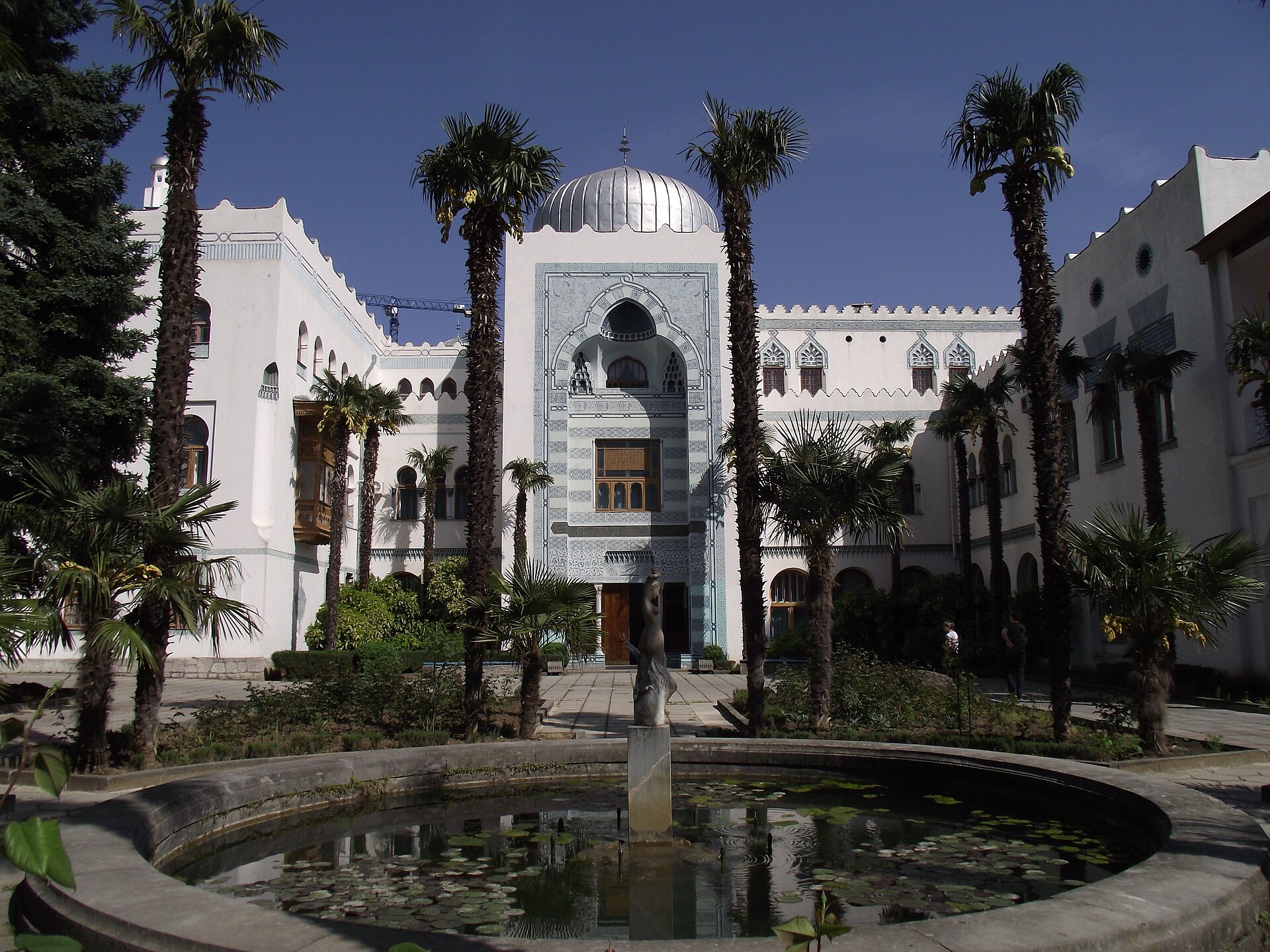
The palace’s design is a love letter to the romanticism of the East, brought to life in stone and ceramic. Its architect, Nikolai Krasnov, drew inspiration from Moorish styles, which were fashionable among Europe’s aristocracy at the time. The result is a building that feels weightless, with its white walls, intricate arches, and delicate balconies set against the backdrop of rolling green hills and the deep blue of the Black Sea. Krasnov himself preferred to call this style "North African," emphasizing its eclectic blend of influences rather than strict adherence to any single tradition. The effect is one of effortless elegance, as if the palace had grown naturally from the landscape rather than being imposed upon it.
Commissioned by Grand Duke Peter Nikolaevich as a private family retreat, Dulber was meant to be a sanctuary away from the pressures of imperial life. The name itself, derived from Crimean Tatar, translates to "beautiful," a fitting description for a place chosen with such care. The location was ideal—sheltered from harsh winds, blessed with a mild climate, and offering sweeping views of the coastline. Construction moved swiftly, and within a few years, the palace had become one of the most recognizable landmarks of the region. Yet the tranquility it provided was short-lived. The revolution of 1917 upended the lives of its inhabitants, as it did for so many others of their class.
After the Bolsheviks seized power, Dulber was nationalized and transformed into a sanatorium for high-ranking Soviet officials. It became a retreat for the new elite, a place where party leaders could recover from the stresses of governance. During World War II, the building served as a military hospital, its halls filled with the wounded rather than the privileged. In the postwar years, its role shifted again, this time opening its doors to a broader range of guests—writers, scientists, and artists—though it never lost its air of exclusivity. Today, it remains a state-run sanatorium, its grounds and facilities still reserved for those with the right connections.
Inside, the palace retains much of its original character. The interiors are a testament to the tastes of the early 1900s, with soaring ceilings, ornate plasterwork, stained-glass windows, and marble fireplaces. The grand staircase, adorned with mosaic tiles and wrought-iron railings, is particularly striking. While much of the original furnishings were lost or replaced during the Soviet era, enough remains to offer a glimpse into the opulence of its early days. The details—whether in the surviving decorative elements or the careful restoration of certain spaces—hint at the lifestyle of the grand duke and his family, a world of leisure and refinement that feels both distant and strangely tangible.
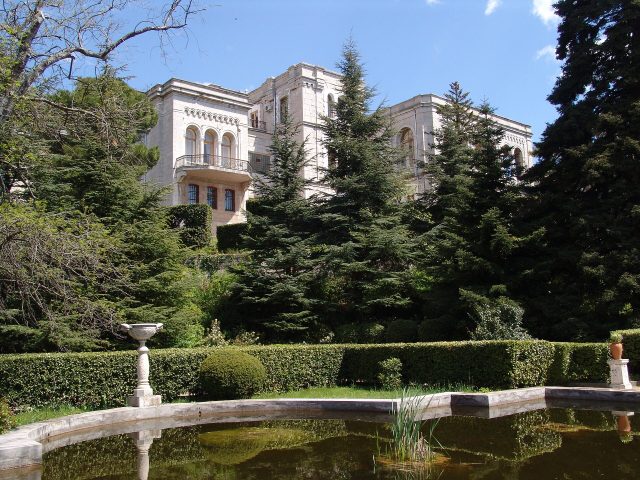
The palace grounds are as much a part of Dulber’s charm as the building itself. The surrounding park is a masterpiece of landscape design, blending exotic and native flora. Towering cypresses, magnolias, and palms share space with local juniper and strawberry trees, their branches framing winding paths that lead to viewpoints overlooking the sea. Small fountains, secluded gazebos, and artificial grottoes add to the sense of seclusion, creating an atmosphere of quiet luxury. The park was designed not just for beauty but for contemplation, a place where one could wander for hours without encountering the outside world.
For modern visitors, Dulber is a place of contradictions. It remains an active sanatorium, its gates typically closed to casual tourists, though occasional guided tours do take place. Even from a distance—whether glimpsed from the road or a nearby viewpoint—the palace is impossible to ignore. Its white walls and domes seem to float above the landscape, a reminder that Crimea is more than just a sun-and-sea destination. It is a place where history is layered into the very earth, where every stone tells a story.
That story is not just about architecture or aesthetics but about the people who shaped Dulber’s past. The grand dukes, their families, the architects, and the countless others who passed through its halls—each left their mark. The palace has witnessed revolutions, wars, and the rise and fall of empires, yet it endures, a silent observer to the passage of time. Perhaps that is why it continues to fascinate. It is not merely a relic of a bygone era but a living connection to it, a place where the past feels almost within reach. For those who seek more than just scenery, Dulber offers a rare chance to step into a world that, while vanished, still lingers in the details.