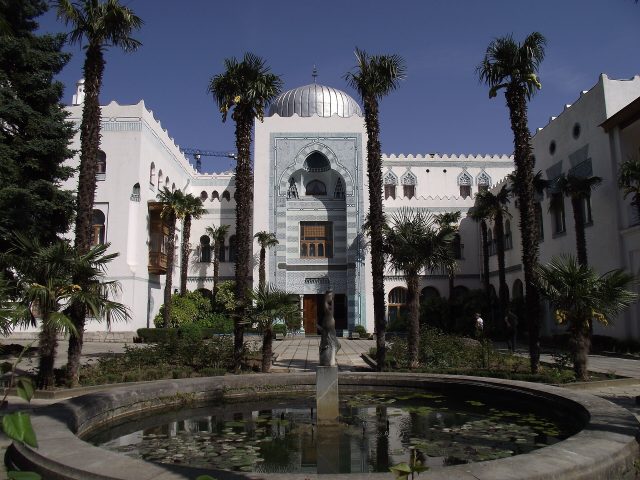
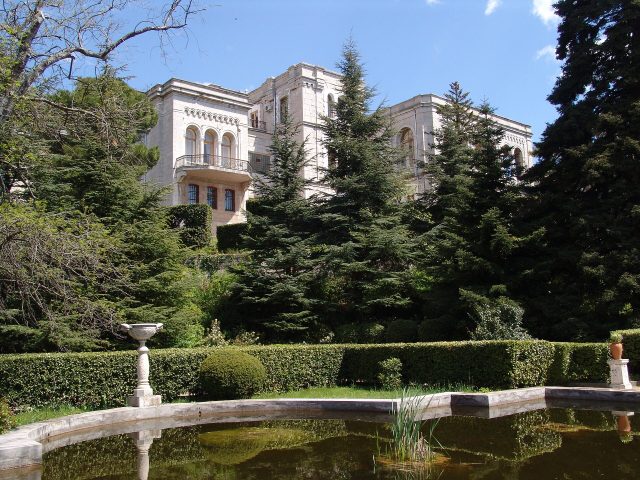
Perched on the southern coast of Crimea, the Milutinskaya Dacha is one of those places where history feels almost tangible, as if the walls themselves could whisper stories of the past. Built in the late 19th century, this estate was originally commissioned by the wealthy Milutin family, who sought a retreat from the bustle of St. Petersburg and Moscow. The choice of location was no accident—Crimea’s mild climate, lush landscapes, and proximity to the Black Sea made it a favored destination for Russia’s aristocracy and intelligentsia. The dacha, with its blend of European elegance and local Crimean charm, reflects the tastes of its time, when grand estates were not just homes but statements of status and refinement.
The architecture of the Milutinskaya Dacha is a quiet testament to the era’s eclecticism. The main building, with its ornate wooden carvings and large verandas, combines elements of Swiss chalet style with traditional Russian dacha aesthetics. The use of local stone and wood gives it a grounded, organic feel, while the intricate detailing—from the lace-like fretwork to the arched windows—adds a touch of sophistication. The estate was designed to harmonize with its surroundings, and even today, the way the building nestles into the hillside, overlooking the sea, feels deliberate and serene. It’s easy to imagine how the original owners might have spent their evenings here, watching the sunset paint the water in shades of gold and pink.
Over the decades, the dacha has seen its share of notable guests and owners. In the early 20th century, it became a gathering place for artists, writers, and politicians, drawn to Crimea’s reputation as a haven for creativity and intellectual exchange. The estate’s gardens, with their winding paths and carefully curated flora, were likely the setting for many lively conversations and quiet contemplation. While the specifics of these gatherings are lost to time, the atmosphere of the place still carries a sense of cultivated leisure, as if the very air is steeped in the ideas and passions of those who once walked these grounds.
The Soviet era brought significant changes to the dacha, as it did to so many estates across Crimea. After the revolution, private properties were nationalized, and the Milutinskaya Dacha was repurposed for state use. It served as a sanatorium, a retreat for officials, and later, a place for cultural figures to work and rest. The building’s sturdy construction and thoughtful design allowed it to adapt to these new roles without losing its character. Even as its function shifted, the dacha retained its elegance, a rare feat in a time when many historic properties fell into disrepair or were altered beyond recognition.
Today, the Milutinskaya Dacha stands as a quiet monument to Crimea’s layered history. It’s not a museum in the traditional sense, nor is it a grand tourist attraction with crowds and guided tours. Instead, it exists in a kind of limbo—partially restored, partially lived-in, and largely overlooked by the masses. This gives it a unique charm. Visitors who make the effort to seek it out will find a place that feels both timeless and slightly forgotten, as if it’s waiting to share its stories with those who are willing to listen. The gardens, though no longer meticulously maintained, still offer pockets of beauty, with overgrown roses and fruit trees hinting at the estate’s former glory.
What makes the Milutinskaya Dacha particularly intriguing is its connection to the broader history of Crimea. The peninsula has long been a crossroads of cultures, a place where empires and ideas collided. The dacha, in its own small way, embodies this complexity. It was built by Russian aristocrats, influenced by European styles, and later repurposed by the Soviet state. Each layer of its history reflects the shifting tides of power and identity in the region. For those interested in the nuances of Crimean history, the dacha offers a tangible link to the past, a way to step into the shoes of those who shaped—and were shaped by—this contested land.
Visiting the dacha today is a low-key experience. There are no grand entrances or polished exhibits, just the quiet presence of a building that has weathered more than a century of change. The surrounding area, Koreiz, is a sleepy settlement with a handful of other historic estates, each with its own story. The nearby mountains and sea provide a stunning backdrop, making it easy to see why this corner of Crimea has long been a retreat for those seeking respite from the world. The Milutinskaya Dacha may not be the most famous or flashy destination in the region, but that’s part of its appeal. It’s a place for those who appreciate history not as a spectacle, but as something lived and breathed.
For those who do visit, the dacha offers a chance to slow down and reflect. The verandas, with their sweeping views of the coastline, are perfect for lingering with a book or a cup of tea. The gardens, though wild in places, invite exploration, with hidden benches and shaded paths leading to unexpected vistas. In the summer, the scent of jasmine and pine fills the air, while in the cooler months, the estate takes on a more subdued, introspective mood. It’s a place that rewards patience, where the details—the worn wooden floors, the faded frescoes, the way the light filters through the trees—tell their own stories.
The Milutinskaya Dacha is not a place you visit for a quick photo op or a checklist of sights. It’s a destination for those who are drawn to the quieter, more contemplative side of travel. Here, history isn’t just something you observe from a distance; it’s something you feel in the creak of the floorboards, the rustle of the leaves, and the distant sound of the waves. It’s a reminder that some places are more than just buildings or landmarks—they’re living connections to the past, waiting to be discovered by those who take the time to look.