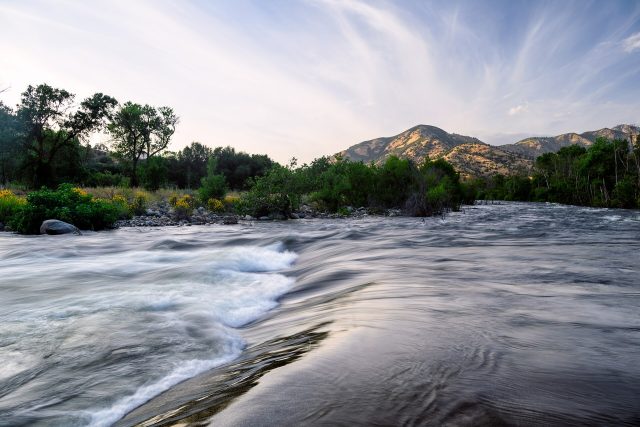
Three Rivers is one of those quiet California towns that rarely makes it onto tourist maps. Nestled in the foothills of the Sierra Nevada, it doesn’t offer grand attractions or crowded viewpoints—just the stillness of oak groves and granite outcrops, where history lingers in the landscape. The Kaweah Historical Park takes its name from the Yokuts word for "big river," a nod to the Kaweah Creek that has shaped this valley for centuries. The creek, a tributary of the Kings River, has long been the lifeblood of the land, winding through the park’s gentle slopes and rocky banks.
For thousands of years, the Yokuts people called this valley home. They fished in the creek, gathered acorns from the oak trees, and hunted deer in the surrounding hills. The rocky ledges provided shelter, while the river offered both sustenance and a sense of place. When European settlers arrived in the mid-1800s, drawn by the promise of gold, the land began to change. By the 1860s, the first homesteads appeared, and the valley slowly transformed into an agricultural community. Orchards and pastures replaced some of the wild terrain, but the creek remained a constant, its waters still flowing as they had for generations.
The park preserves fragments of that settler era. Near the creek, the ruins of an old mill stand as a reminder of the self-sufficient life that once defined this place. Built in the late 1800s, the mill ground grain for local farmers, its stone foundations now softened by time and weather. Nearby, the low walls of early settler homes, constructed from local rock, hint at the modest lives of those who first carved out a living here. These structures were never grand, but their simplicity tells a story of resilience—of people learning to coexist with a landscape that was as generous as it was demanding.
A bridge spans the Kaweah Creek, built in the 1870s when roads first connected the valley to the outside world. The original structure is gone, but the current bridge echoes its purpose, marking a turning point in the region’s history. In summer, the creek flows gently beneath its arches, a quiet murmur against the stones. After winter rains, the water swells into a rushing torrent, a reminder of the raw power that early settlers had to reckon with. The bridge, like much of the park, feels like a threshold between past and present, a place where the land’s rhythms are still palpable.
The park is a haven for wildlife. Ancient oaks stretch their gnarled branches over the trails, offering shade in the heat of the day. Along the creek, willows and cottonwoods sway in the breeze, their leaves whispering against one another. Deer graze on the hillsides, while coyotes and the occasional mountain lion move through the underbrush. In spring, wildflowers carpet the ground, their colors bright against the green. By autumn, the oaks turn gold, their leaves drifting down to join the layers of history beneath. There’s no rush here—just the slow pace of walking, listening, and letting the land reveal itself.
A small open-air museum in the park displays artifacts from both the Yokuts and the settlers. Clay pots, stone tools, and early 20th-century photographs offer glimpses into daily life across the centuries. The contrast is striking: the Yokuts’ handcrafted implements, shaped from natural materials, sit alongside the settlers’ metal tools, a testament to the collision of two worlds. The collection isn’t large, but it doesn’t need to be. Each object carries the weight of its own story, a quiet connection to the people who once relied on this land.
One of the park’s most evocative spots is the old settler cemetery. The graves are simple, many of the headstones worn smooth by time. Some still bear faint inscriptions—names, dates, the briefest traces of lives lived. It’s a place that invites reflection, a reminder of how fleeting even the most settled existence can be. The cemetery, like the rest of the park, feels untouched by the noise of the modern world, a corner of the past that hasn’t been polished for visitors.
The best times to visit are spring and fall, when the weather is mild and the trails are at their most inviting. Summer can be hot, and winter rains sometimes make the paths muddy and difficult to navigate. But no matter the season, Kaweah remains a place of quiet beauty. There are no prescribed routes here—just winding paths that lead where curiosity takes you. Some trails follow the creek, others climb toward the hills, offering views of the valley below. The park doesn’t demand attention; it simply waits, letting visitors find their own way.
If you find yourself in Three Rivers, take the time to stop. Kaweah Historical Park isn’t just a destination—it’s a pause, a chance to step out of the rush and into a slower rhythm. Here, history isn’t confined to plaques or exhibits. It’s in the way the light filters through the oaks, in the sound of the creek moving over stones, in the quiet persistence of the land itself. Whether you spend an hour or a day, the park offers something rare: a place where the past feels close enough to touch, and the present fades into the background. It’s for those who appreciate the beauty in simplicity, in the unspoken stories that linger in the landscape.