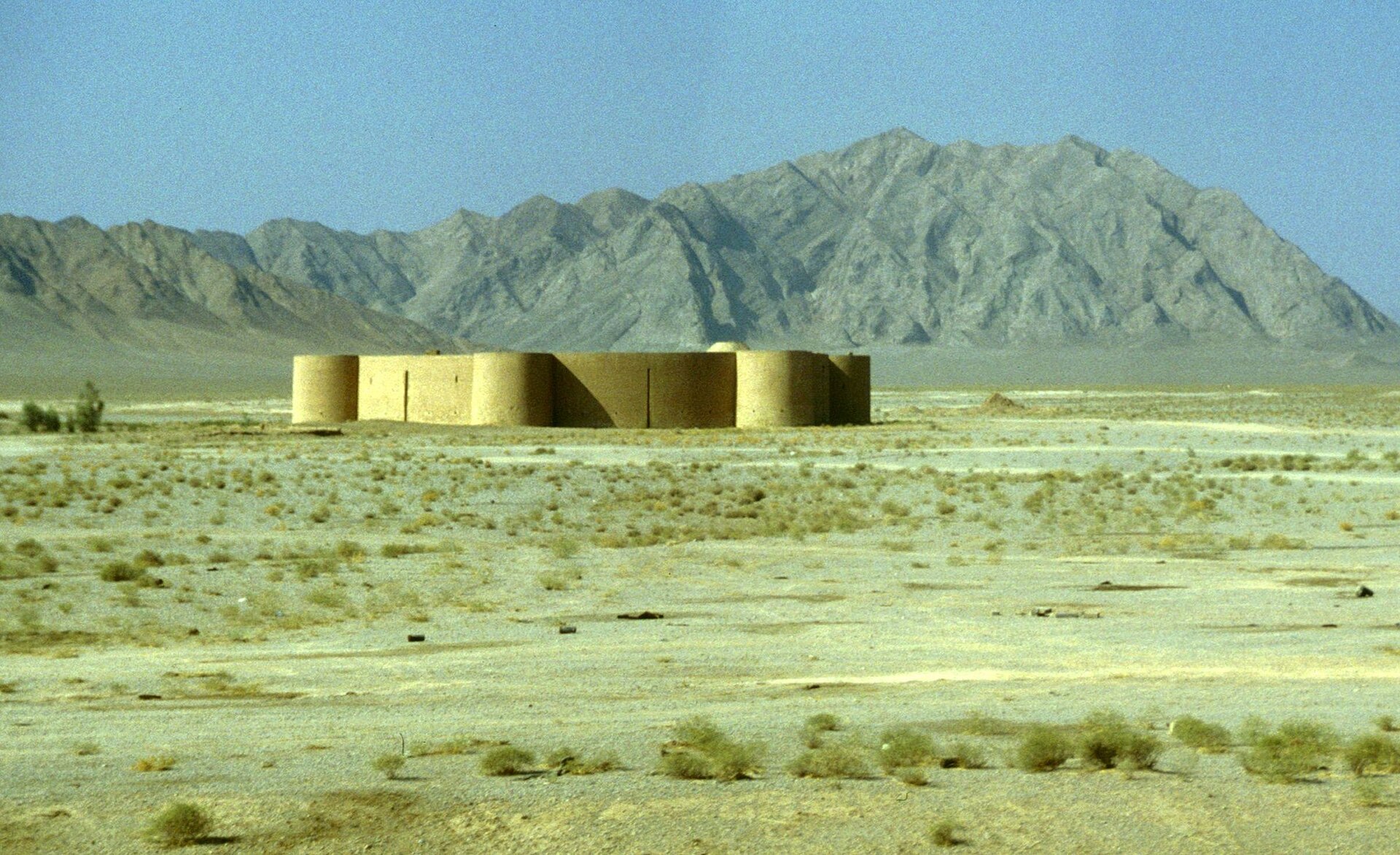
Mahan’s Zein-o-din Caravanserai is one of those rare places where the past doesn’t just linger in ruins but still breathes. Built in the 16th century under Shah Abbas I, it once stood as a vital stop along the trade routes that connected Persia with India and Central Asia. For centuries, merchants, pilgrims, and travelers crossing the harsh Kerman desert relied on its thick walls for shelter, its courtyard for rest, and its storerooms for safekeeping of goods. Today, it remains one of the few surviving caravanserais where you can step into the world of the Silk Road as it once was—not as a romanticized idea, but as a place that functioned, survived, and shaped lives.
The structure is built from sun-dried brick and clay, materials chosen for endurance. They kept the interior cool during scorching days and retained warmth through cold desert nights. The central courtyard, surrounded by two-story arcades, was the heart of the caravanserai. Here, traders set up stalls, animals were tended to, and travelers found respite. The entrance gate, modestly decorated with stone carvings, values strength and purpose over ornamentation. The thick walls, punctuated by narrow windows, were designed to keep out sandstorms and deter bandits, a constant threat on the roads.
The silence inside is almost tangible, but it carries echoes. The courtyard, once filled with the clatter of hooves, the murmur of bargaining, and the scent of spices and fresh bread, now feels like a space shaped by movement. Traces of that life remain. In some rooms, niches for oil lamps still line the walls, their surfaces darkened by centuries of smoke. In others, faint soot marks hint at fires that once burned through long winter nights. A small museum in one of the chambers displays everyday objects from the era—clay pots, coins, tools, and fragments of woven fabric—each a reminder of the people who passed through.
Zein-o-din was never just a roadside inn. It was a microcosm of the world beyond, a place where deals were struck, news was exchanged, and cultures collided. Merchants from Persia, India, and the Arab world mingled here, along with scholars, poets, and wandering dervishes, turning the caravanserai into a hub of knowledge and storytelling. Some of that history is still visible in the inscriptions left on the walls—Persian script alongside Arabic and even Indian characters—a record of how many voices once filled this space.
Like most caravanserais, Zein-o-din fell into disuse as modern transportation rendered it obsolete. Many were abandoned or demolished, but this one was restored in the early 2000s, preserving its original form while adapting parts of it for contemporary visitors. Today, you can spend the night here, sleeping on traditional mattresses laid out on the floor, much as travelers did centuries ago. The experience blends old and new—electricity and running water exist, but the layout, the materials, and the atmosphere remain unchanged.
For the people of Mahan, the caravanserai is more than a tourist attraction. It’s a link to a time when their town was a crossroads of civilizations, a place where the desert didn’t just divide but connected. Even now, camel caravans sometimes pass through the outskirts of the city, though they’re more a nod to tradition than a necessity. But if you climb to the rooftop at sunset, when the desert light turns the walls golden and the air cools, you can almost see the scene as it was hundreds of years ago—dust rising from the horizon, the distant sound of bells, and the slow, steady rhythm of a journey unfolding.
Visiting Zein-o-din isn’t like stepping into a museum. There are no crowds, no guided tours rushing you along, no scripted narratives. Instead, there’s space to wander, to sit in the courtyard and listen to the wind moving through the arches, to peer into empty rooms and wonder about the lives that once filled them. It’s a place that invites reflection on the human impulse to move, to explore, to seek out the unknown. The caravanserai stands as a quiet monument to all those who came before—those who braved the desert because the road was there, and the world was wide.