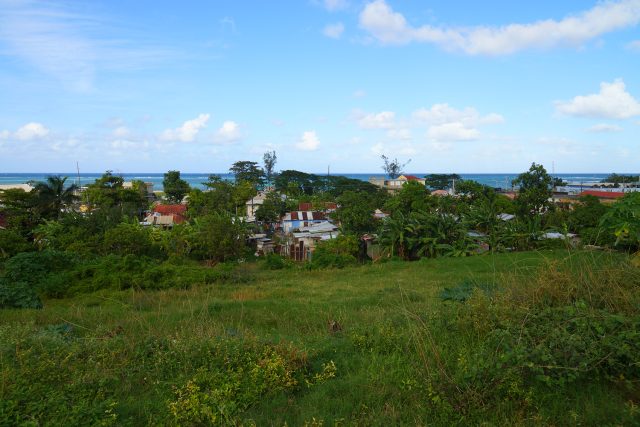
Green Grotto Caves sit along Jamaica’s northern coast like a quiet secret, half-hidden by the island’s lush hills and the steady rhythm of the Caribbean Sea. The caves have always been more than just stone and shadow—they’ve been a refuge, a hiding place, a silent witness to centuries of human struggle and resilience. Long before tourists arrived, the Taíno people sought shelter here, leaving behind faint traces of their presence in the cool, damp chambers. Later, during the brutal years of slavery, escaped Africans, known as Maroons, used the caves as a base for their resistance against colonial forces. Even the British, who ruled the island for over three hundred years, never fully controlled this underground world. During World War II, the caves took on yet another role, serving as a discreet storage site for rum destined for American troops stationed on the island.
Stepping inside feels like crossing into another era. The entrance is narrow, almost unassuming, but once you pass through, the space opens up into a vast, dimly lit cavern. The air is thick with the scent of wet earth and minerals, cool against the tropical heat outside. Stalactites hang from the ceiling like frozen time, their shapes shifting in the flicker of handheld lanterns. Some formations resemble melted wax, others look like petrified waves, and in one chamber, massive columns rise where stalactites and stalagmites have finally met after thousands of years. The caves are alive in their own way—the distant drip of water, the echo of footsteps, the way the light plays across the rock, revealing textures that seem almost deliberate, as if carved by an unseen hand.
One of the most striking features is the underground lake that fills much of the cave system. Its surface is eerily still, reflecting the arched ceiling above like a dark mirror. The water is clear but deep—some sections reach down twelve meters—and though swimming isn’t allowed, the lake adds a sense of mystery to the place. Local guides sometimes mention that the lake is connected to the sea through hidden tunnels, and that during storms, the water inside stirs as if sensing the tide’s pull. Whether that’s true or not, the idea fits the caves’ atmosphere: a place where the boundaries between land and water, past and present, feel blurred.
The caves’ layout is a maze of contrasts. Some passages are so tight you have to turn sideways to squeeze through, while others open into vast chambers where you can stand upright and stretch your arms without touching the walls. The most impressive section is the Great Hall, where massive columns support the ceiling like the pillars of an ancient temple. It’s easy to imagine how this space might have felt to those who sought shelter here centuries ago—safe, hidden, a world apart from the dangers above. The caves were never just a hiding place, though. They were a lifeline. The Maroons stored food and weapons in these tunnels, and during the war, the American military used them to hide supplies, including barrels of rum that were later distributed to soldiers. Some say you can still find remnants of those barrels in the deeper chambers, though no one has ever confirmed it.
What makes Green Grotto different from other tourist sites is how little it has changed. There are no bright lights, no modern walkways, no attempts to sanitize the experience. The caves remain raw and unpolished, just as they’ve been for centuries. Guides lead small groups along the same paths that Maroons and smugglers once used, pointing out geological formations and sharing stories that blur the line between history and legend. One persistent tale involves the pirate Henry Morgan, who supposedly hid treasure somewhere in the caves. No one has ever found it, but the story lingers, adding to the sense that the caves still hold secrets.
A visit here takes about an hour, though it’s the kind of place where time feels different. The route winds through narrow tunnels and sudden open spaces, each turn revealing something new—a glint of water in the distance, a formation that looks like a sleeping giant, the way the light catches the damp walls just right. The tour ends at a small overlook where the caves open up to the sea. From here, you can see how the grotto fits into the landscape, its dark mouth framed by tropical greenery. It’s a quiet moment, one that makes you realize how small you are in the grand scheme of things.
Green Grotto isn’t the kind of place you visit for a quick photo or a checkbox on a travel itinerary. It’s a place that demands a little patience, a willingness to step into the unknown. There are no crowds here, no noise, just the sound of dripping water and the occasional murmur of a guide’s voice. The caves don’t try to impress you with grandeur or spectacle. Instead, they offer something rarer: a sense of connection to the past, a reminder that history isn’t just something you read about in books. It’s something you can touch, smell, and feel in the cool, damp air of a place that has seen centuries of human stories unfold.
Jamaica has no shortage of beautiful beaches and vibrant culture, but Green Grotto offers something different—a chance to step away from the sun and the music and the energy of the island and into a quieter, older world. It’s a place where the land itself tells a story, one that’s still being written. And maybe that’s why it stays with you long after you’ve left. The caves don’t give up their secrets easily, but they leave you with the feeling that you’ve glimpsed something real, something that existed long before you arrived and will remain long after you’re gone.