Farafenni sits quietly in the heart of The Gambia, a town where life moves to the rhythm of the river and the changing seasons. There are no crowded tourist trails here, no grand attractions vying for attention. Instead, the place holds a different kind of significance—one that reveals itself in the stories of the people and the institutions that have shaped the community. Among them, Farafenni Hospital stands out, not as a monument or a landmark, but as a place that has quietly served as a lifeline for generations.
The hospital’s origins trace back to the mid-20th century, when The Gambia was still under British colonial rule. Healthcare in those days was a struggle—doctors were scarce, equipment was basic, and diseases that had long been manageable elsewhere remained deadly here. The decision to build a hospital in Farafenni was strategic. The town was a crossroads, a place where trade routes intersected and people from different regions converged. It made sense to establish a medical facility here, one that could serve not just the town itself but the surrounding rural areas as well. When the hospital opened, it became one of the first major healthcare institutions in central Gambia, marking a turning point in how medical services reached those who needed them most.
The architecture of the hospital reflects its practical purpose. Built in the functional style of colonial-era public buildings, its long, low-slung wings stretch out in neat rows, their pale walls softened by the shade of trees and wide verandas. Inside, high ceilings and large windows allow the breeze to circulate, a small but crucial comfort in the heat. Over the years, new wings have been added, but the original design remains intact—simple, unadorned, and focused on what matters: providing care. There are no grand flourishes here, just a quiet efficiency that has stood the test of time.
Today, Farafenni Hospital is more than just a place for treatment. It’s a training ground for the next generation of Gambian healthcare workers, where medical students from across the country come to learn. The staff—many of whom grew up in the area—understand the challenges their patients face, from the prevalence of malaria and waterborne illnesses to the difficulties of accessing care in remote villages. The hospital sees a wide range of cases, from common infections to chronic conditions and injuries. Women and children, who often bear the brunt of healthcare disparities in the region, receive particular attention here. The work is demanding, but it’s also deeply rooted in the community, a reflection of the trust that has been built over decades.
Yet the hospital’s role extends beyond medicine. In a country where healthcare infrastructure is still developing, it serves as a gathering place, a hub where people come not just for treatment but for connection. In the waiting areas and under the trees outside, conversations unfold—news is shared, advice is given, and sometimes, people simply sit together in silence. For many in the surrounding villages, the hospital is the only place where they can access professional medical care, and that reality shapes how they view it. It’s not just a building; it’s a symbol of what is possible, even in a place where resources are limited.
Like many public institutions in The Gambia, the hospital relies on a mix of government support and international assistance. Over the years, doctors and volunteers from Europe, the Americas, and other African nations have worked here, bringing with them new skills and equipment. These collaborations have helped modernize some aspects of the hospital’s operations, though challenges remain. Power outages, water shortages, and funding gaps are part of daily life, reminders of the broader struggles facing healthcare in the region. Yet despite these obstacles, the hospital continues to function, a testament to the resilience of both its staff and the community it serves.
For travelers passing through Farafenni, the hospital might not seem like an obvious destination. There are no ornate halls or historic artifacts to admire, no guided tours or glossy brochures. But that’s precisely what makes it worth a visit. This is not a place curated for outsiders; it’s a living, breathing part of the town, where the realities of life in The Gambia unfold in real time. A walk through its grounds offers a glimpse into the country’s healthcare system, its challenges, and its quiet triumphs. It’s a chance to see Gambia as it is—not the postcard version, but the one that exists beyond the tourist trail.
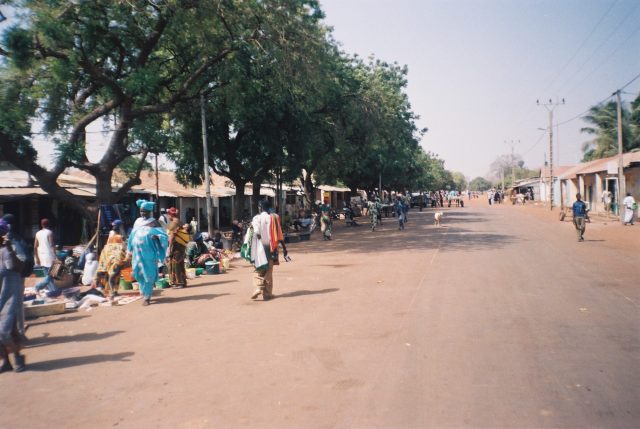
The area around the hospital hums with activity. In the mornings, people arrive from nearby villages, some seeking treatment, others accompanying family or friends. A small market springs up nearby, where vendors sell fresh fruit, vegetables, and homemade meals—often brought by locals to share with patients. Under the trees, elderly women weave baskets while children kick a worn-out football across a dusty patch of ground. The boundaries between the hospital and the town blur here, creating a sense of continuity, as if the institution and the community are one and the same.
Farafenni Hospital is more than just a building; it’s a piece of Gambia’s history. It has witnessed the country’s transition from colonial rule to independence, and the struggles that came with it. Today, it remains a place of quiet importance, a reminder that progress isn’t always measured in grand gestures but in the steady, everyday work of caring for others. If you ever find yourself in this part of The Gambia, take a moment to step inside. You might not find the usual tourist attractions, but you’ll find something far more meaningful—the pulse of a place and the people who keep it beating.