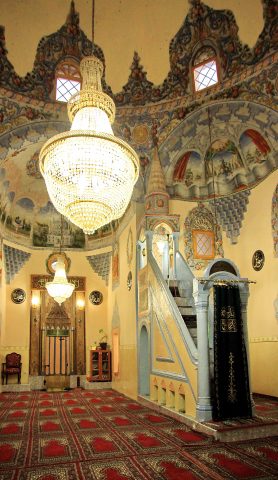
The market in Peć has no souvenir stalls or trinkets for tourists. You’ll find hand-embroidered socks or local pottery, but these are for the townspeople, not visitors. It sits where streets meet near the old bazaar and Hadži Zeka Mosque. The place feels alive—stalls clatter, spices and fresh bread scent the air, and Albanian, Serbian, and Romani voices mix.
This market was once one of the Balkans’ largest trading hubs. Merchants from Albania, Montenegro, and Serbia came here for Italian fabrics, Turkish coffee, Yugoslav radios, and smuggled vinyl. Today, the selection is simpler, but the market’s energy remains.
Mornings bring vegetables from nearby fields, dairy from mountain villages, and meat from local farms. By midday, stalls shift to clothing, shoes, and household items. Some are handmade in workshops nearby. The architecture tells a story: low stalls under corrugated roofs stand beside two-story brick shops from the early 1900s, their arched windows and wooden shutters hinting at Ottoman craftsmanship. Rain makes the covered walkways feel tight; in summer, vendors retreat under the shade of plane trees.
The buildings around the market are lived-in, not museum pieces. Faded facades, wrought-iron balconies, and satellite dishes mark them as real homes. Here, the city breathes. You’ll see women haggling over herbs, old men sipping coffee, children darting between stalls with flatbread. Arguments over prices or parking spots flare up but fade just as fast.
The market is where neighbors catch up, farmers debate the harvest, and young people grab cheap fruit or cigarettes. Before Eid al-Adha or Christmas, stalls overflow with meat, sweets, and toys. The scent of fried onions and spices fills the air.
Peć’s market has seen Kosovo’s history up close. In the 1990s, during the conflict, Serbs and Albanians still traded here. Today, Serbian vendors are rare, but their presence lingers in Cyrillic signs and stories from those who remember. The market has survived economic crises, political upheavals, and attempts to move it. The city wanted to modernize, but the people refused. So it stays, stubbornly, at the center.
For visitors, the market is Kosovo unfiltered. No guided tours, no English signs—just the energy of a place that exists for itself. Fresh cheese and roasting meat mix with the shouts of vendors. Old women sell homemade jam in plastic bottles. You might find pomegranates from Mitrovica or try burek, baked right there. If you’re lucky, you’ll see live poultry or fresh fish from the White Drin River.
A few cafés now serve Turkish coffee and raki, and some stalls sell local delicacies. But the market hasn’t lost its soul. It’s not a tourist attraction—it’s a living part of the city.
Sit on a bench and watch. That’s where the real story is.