The White Drin River winds quietly through Kosovo, a place that doesn’t announce itself with grand scenery but lingers in memory long after you’ve left. Near the village of Koriša, it meanders between gentle hills and open fields, its banks untouched by tourist trails. The water runs clear, with a faint greenish tint, and the current moves just slowly enough to invite you to sit by the shore, watching how the light plays across the surface. There’s no rush here, no need to fill the silence—just the river, the wind, and the occasional rustle of leaves.
Stretching nearly a hundred and twenty kilometers, the White Drin is Kosovo’s longest river. It begins in the northern mountains, where several mountain streams converge, then flows southward until it merges with the Drin River in Albania. Around Koriša, it hasn’t yet gathered the strength of its later course; here, it feels more like a wide, unhurried channel, lined with willows and poplars. Locals simply call it the Drin, without qualification, because for them it’s not just a body of water—it’s part of daily life, as familiar as the roads they walk or the fields they tend.
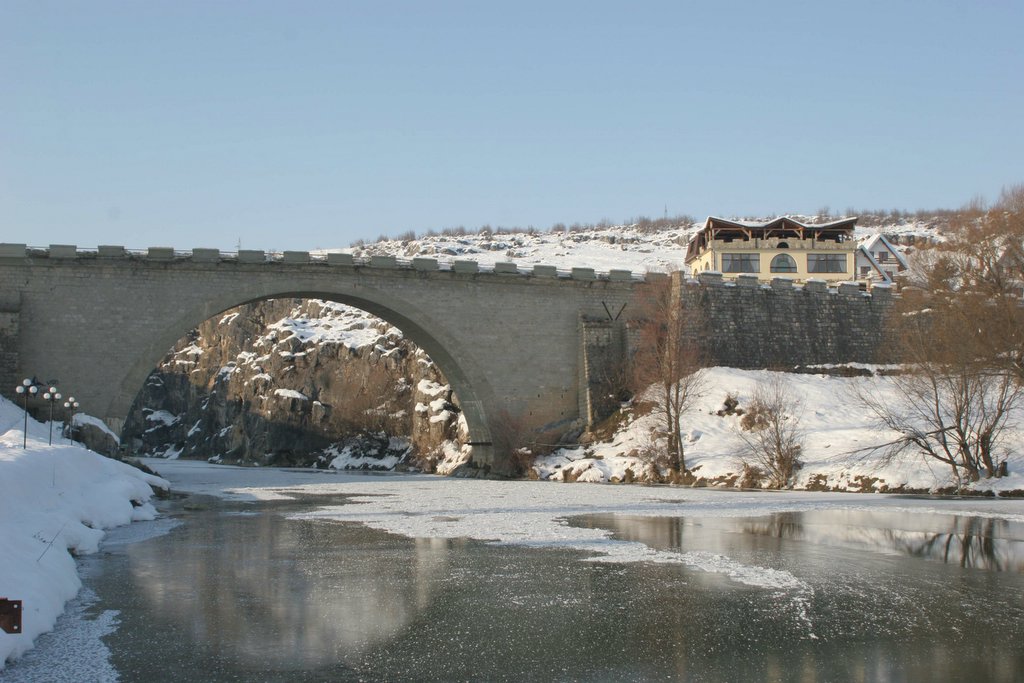
The river’s history is woven into the broader story of the region. Centuries ago, trade routes passed along its banks, connecting settlements and later linking Ottoman territories across the Balkans. In the Middle Ages, craftsmen and farmers settled here, drawn by the fertile soil and reliable water supply. Some of the old stone bridges from that era still stand on the outskirts of Koriša, though many are now half-hidden by overgrowth or worn down by time. These bridges, though crumbling, are quiet witnesses to how life has changed around the river—while the river itself has remained constant, flowing just as it did hundreds of years ago.
There’s nothing grandiose about the architecture along the White Drin. You won’t find castles or cathedrals here, but what you will find is something rarer: authenticity. The houses in Koriša and the surrounding villages are built from stone and wood, with low roofs of tile or slate. Many stand right by the water, their reflections shimmering in the river, creating the sense that time moves more slowly here. In summer, wildflowers grow along the banks, and in autumn, the water turns colder, rising in a thin mist that gives the landscape a soft, mysterious edge.
For the people who live here, the river is more than just a water source—it’s a place to unwind. In the warmer months, children swim in its shallows, leaping from small banks or splashing near the shore. Adults often sit on the rocks with fishing rods, though the catch is usually modest—small fish that are quickly returned to the water. Evenings bring a different rhythm: fires are lit on the banks, coffee is brewed in a *dzezva*, and conversations drift lazily with the sound of the current. There’s no need for anything more.
Winter transforms the river. The water darkens, almost black in places, and the banks frost over. The current slows, and the river seems to pause, waiting for spring. Few people come here in the colder months, just the occasional passerby hurrying along the path or a flock of ducks resting during migration. Yet even in winter, the White Drin doesn’t lose its appeal—it simply becomes quieter, more austere, as if conserving its energy for the seasons ahead.
Though it’s not one of Kosovo’s headline attractions, the White Drin plays a vital role in the region’s ecosystem. Otters live along its banks, and birds nest in the riverside thickets. The water remains clean, despite some pollution from nearby farms, and it’s still one of the country’s purest natural waterways. Local authorities occasionally organize clean-up efforts, but most of the care for the river comes from the people who live nearby, who’ve long understood its value.
Travelers who make the journey to Koriša usually aren’t here for sightseeing. There are no crowds, no noisy cafés, no souvenir stalls—just the quiet, broken only by the rustle of leaves and the murmur of water. You can walk along the bank, peer into an old mill that hasn’t turned in years, or simply sit on the grass and watch the sun dip behind the hills. In moments like these, it becomes clear that the most memorable places aren’t always the ones that demand attention. Sometimes, they’re the ones that let you slow down enough to notice them.
The White Drin doesn’t try to impress. It exists, much like the mountains, the forests, and the sky above. That, in itself, is its greatest quality. Here, you can sense the rhythm of life that hasn’t changed in decades, and realize that beauty doesn’t need to be loud or dramatic. Sometimes, all it takes is the quiet flow of water to feel connected to a place and its past.