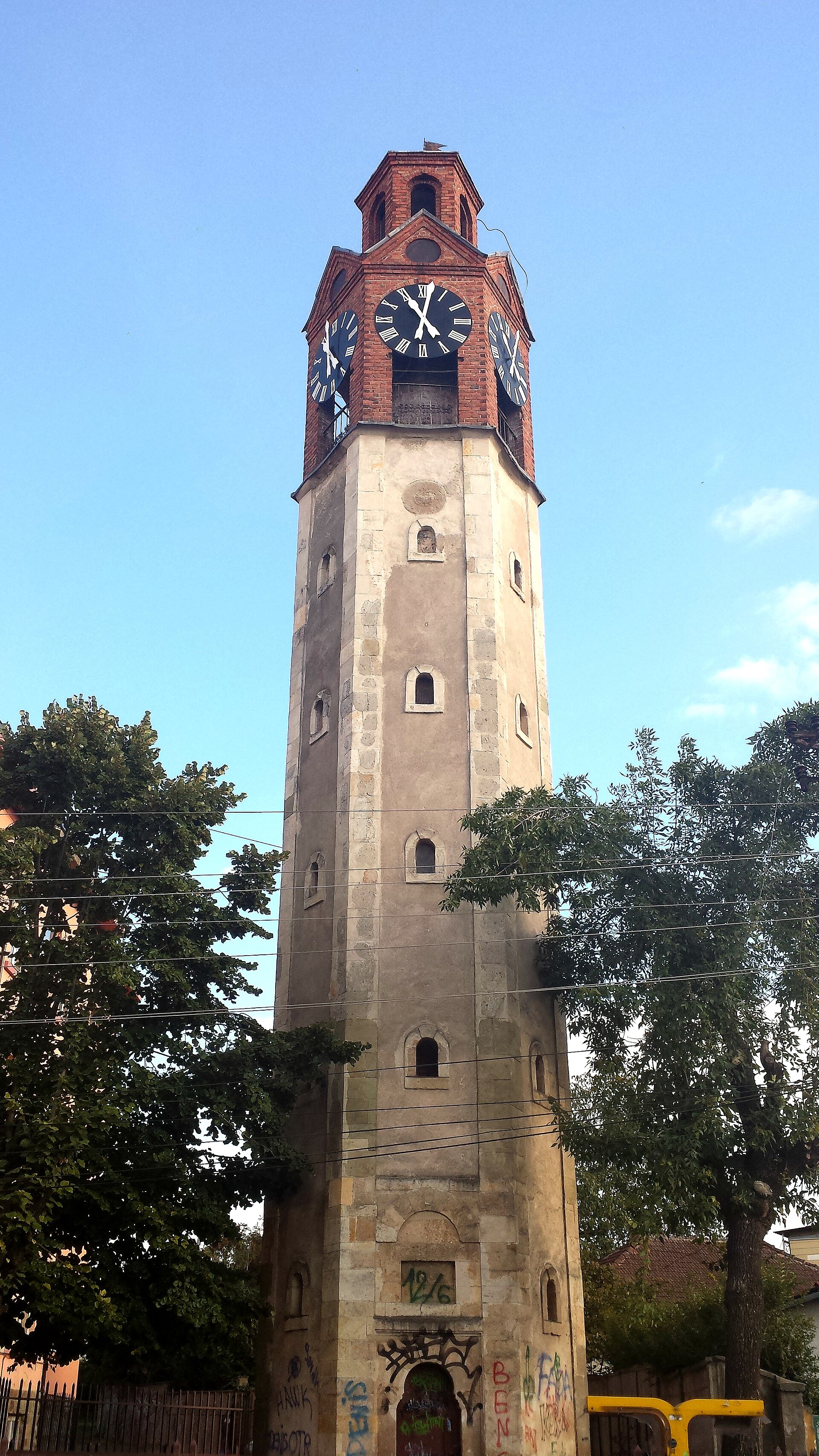
The tower rises at the city’s center, built under Ottoman rule. Its chimes once regulated daily life—signaling work hours, prayer times, and public gatherings. Now, it stands as a physical trace of the past, a marker of the history layered into this part of Kosovo.
The design is straightforward: a square stone base, sturdy and unadorned, topped with wooden galleries where the sound of the clock once carried across Peja. The structure shows its age—worn stones, hairline cracks, a corner eroded by time. The mechanism inside no longer works, but you can still see fragments of its gears, a reminder of the precision that once organized the town.
Peja grew where trade routes intersected. For centuries, it was a place of commerce, craft, and learning. The Ottomans left their imprint on the city’s layout—narrow streets, arched bazaars, domed mosques fitting into the landscape. The Clock Tower stood near the marketplace, where merchants sold spices, cloth, and metal goods. Its chimes matched the city’s rhythm.
The tower’s purpose changed as empires shifted. When Ottoman rule ended, many such structures were torn down or altered. This one survived, though not unchanged. In the 20th century, as Kosovo moved from Yugoslav governance to independence, views on Ottoman heritage changed. What had been ordinary became protected, a symbol of the region’s layered identity.
The square around the tower is alive with movement. Locals sit in cafés, vendors arrange piles of fruit and vegetables, children run between patches of shade. In summer, visitors take photos, though most move on quickly. Still, the tower holds its ground, as if asking you to pause and think about the people who once depended on its steady sound.
For those who live here, the Clock Tower isn’t just old stone. It’s part of their shared past, a sign of how the city has absorbed different cultures over time. Nearby, Ottoman buildings stand near Orthodox churches, while the hills around hold Roman ruins and medieval forts. The tower connects these eras, a silent observer of change.
There are no exhibits or guided tours. The tower doesn’t ask for attention; it’s been here for centuries, and that’s enough. If you can climb the narrow stairs, the view shows Peja’s rooftops, the hills beyond, and the mountains framing the valley. From up there, the city’s quiet character makes sense—it doesn’t need to announce itself because its history is visible in every street.
History isn’t just in books. You walk on it, follow it through the city’s winding paths, hear it in the voices of the people who live here. The tower doesn’t need to say much. It’s the weight of time, the murmur of the present, the ghost of a bell that once kept time for the whole town. Some places don’t require explanation. They just exist.