Kruševac’s market is one of those places where the city reveals itself without pretense. Tucked in the heart of town, where streets converge toward the old center, it has been a fixture for decades—not just as a place to buy groceries, but as a living slice of Serbian provincial life. There are no souvenir stalls here, no staged authenticity, just the steady rhythm of trade: the scent of fresh herbs and spices mingling with baked goods, the rise and fall of voices in animated conversation, the occasional burst of laughter cutting through the hum of the crowd.
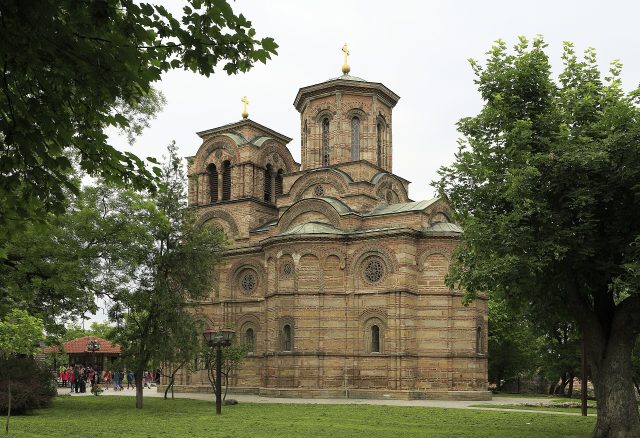
The market’s origins are as old as Kruševac itself. When Prince Lazar Hrebeljanović chose this spot in the 14th century for his fortress, the town quickly became a strategic hub, and the market naturally grew alongside it. Over the centuries, rulers changed, borders shifted, and the city evolved, but the market remained a constant—a place where urban and rural life intersected, where people came not just for supplies but for news, gossip, and the simple comfort of routine.
The architecture here is unassuming, built for function rather than grandeur. Mid-20th-century pavilions stand alongside open-air stalls, where vendors arrange their goods on tables or in wicker baskets. The layout is practical: wide aisles to accommodate crowds, awnings to shield against rain, and in some corners, old wooden crates that hint at a time when the market was entirely open-air. Modern refrigerated units have appeared in recent years, but they haven’t replaced the traditional way of doing things—just adapted to them.
Mornings start early. By six, the market is already alive with activity. Farmers from nearby villages arrive with fresh milk, cheese, eggs, and meat, while gardeners unload mountains of peppers, tomatoes, and cucumbers. Bakers roll in carts piled high with hot flatbreads and burek. By nine, the place is at its busiest, drawing not just locals but visitors from surrounding towns. The air is thick with the smells of smoked meat, warm bread, and the sharp tang of herbs and spices, which vendors sprinkle liberally over their cheeses and cured meats.
What sets this market apart are the things you won’t find in supermarkets. Here, you can buy *kajmak*—thick, creamy clotted milk made the old-fashioned way—or smoked pork roasted over an open fire. There’s *ajvar*, the smoky red pepper relish that’s a staple of Serbian cuisine, and vendors are usually happy to explain how to prepare their goods, sharing recipes or just chatting with regulars. For many, the market is as much a social hub as a place of business, where politics, family matters, and local gossip are discussed as freely as prices.
Beyond food, the market offers a mix of other goods. Clothing, shoes, and household items fill some rows, while others feature secondhand finds—old tools, vintage kitchenware, or even the occasional piece of antique bric-a-brac. Bargaining is part of the process, and a simple purchase can turn into a long conversation, with sellers recounting the history of an item and buyers testing their haggling skills.
This is a place where old traditions linger. Some vendors still use mechanical scales, weighing goods by hand, while others measure fabric by eye rather than with a tape. Transactions often happen without receipts, with sellers jotting down totals on scraps of paper or keeping track in their heads. It’s a system that works because everyone knows each other—or at least knows how things are done.
In recent years, the market has started to attract visitors who come not just to shop but to experience something real. Travelers curious about everyday Serbian life often stop by, drawn to the unfiltered energy of a provincial bazaar. There’s no tourist trap here, no forced charm—just the honest exchange of goods and stories. It might feel chaotic or loud to some, but that’s part of its appeal.
The market doesn’t try to be anything more than what it is. It’s not a landmark, not a must-see attraction, and it doesn’t seek praise. It simply exists—as a part of the city, as a place where people come to buy bread, sell milk, or catch up with neighbors. And in that simplicity lies its greatest value.