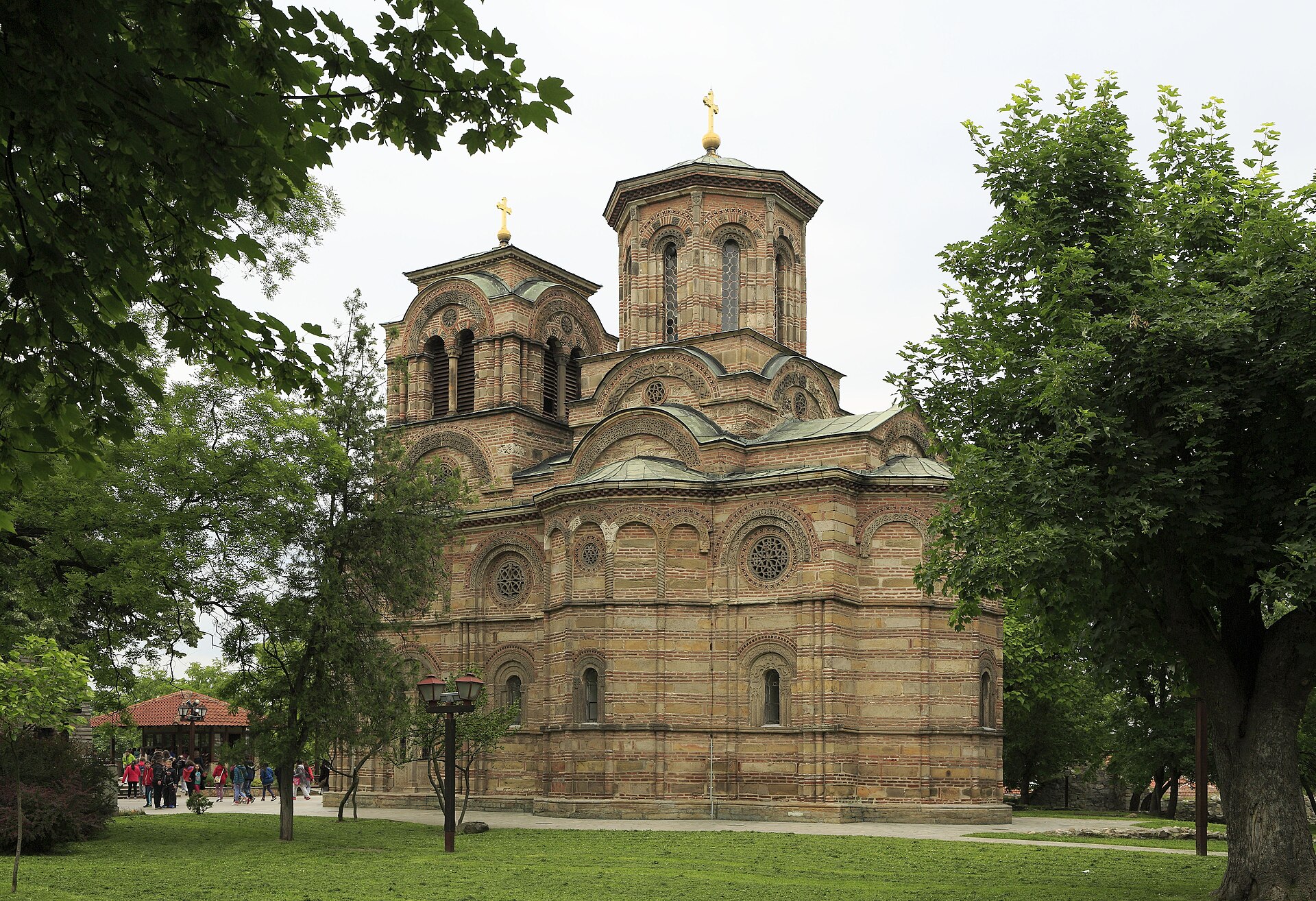
Kruševac is a city where history lingers in the quiet corners, where the past isn’t just remembered but still feels alive. The Church of Saint Stephen the Protomartyr stands as one of those places where time seems to slow, where the weight of centuries settles gently on your shoulders the moment you step inside. Built in the late 19th century, it occupies a piece of land that has seen empires rise and fall, wars fought and peace painfully won. This is a city that has been at the heart of Serbia’s story for centuries, and the church, dedicated to the first Christian martyr, serves as a quiet but powerful link between then and now.
The architecture here is a testament to the enduring influence of Serbian-Byzantine traditions, a style that took on its own character in the Balkans. The church’s sturdy walls, built from pale stone, rise toward the sky in graceful domes, while arched windows filter light in a way that softens the space within. There’s a sense of solidity to the structure, as if it were built not just to last but to endure whatever history might throw at it. Inside, the craftsmanship is evident in every detail—the frescoes, the iconostasis, the intricately carved wood—all executed with the kind of skill that comes from generations of practice. The iconostasis, in particular, is a striking example of Orthodox iconography, where each image is more than decoration; it’s part of a spiritual narrative, a visual prayer.
This church is deeply tied to Kruševac’s past, a city that has played a pivotal role in Serbia’s history. In the Middle Ages, it was the capital of the Lazarević principality, a center of power and culture before becoming a key stronghold in the resistance against Ottoman rule. Temples like this one weren’t just places of worship; they were symbols of resilience, built to fortify the spirit of a people facing uncertainty. Though the current church was constructed later, it carries the memory of those times. It witnessed the upheavals of the First World War, when Kruševac found itself in the midst of conflict, and the Second World War, when the city endured occupation. The stones here seem to hold echoes of those eras, something you can almost feel when you stand inside, listening to the quiet crackle of candles or the faint sound of footsteps on the stone floor.
What makes this church special is that it hasn’t been reduced to a relic. It remains an active place of worship, a living part of the community. On Sundays and religious holidays, the space fills with the voices of parishioners, their hymns resonating through the vaulted ceilings. Even if you’re not religious, there’s something about the stillness here that’s hard to ignore. The way light spills through the windows, casting shifting patterns on the walls, creates an atmosphere that feels both timeless and deeply personal. It’s a place where people come not just to admire the architecture but to seek solace, to reflect, or simply to be.
Kruševac isn’t a city that reveals itself immediately. Unlike Belgrade or Novi Sad, it doesn’t draw crowds of tourists, and that’s part of its charm. Here, you can wander down narrow streets, peek into the courtyards of old houses, or linger in a café where the coffee is strong and the pastries are homemade. The Church of Saint Stephen sits near the city center, not far from the main square, yet it feels like it exists in its own rhythm, untouched by the rush of modern life. It’s easy to find but hard to leave, especially when you realize how much of the city’s soul is concentrated within its walls.
The church looks different depending on the season. In summer, when the sun bathes everything in golden light and the shadows of trees stretch across the pavement, it takes on a warm, almost dreamlike quality. In winter, when snow dusts the domes and the air is crisp, the interior glows with the light of candles, making the space feel even more intimate. No matter when you visit, there’s always a quiet corner where you can sit, listen to the sounds of the city beyond the walls, and feel the weight of history pressing gently against the present.
This isn’t just a monument; it’s a living piece of Serbia’s cultural and spiritual heritage. In a world that moves too fast, places like this remind us that some things endure. The Church of Saint Stephen the Protomartyr is one of those rare spots where the past isn’t just preserved—it’s still breathing, still speaking to anyone willing to listen. In Kruševac, a city where every stone seems to hold a story, this church is where those stories come together, offering a moment of connection to something greater than ourselves.