Braubach is one of those quiet towns along the Rhine where time moves at its own pace. The narrow streets wind between half-timbered houses, their wooden beams darkened by centuries of weather. Old-fashioned street lamps glow softly in the evening. There’s no rush here—just history etched into every stone and corner. Among the town’s landmarks are the Obertor, the old city gates that stand as a witness to Braubach’s past, a reminder of the days when survival depended on sturdy walls.
The Obertor and its role in medieval Braubach
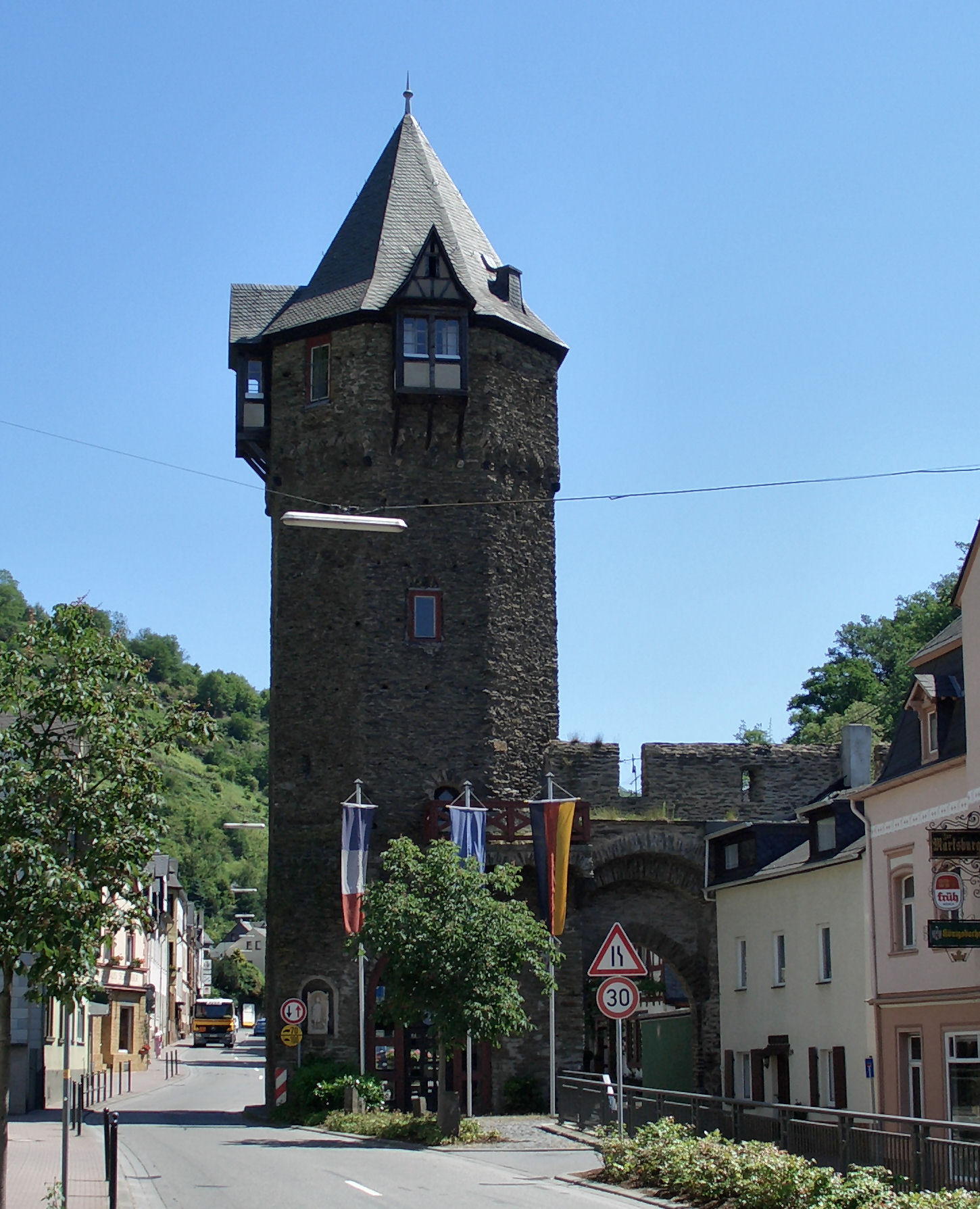
The Obertor rises at the northern edge of the old town, where medieval fortifications once marked the boundary between safety and the unknown. Built in the 14th century, the gates were part of a defensive system that included walls, towers, and moats. Braubach was an important trading post on the Rhine, facing constant threats—raids by neighboring lords, mercenaries, or rival towns. The gates weren’t just an entrance; they were a critical part of the town’s defenses, where guards monitored movement and held back attacks.
Little remains of the original fortifications today, but the Obertor still stands.
A structure built to last
The Obertor is a solid structure of gray stone with a towering arch that once welcomed merchants, travelers, and locals. Above the arch, the gatehouse rises, its narrow windows serving as lookout points. The facade bears the faded carving of the town’s coat of arms. Inside, the vaulted ceilings and winding staircase leading to the upper level remain intact. The view from the top shows rolling hills, the winding Rhine, and the rooftops of Braubach below. The gates have been restored over the years, but their core remains unchanged—a structure that has endured for over seven centuries.
Daily life at the gates
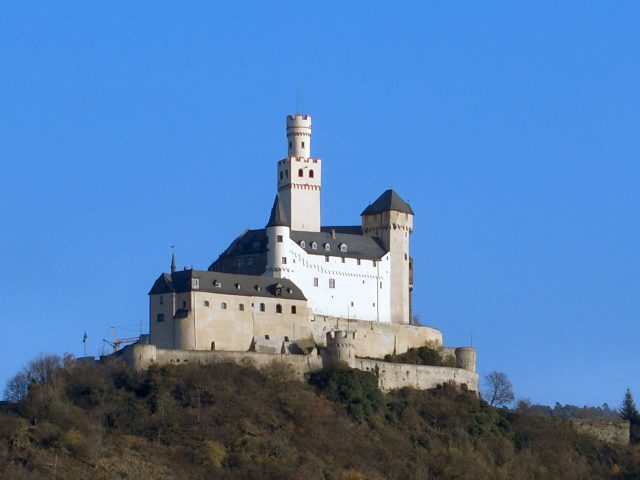
In the Middle Ages, the Obertor was part of daily life. Everyone entering or leaving Braubach passed through its arch—farmers bringing harvests to market, craftsmen transporting goods, nobles traveling to Marksburg Castle. At night, the gates were locked. Guards inspected papers, and in times of danger, the drawbridge over the moat was raised.
This system allowed Braubach to thrive, preserving its independence through turbulent times.
A symbol of resilience
As the centuries passed, the role of the Obertor shifted. When the threat of raids faded, the gates became less a necessity and more a symbol of the town’s resilience. By the 19th century, many medieval fortifications across Germany were demolished. Braubach preserved the Obertor, restoring it to its original appearance. Today, it stands as a reminder that some things are worth holding onto.
Walking through history
Beyond the arch, the old town unfolds in narrow streets lined with closely packed houses. Cobblestones still bear the grooves of centuries-old wagon wheels. There are quiet courtyards, flower boxes on windowsills, and the scent of fresh bread from a nearby bakery. The gates act as a threshold, separating the present from the past.
Braubach is a place where history isn’t just remembered; it’s still alive.
Festivals and timeless moments
The Obertor takes on a special character during local festivals, particularly the medieval fair held every August. For a few days, the streets fill with musicians, artisans, and performers in period costumes. Processions pass through the arch, and banners fly from the tower.
Even on an ordinary day, the Obertor leaves an impression. Early in the morning, when mist clings to the Rhine, or in the evening, when the gates are softly lit, the scene feels timeless. The stone is cool to the touch, worn smooth by generations of hands. For a moment, you can almost hear the voices of the past echoing through the arch.
A quiet charm
Braubach isn’t the kind of place that dazzles at first sight. There are no grand cathedrals or palaces here. Instead, its charm lies in its authenticity, in the way it has preserved its character without trying to impress.
The Obertor doesn’t need grand descriptions. It speaks through its sturdy stone, its enduring presence, the stories within its walls. If you ever find yourself in this part of the Rhine, pause at the gates. Run your fingers over the weathered stone, feel its cool surface, and listen to the silence. You might understand why Braubach has held onto its past so fiercely—and why it feels like a place out of time.