Marksburg
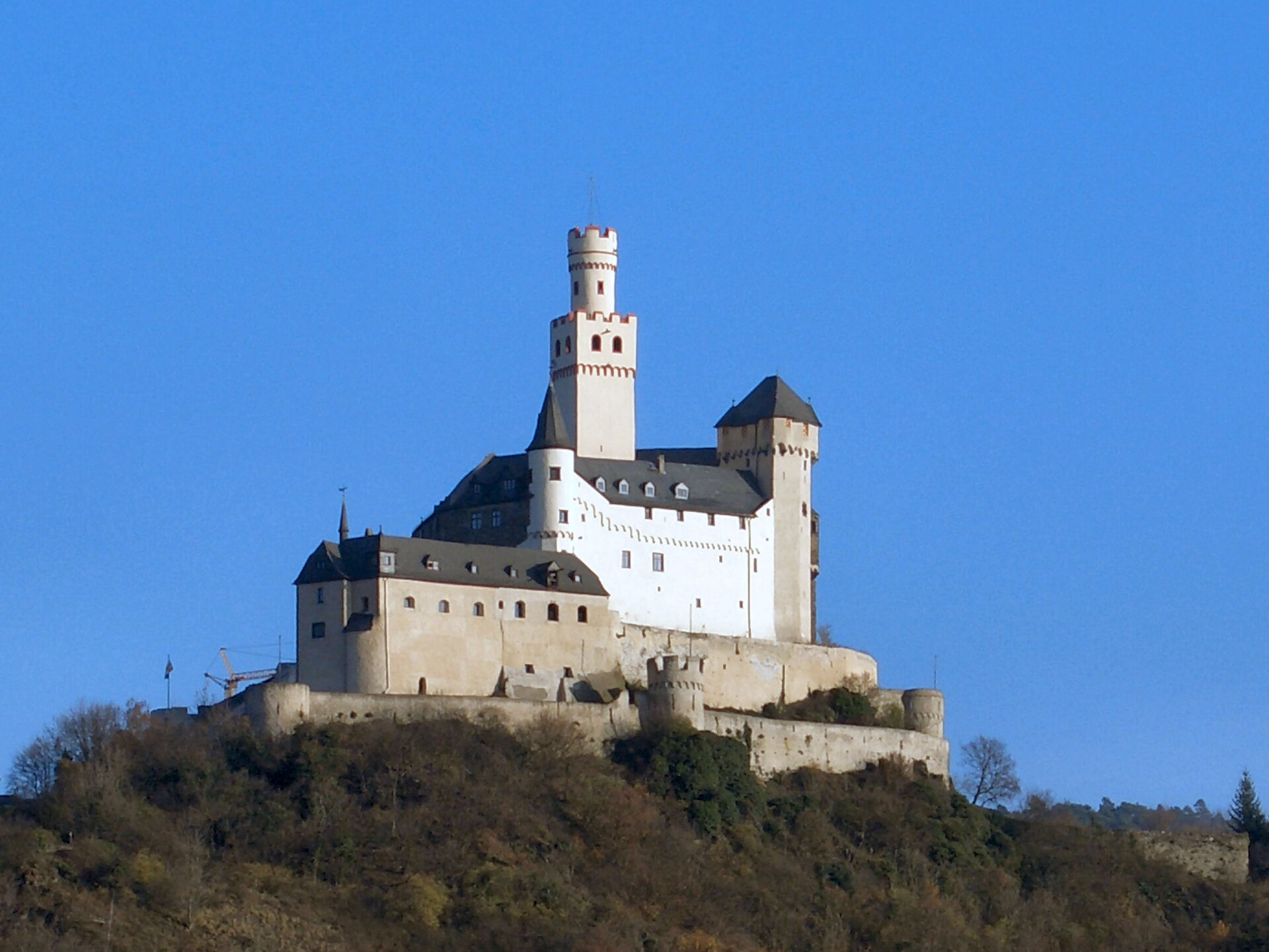
Marksburg is the only castle on the Rhine that has never been destroyed. For eight centuries, it has overlooked Braubach, its outline part of the river valley’s shape. Unlike other fortresses now hollowed into museums, this one still holds the weight of time—stone steps worn by use, halls that echo with real footsteps, air thick with old wood and damp rock. When you walk into its courtyards, you feel it: this place has always been alive.
The castle began in the twelfth century, when the Rhine was Europe’s busiest trade route. Whoever controlled the river controlled wealth, so Marksburg was built to protect the interests of local lords. The first written record appears in 1231, though by then it was already a stronghold. Most neighboring castles changed hands through war or marriage, but Marksburg stayed with one family—the counts of Braunsberg—before passing to their heirs. That continuity shows in the way the castle feels less like a relic and more like a place where people still live.
The architecture layers centuries like sediment. The oldest part is the Romanesque keep, built in the thirteenth century from dark stone. Its thick walls and narrow windows were made for defense, not comfort. Later, Gothic wings were added in the fourteenth and fifteenth centuries, their pointed arches and ribbed vaults softening the fortress’s harsh lines. The Renaissance brought bay windows, carved doorways, and inner courtyards where sunlight now falls across flagstones. The knights’ hall, with its oak beams and massive fireplace, was where feasts and councils happened. Below ground, the wine cellars tell another story: Marksburg was also a trade hub, its vaults once filled with barrels from nearby vineyards.
By the seventeenth century, artillery made castles obsolete, but Marksburg never fell into ruin. Its owners adapted, turning parts of the fortress into living quarters. Baroque details appeared—stucco, wider windows, spaces designed for comfort. In the nineteenth century, Europe’s romantic revival turned Marksburg into a destination. Artists and writers came here, drawn to its rugged look, and early restoration work began. You can still see the light on the battlements at dusk, the way the river bends below, the same views that inspired poems and paintings.
Today, Marksburg is open to visitors. The stone steps are smooth from centuries of use. The air smells of old wood and damp stone. From the lookout platforms, you can see vineyards on the hills, the river’s curve where the Lorelei legend lives. Inside, the collections include armor worn in battle, swords that saw combat, tapestries faded but still showing their stories. The armory holds halberds, crossbows, and broadswords—many originals, not replicas. These objects feel real because they were part of someone’s life.
Legends cling to the castle. There’s the White Lady, a ghost said to wander the halls on moonlit nights. Another story tells of a secret tunnel to the river, used by knights to escape sieges. The truth doesn’t matter—what matters is how the castle feels. Its walls hold more than history; they hold time itself.
Visiting Marksburg isn’t like visiting a museum. In summer, medieval fairs bring the castle to life—blacksmiths hammering, visitors drinking spiced wine, knights jousting in the courtyard. Winter is quieter. The crowds thin, the air sharpens, and the stones look stark against the sky. Frost clings to the battlements, and the only sounds are the wind through arrow slits and the creak of old beams. You half-expect to turn a corner and meet a knight.
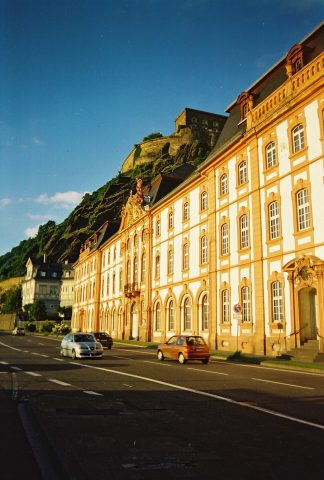
Below the castle, Braubach is quiet. Its narrow streets wind past half-timbered houses, their facades worn by time. The riverfront has cafés where locals sit with coffee and cake. There’s no rush, no performance for tourists. The town simply exists, with Marksburg above it like a guardian. The castle isn’t just a landmark—it’s part of Braubach’s identity, a piece of the past that refuses to fade. The Rhine has carved this valley for centuries, but Marksburg has stood firm against the current. It’s not just a castle on a hill; it’s a fragment of history that has survived, unchanged, against all odds.