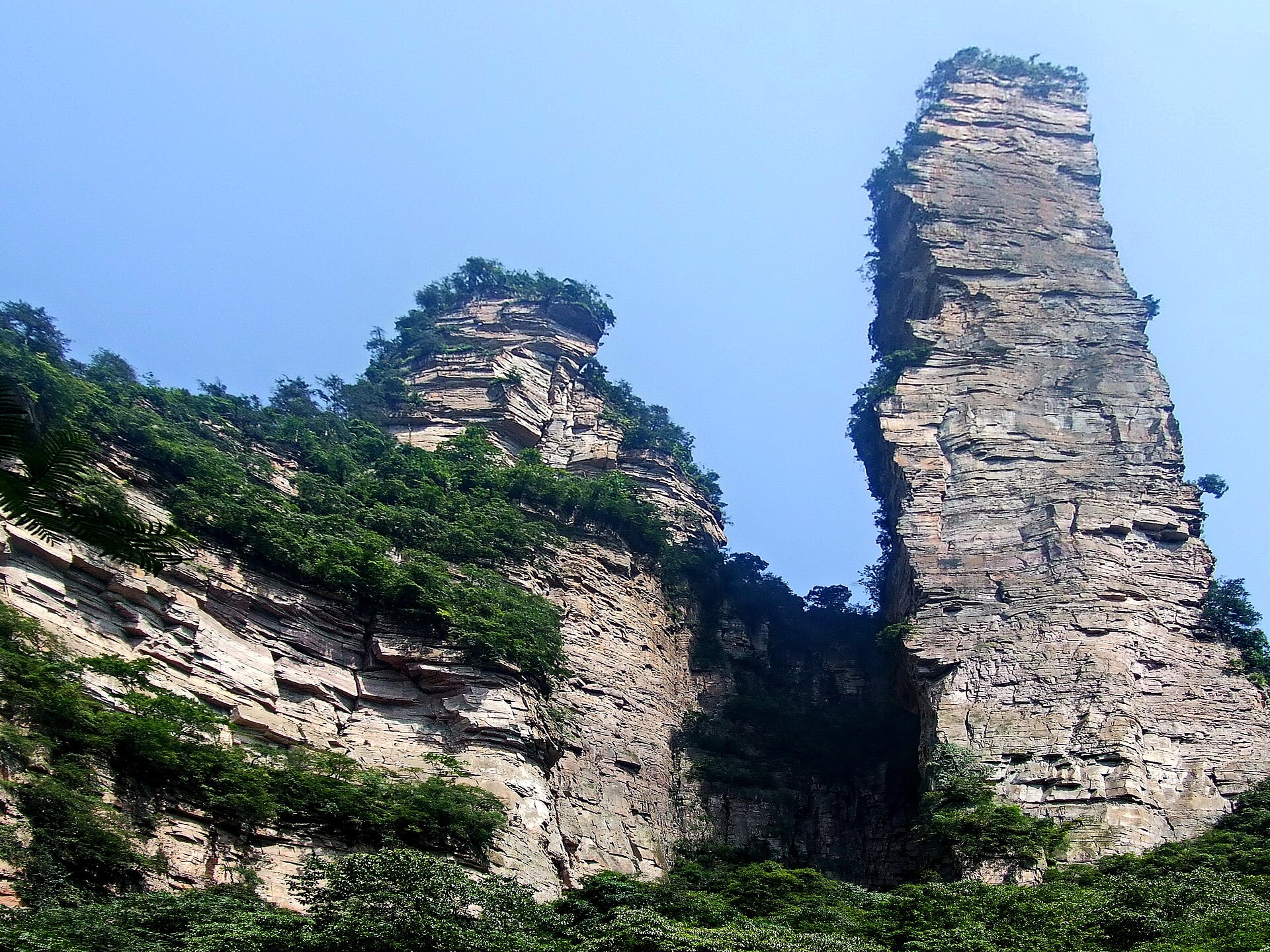
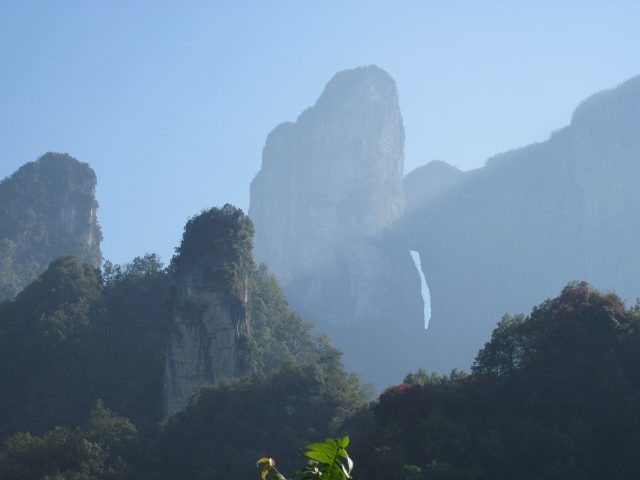
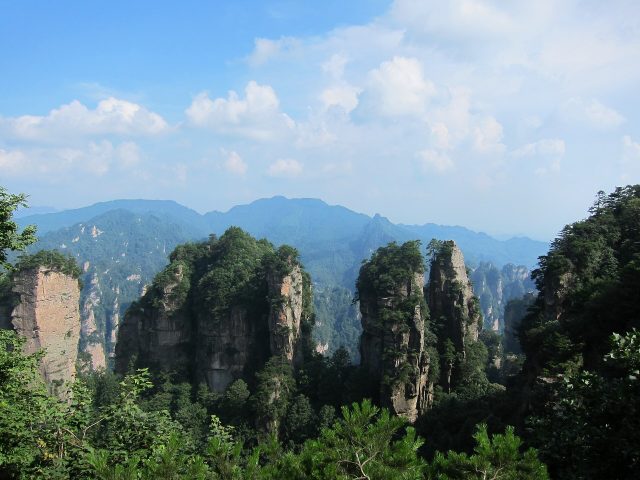
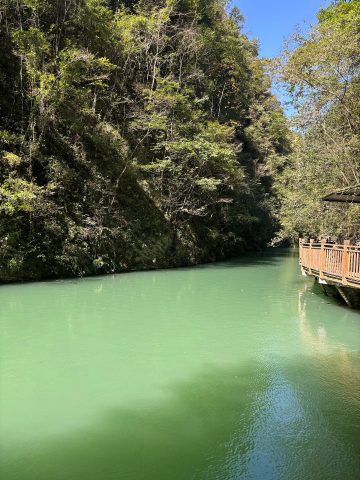
Tianzi Mountain is one of those rare places where the earth seems to have set aside its usual rules and let imagination take over. Rising from the mist in Zhangjiajie National Forest Park, its towering sandstone pillars create the illusion of a petrified forest suspended in time. These formations, draped in dense greenery, have become the defining image of the region, their otherworldly shapes so striking that they inspired the floating mountains of Pandora in *Avatar*. Walking through this landscape feels like stepping into a living painting, where every turn reveals something new—jagged peaks piercing the clouds, deep ravines cutting through the earth, or waterfalls appearing suddenly from the cliffs above.
The mountain’s name, which translates to "Son of Heaven Mountain," carries echoes of ancient legends. According to local folklore, the wise Emperor Yao, one of China’s mythical rulers, once made his home here. The stories say these stone pillars aren’t just rock but spirits frozen in time, guardians of the valley below. Even now, the mountain retains a sense of quiet reverence, as if the boundary between myth and reality has softened. For centuries, Tianzi was nearly inaccessible, its steep paths known only to locals and the occasional adventurer. It wasn’t until the late 20th century that roads and cable cars made it possible for visitors to experience its grandeur firsthand.
What makes Tianzi Mountain truly extraordinary is the way nature itself has shaped its architecture. Over millions of years, wind and water eroded the sandstone, carving away the softer layers and leaving behind these colossal columns, some reaching hundreds of meters into the sky. The result is a landscape that feels almost deliberate, as if designed by an artist’s hand. Some of the pillars resemble human figures or animals, their forms shifting with the light and perspective. Pine trees cling to the summits, their roots gripping the rock in a delicate balance between life and permanence. The contrast between the fragile greenery and the enduring stone only deepens the sense of wonder.
Reaching the top is an experience in itself. The most popular route is the cable car, which lifts passengers more than a thousand meters above the valley floor. As the glass cabins glide over the abyss, the view unfolds like a dream—endless ridges stretching into the distance, their peaks emerging from a sea of clouds. For those who prefer to walk, there are trails winding through forests and along cliff edges, each offering its own perspective. One of the most famous is the path to the First Sun Over the East Sea viewing platform, where visitors gather at dawn to watch the sunrise paint the sky in gold and pink. The moment when the first light touches the peaks while the valley below remains shrouded in mist is unforgettable.
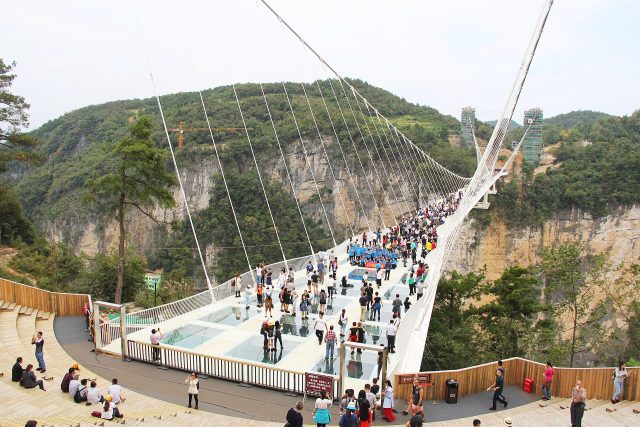
The mountain is dotted with viewpoints that feel like scenes from another world. Helong Park, or the "Garden of Clouds," is a maze of trails threading between floating rock formations, where the air itself seems lighter. Here, a narrow bridge connects two pillars, its path disappearing into the void—a perfect spot for those who enjoy the thrill of standing between earth and sky. The summit of Tianzi Peak, the highest point on the mountain, offers a sweeping panorama of the national park, its ridges rolling into the horizon. On clear days, the view extends even farther, to distant ranges dissolving into the haze. In winter, a dusting of snow transforms the landscape into something even more surreal, the stark white contrasting with the dark stone.
Beyond its visual splendor, Tianzi Mountain offers a chance to step away from the noise of modern life. There are no crowds here, no blaring horns or hurried footsteps—just the rustle of leaves, the call of birds, and the occasional murmur of wind through the rocks. The local Tujia people, who have lived in these mountains for generations, maintain a way of life that feels untouched by time. In the villages at the mountain’s base, visitors can taste traditional dishes like spicy river fish or rice cakes cooked over open fires, their flavors as rich as the stories behind them. During festivals, the air fills with the sound of drums and the swirl of colorful costumes, offering a glimpse into a culture that has thrived in harmony with this rugged landscape.
Time moves differently on Tianzi Mountain. The hours slip by unnoticed as you wander the trails, the rhythm of the day dictated by the sun’s arc across the sky. Mornings begin with the slow reveal of the valley as the mist lifts, afternoons are spent exploring hidden corners, and evenings bring the quiet spectacle of sunset, when the rocks glow amber and rose. If the weather is clear, the night sky here is a revelation—so vivid it feels as though you could reach out and touch the stars. For many, the mountain becomes a place of reflection, a reminder of how small we are against the vastness of nature, and how fleeting our moments on this earth can be.
What lingers long after leaving Tianzi Mountain is not just the memory of its views, but the way it makes you feel. Whether you come for the photographs, the hikes, or simply to sit in silence, the mountain has a way of leaving its mark. It doesn’t ask for much—just an openness to its beauty, a respect for its history, and a willingness to slow down. That’s why people return, year after year, drawn back by the promise of standing once more on a cliff edge as the clouds drift below, or watching the light play across the peaks at dawn. In the end, Tianzi isn’t just a destination; it’s a place where the world feels a little larger, and you, for a moment, feel a little more connected to it.