The hill above Nazareth feels like a place where time slows. From its slopes, the city spreads below in a quiet valley, framed by Galilee’s rolling hills—landscapes that have held human stories for centuries, some reshaping cultures far beyond this corner of the world. For many, this hill isn’t just a landmark; it’s where Jesus is said to have spent forty days in prayer before his ministry began.
Its height is modest, but its meaning runs deep. Christian tradition ties it to the Transfiguration, when Jesus appeared to his disciples in divine light. Scholars argue whether this happened here or on Mount Tabor, yet the hill remains a quiet stop on pilgrimage routes. At the summit, a small Franciscan church, built in the early 1900s, stands unassuming, drawing those who seek solitude over spectacle.
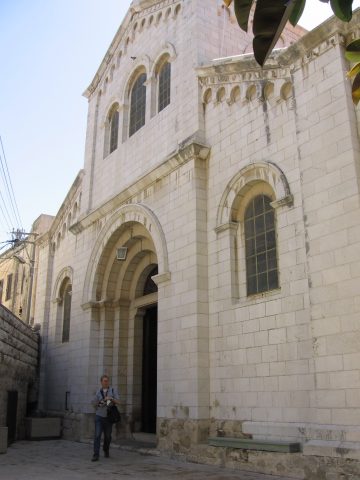
The church is plain: white walls, clean lines, no unnecessary decoration. Inside, frescoes show scenes from Christ’s life, and a simple altar invites visitors to pause. Though small, its hilltop position gives it weight. From here, the view opens across the valley, where Nazareth’s houses thin into Galilee’s gentle slopes, fading into the distance.
The hill is more than a religious symbol. It’s part of a landscape barely changed in millennia. The path up winds through olive groves and vineyards, some tended by the same families for generations. On clear days, the air sharpens the contours of the surrounding hills. Locals say this is where Jesus first preached, though history doesn’t confirm it. The silence, the sunlight—it makes the story feel possible.
For travelers who aren’t pilgrims, the hill offers something else. Here, history isn’t just in books; it’s in the rocks, the rustling leaves. Below, Nazareth is a city of layers: Arab neighborhoods beside Christian churches, markets thick with the scent of spices and fresh bread. The hill watches over it all, a reminder of how this land has been a crossroads.
Walk up. The path is worn smooth by centuries of footsteps. It’s not a short climb, but each step shifts the view—the valley widening, the horizon stretching. Along the way, small chapels and benches let you rest. At the top, beyond the church, a lookout shows the villages below, with Mount Carmel faint on the horizon.
This isn’t a place for crowds. Even in peak season, it stays quiet, offering space to think. Maybe that’s why people come—not for entertainment, but for stillness. Time moves differently here. You might feel part of something bigger than your own journey.
At sunset, the hill changes. Light softens, painting the sky in gold and rose. Shadows stretch long across the slopes. In these moments, the world feels suspended, as if the wind carries whispers from centuries past. For some, it’s a moment of clarity—not necessarily religious, but human. A sense that certain places can shift how you see everything.
The hill doesn’t belong to one faith or people. It’s part of a shared heritage, linking Christians, Muslims, Jews, and travelers from afar. Orthodox pilgrims, Catholic monks, curious visitors—all find their way here, drawn by the quiet pull of the place. It may not have the fame of Bethlehem or Jerusalem, but that’s its strength. Here, history isn’t just recorded; it lingers in the stones, the breeze, the silence between steps.