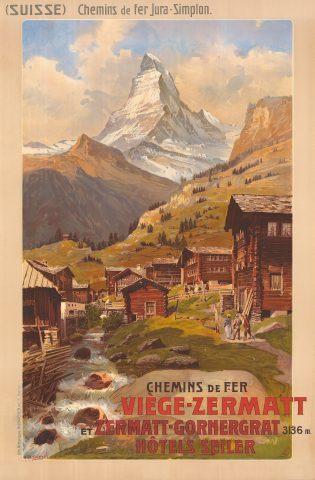
The Matterhorn isn’t just a mountain—it’s an icon. Even those who have never set foot in the Alps recognize its sharp, pyramid-like peak rising on the border between Switzerland and Italy. At 4,478 meters, it’s not the tallest summit in the region, but its near-perfect symmetry when viewed from the north has made it the defining image of Switzerland. For centuries, the Matterhorn was considered unconquerable, a reputation that only added to its mystique. The first successful ascent in 1865 ended in tragedy when four of the seven climbers plunged to their deaths during the descent. Today, the mountain remains one of the most challenging climbs in the Alps, yet its slopes draw not only seasoned alpinists but also travelers who simply want to witness its grandeur from a distance.
Zermatt, the village that serves as the gateway to the Matterhorn, feels like a place suspended in time. Cars are banned here, and the narrow streets are filled instead with electric taxis and horse-drawn carriages. Wooden chalets with flower-laden balconies line the lanes, their carved facades and the scent of fresh bread from local bakeries creating an atmosphere of quiet charm. The village isn’t just a base for exploring the mountain—it’s a destination in its own right, where the pace of life slows to match the rhythm of the Alps. In summer, cows graze on high meadows, their bells echoing across the valleys, while in winter, the slopes transform into one of Europe’s most renowned ski resorts.
There are many ways to experience the Matterhorn, each offering a different perspective. The easiest is the cable car to Gornergrat, where a thirty-minute ride reveals a sweeping panorama of 29 peaks over 4,000 meters, including the vast Gorner Glacier. For a closer view, the lift to Schwarzsee—a small mountain lake—provides a mirror-like reflection of the peak. On clear days, the water takes on an almost surreal turquoise hue, surrounded by alpine wildflowers. Hikers can choose from numerous trails leading toward the base, with the route from Schwarzsee to the Hörnli Hut being one of the most popular. The hut, a rustic shelter for climbers, sits at the foot of the mountain, offering a glimpse into the world of those who dare to ascend.
The history of the Matterhorn is one of perseverance and loss. For generations, the mountain was deemed impossible to climb, and even experienced mountaineers avoided it. The first serious attempt came in 1857, but it wasn’t until July 1865 that a team led by Edward Whymper reached the summit. The victory was short-lived—during the descent, a snapped rope sent four climbers to their deaths. Their bodies were recovered days later, and the tragedy cast a long shadow over future attempts. Today, several routes lead to the top, but all demand skill, preparation, and respect for the mountain’s dangers. Even in summer, avalanches and sudden storms remain a constant threat, ensuring that the Matterhorn remains the domain of experts.
Beyond its challenges, the Matterhorn has inspired artists, writers, and photographers for generations. Its image appears on postcards, souvenirs, and even corporate logos, becoming a symbol not just of Switzerland but of the entire Alpine region. In Zermatt, the Matterhorn Museum offers a deeper look into the mountain’s history, displaying the gear of early climbers and photographs documenting the most dramatic moments of its conquest. For many, the peak embodies the raw beauty of nature, the spirit of adventure, and the enduring allure of the high mountains.
The Matterhorn changes with the seasons, each offering a distinct mood. In winter, its snow-covered slopes become part of a vast ski area, drawing everyone from beginners to professionals. Come summer, the snow retreats, revealing jagged rock and lush meadows, while wisps of cloud often swirl around the summit, adding to its mystique. Autumn paints the surrounding forests in gold and amber, making the mountain stand out even more, while spring brings the sound of melting snow and rushing streams. No matter the time of year, the Matterhorn never looks the same twice, and even repeat visitors find something new to discover.
Zermatt and the Matterhorn exist on nature’s terms. There’s no room for haste here, and even the most hurried travelers find themselves slowing down. The air is crisp and clean, the silence broken only by the distant chime of cowbells. As evening falls, the sky turns shades of pink and violet, and the lights of the village flicker to life like stars on earth. It’s in these moments that the true magic of the place reveals itself—a rare combination of grandeur and tranquility that offers rest for both body and mind.
The Matterhorn doesn’t leave anyone indifferent. It can seem harsh and unyielding, yet there’s a quiet beauty in its presence. Perhaps that’s why it has come to represent Switzerland itself: a blend of strength and elegance, tradition and modernity. For some, it’s a challenge to be conquered; for others, a place to unwind; and for many, simply a view worth remembering forever. But one thing is certain—once you’ve seen the Matterhorn, you’ll never forget it.