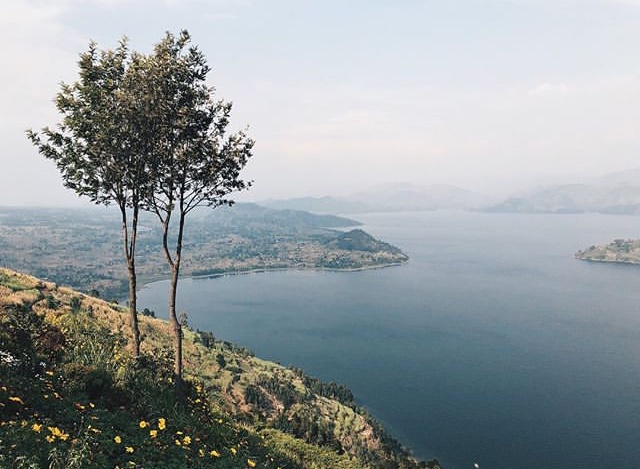
Mount Kabgayi rises quietly above the hills of Nyanza, a small town in southern Rwanda, its slopes thick with greenery. At around two thousand meters, it isn’t the tallest peak in the country, but its presence is deeply felt. The air here carries the scent of damp earth and wild herbs, and the landscape—rolling hills, scattered villages, and terraced fields—feels like a place where time moves differently. For centuries, this mountain has been more than just a landmark; it has been a witness to history, a refuge, and a sacred space for those who call these lands home.
Long before Rwanda became a unified kingdom, Kabgayi was already significant. The Bahutu, one of the country’s major ethnic groups, tell stories of spirits dwelling on its slopes, of ancestors whose presence lingers in the wind and the rustling leaves. In pre-colonial times, the mountain served as a natural fortress for the rulers of the Nduga kingdom, a small but influential state that thrived in this region before the rise of a centralized monarchy. Even now, as cattle graze on its lower slopes and children play among the rocks, there’s a sense that the past isn’t entirely gone—it’s just woven into the everyday.
The mountain doesn’t have grand monuments or ruins, but the traces of its history are still visible. On its slopes, you can find remnants of old stone walls and terraces, built without mortar yet standing firm after centuries. These structures weren’t just for defense; they were part of a way of life. Farmers carved the land into stepped fields, growing crops to feed their families, and the precision of their work is evident in the way the stones still hold the soil in place. It’s a quiet testament to the skill and patience of those who shaped this landscape long ago.
Today, Kabgayi is a place where people come for solitude as much as for history. Unlike the bustling streets of Kigali or the crowded trails of Rwanda’s national parks, this mountain offers a different kind of experience—one of stillness. The paths to the summit wind through groves of banana trees and eucalyptus, their leaves whispering in the breeze. From higher up, the view stretches across a patchwork of green hills, dotted with tiny villages and cultivated fields. On clear days, the horizon seems endless, as if the land itself is breathing.
For the people who live nearby, the mountain remains a vital part of their lives. Farmers collect firewood and medicinal plants from its slopes, herders guide their cattle along familiar trails, and elders pass down stories of a time when Kabgayi was at the heart of a kingdom. In some villages, traditions tied to the mountain’s sacred status are still observed. Certain days are set aside for rituals, where people ask the spirits for protection and good fortune. These ceremonies aren’t advertised, but if you spend time in the area and show genuine interest, locals might share fragments of these customs with you.
The climb to the top isn’t difficult, though it does take time. The trails have been worn smooth by generations of footsteps, and while the ascent can take a few hours, it’s more of a steady walk than a grueling hike. Along the way, small clearings offer places to rest, where you can sit and watch birds flit between the branches or butterflies dance over wildflowers. The summit itself is unmarked—no viewing platform, no signs—but the view needs no explanation. From here, the land unfolds in all directions, a quiet expanse of green and gold under the vast African sky.
Kabgayi isn’t the kind of place that dazzles you immediately. There are no dramatic waterfalls, no rare wildlife, no luxury lodges. Instead, it offers something subtler: a sense of continuity. This is a mountain that doesn’t try to impress; it simply exists, holding the memories of those who came before and offering a refuge for those who seek peace. It reminds you that travel isn’t always about chasing the extraordinary—sometimes, it’s enough to stand on a slope, feel the cool air on your skin, and let the world slow down for a while.
For those who want to understand Rwanda beyond its well-known stories—beyond its tragic past or its famous gorillas—Kabgayi can be a quiet revelation. There are no crowds here, no souvenir stalls, no guides hustling for your attention. Just the land, the sky, and the people who live as their ancestors did. Maybe that’s why the mountain still feels like a place apart. It doesn’t change to suit visitors; it stays true to itself, and to the people who have always known its value.