Nyanza is one of those quiet Rwandan towns that rarely makes it onto tourist itineraries, tucked away in the country’s southern hills. Yet it was here, in the heart of the former kingdom, that the royal court once shaped the nation’s destiny. The Rukari Royal Palace Museum stands as a quiet witness to that era, a place where history feels less like a distant memory and more like something still lingering in the air. The palace was the seat of Rwanda’s monarchy until the mid-20th century, and though much of its original grandeur has faded, the site retains a sense of solemnity, as if the past hasn’t quite let go.
The palace complex is a reconstruction of traditional royal dwellings, built in the style that once housed Rwanda’s kings. At its center stands the *inyanja*, the monarch’s residence, its thatched, rounded structure towering over the smaller huts around it. The design is simple—circular walls, a steep conical roof—but the scale and craftsmanship reveal its importance. Inside, the space is sparse yet deliberate. Wooden thrones, ceremonial spears, and woven baskets line the walls, each object a remnant of rituals that once defined royal life. The most striking piece is the king’s throne, carved from wood and draped in animal hides, a symbol of authority passed down through generations. It isn’t just an artifact; it’s a relic of a system where power was as much about tradition as it was about rule.
Just steps from the palace lies the royal tombs, a modest structure where several of Rwanda’s kings are buried. For locals, this is sacred ground, a place where the living still honor the dead through quiet ceremonies. The tombs are unassuming, little more than a low building surrounded by trees, but their significance runs deep. According to tradition, the trees themselves are guardians, their roots intertwined with the spirits of the monarchs. Visitors are welcome, but the site demands respect—not as a tourist attraction, but as a place where history is still alive.
For centuries, Nyanza was the political and cultural heart of Rwanda, and Rukari was its nucleus. This was where kings, known as *mwami*, made decisions that shaped the kingdom’s fate—where alliances were forged, wars declared, and justice administered. The monarchy wasn’t just a political institution; it was a spiritual one. The *mwami* were seen as intermediaries between the people and the divine, their authority blessed by the gods. The palace, then, was more than a home; it was a bridge between the earthly and the sacred, a place where the ordinary and the extraordinary coexisted.
When Rwanda gained independence in the 1960s, the monarchy was abolished, and the palace fell into disrepair. For decades, it stood as a fading relic of a bygone era. But in the late 20th century, efforts were made to restore it, not as a royal residence, but as a museum—a way to preserve the traditions that might otherwise have been lost. Today, the exhibits go beyond the story of kings. They offer a glimpse into the lives of ordinary Rwandans: the tools they used, the clothes they wore, the instruments they played. There are no grand halls or gilded decorations here, just the quiet authenticity of a culture that has endured.
What makes Rukari special isn’t its opulence, but its rawness. Unlike the palaces of Europe, with their marble floors and chandeliers, this place feels lived-in, almost intimate. The thatched roofs, the worn wooden stools, the simple clay pots—each detail tells a story of a society that valued community, ritual, and continuity. Walking through the museum, it’s easy to imagine the sounds that once filled these spaces: the murmur of advisors in the king’s chambers, the rhythmic beat of drums during ceremonies, the laughter of children playing in the courtyard.
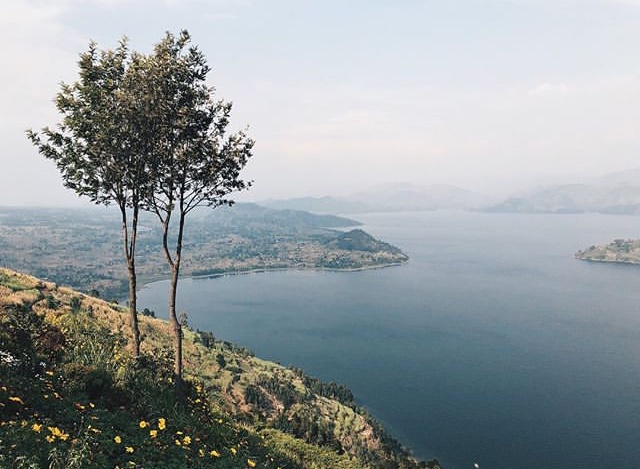
Beyond the palace walls, the landscape is pure Rwanda—rolling hills covered in lush greenery, the kind of scenery that has defined this country for centuries. The air is cool and still, the kind of quiet that makes time feel slower. Nyanza isn’t a place for hurried visits; it’s somewhere to linger, to sit on a bench and watch the light change over the hills, to let the weight of history settle in. It’s a reminder that Rwanda’s past isn’t just something to read about in books, but something that can still be felt, if you know where to look.
Rukari won’t dazzle you with its size or splendor. It’s not a place that demands attention, but one that rewards those who take the time to understand it. For anyone curious about Rwanda’s culture, this museum offers something rare: a chance to step into the past without the filter of modern interpretation. It’s a place where history isn’t just preserved—it’s still breathing.