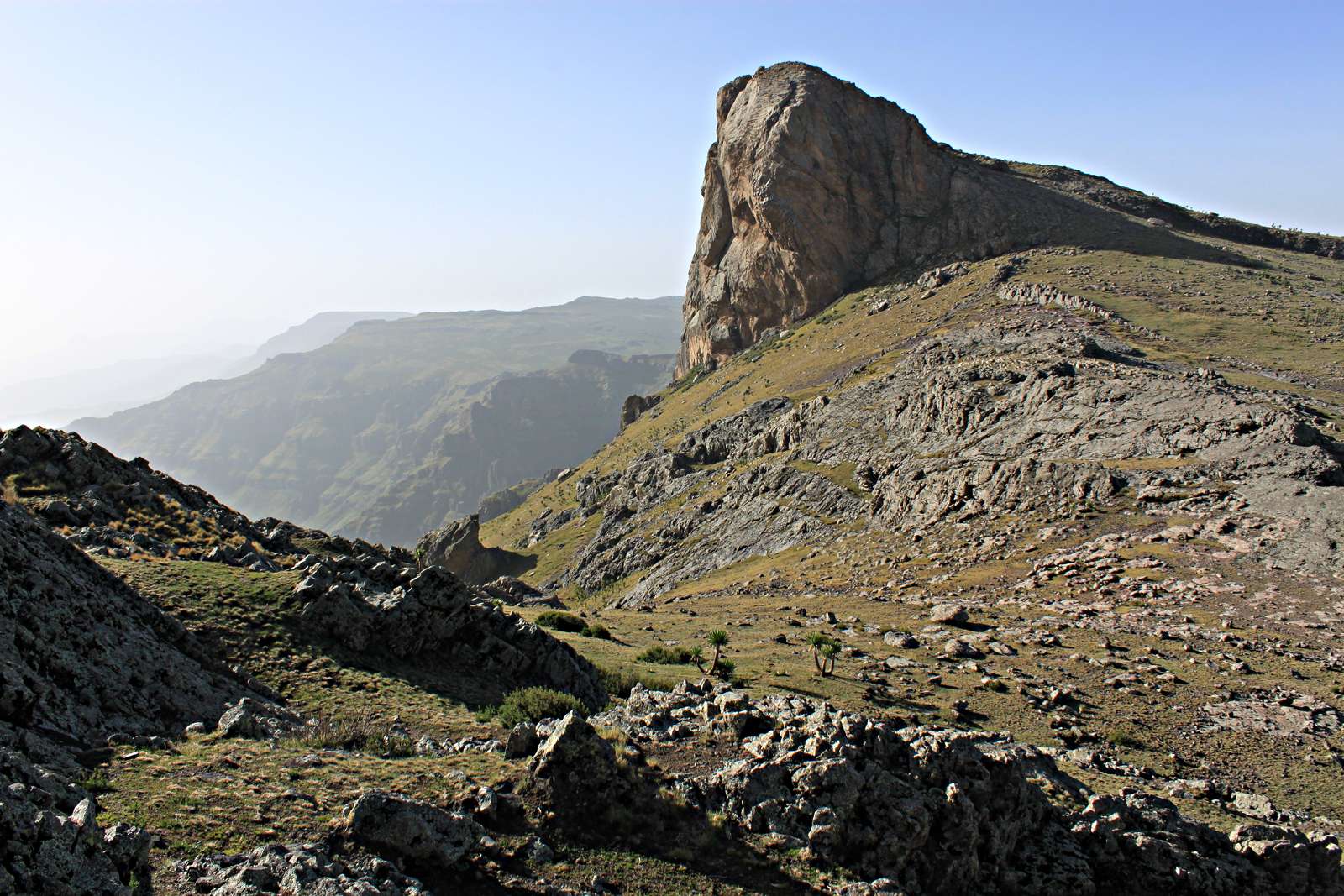
Abuna Yosef rises in the northern highlands of Ethiopia. The land here feels shaped by ancient legends. The slopes are covered in sparse vegetation, adapted to sudden temperature shifts and brief rains that turn trails into rushing streams. There are no crowds, no cafes, no signs. Only wind, stone, and a sense of time moving differently than in the valleys below.
For the Amhara people and others who call these highlands home, Abuna Yosef is part of a sacred landscape. It is named after Saint Yosef, one of the Nine Saints who arrived in Ethiopia between the fifth and sixth centuries. They brought Christianity to the region. The saint spent years in prayer and solitude among these rocks. Later, his relics were moved to a nearby monastery, but the mountain remains a place of pilgrimage. On certain days, people gather at its base, leaving woven ribbons, grains of wheat, or candles.
The climb up Abuna Yosef is about stepping into a different rhythm. The trail begins in small villages where farmers tend terraced fields carved into the slopes centuries ago. The plots yield teff, barley, and flax. Those you meet—herders, women carrying firewood—greet strangers with quiet warmth. They navigate the paths even when fog reduces visibility to a few meters.
The summit reaches just over four thousand meters. On clear days, the Simien Mountains come into view, home to geladas and walia ibex. Below, tiny villages dot the valleys, their clay huts scattered like mushrooms. More often, the peak is shrouded in clouds. Then, it feels like standing at the edge of the world.
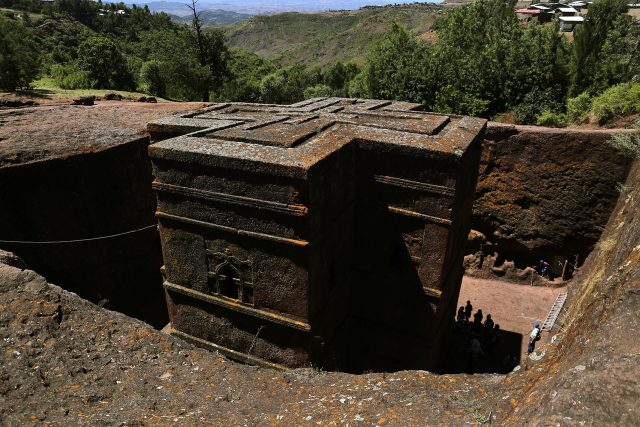
There are few landmarks on Abuna Yosef. A monastery, tucked into one of the slopes, is said to date back to the Aksumite era. Its walls are built from roughly hewn stone. Inside, faded frescoes depict saints and biblical scenes with local motifs. The monastery is still active. Entry is granted only with the abbot’s permission. Nearby lies a small cemetery where monks and villagers rest beneath simple stone crosses.
Meltwater from Abuna Yosef’s slopes feeds rivers that irrigate the valleys where Ethiopia’s coffee is grown. During the rainy season, the mountain turns green, alive with rushing water and birdsong. Within weeks, the landscape dries under the sun, returning to ochre hues.
Come prepared. There are no hotels or restaurants. A handful of guesthouses in nearby villages offer floors and wool blankets. Food must be brought along or relied upon from locals, who might offer coffee or injera. The water in the streams is clear but best boiled.
Abuna Yosef is not a place to check off a list. It is a mountain for those willing to meet it on its own terms—harsh, quiet, and mysterious. Walking its slopes, you wonder how many generations have passed this way, how many prayers have been carried on this wind, how many stories remain untold.