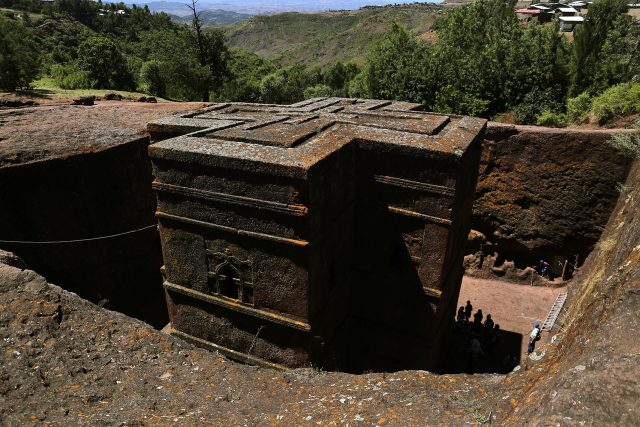
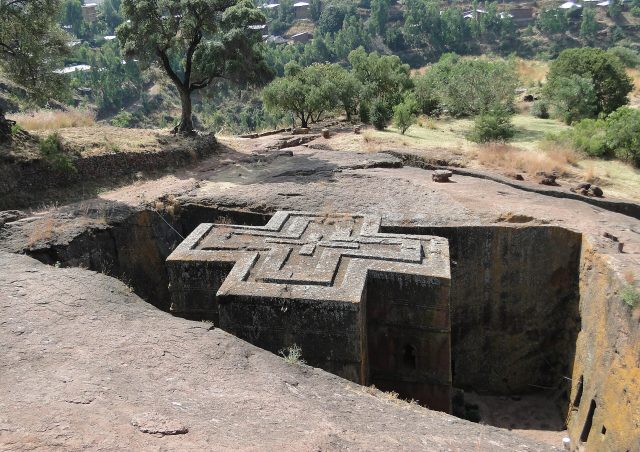
Bet Daniel Church in Kobo is one of those quiet places that rarely make it into guidebooks but linger in memory long after you’ve left. Tucked away on the edge of a small town in northern Ethiopia, it stands where the rugged highlands give way to arid plains, where life moves at the unhurried pace of rural days. Kobo itself isn’t a tourist hub—there are no bustling markets or luxury hotels, just the kind of stillness broken only by the braying of donkeys or the occasional honk of a passing truck. In this setting, the church isn’t just a place of worship; it’s woven into the fabric of daily life, as much a part of the landscape as the dusty paths and clay houses that surround it.
Like all Ethiopian Orthodox churches, Bet Daniel belongs to one of the oldest Christian traditions in the world, with roots stretching back over fifteen centuries. While the exact age of this particular church isn’t recorded, it’s clearly stood here for generations. Ethiopian Orthodoxy isn’t just a religion here—it’s the foundation of culture, shaping everything from architecture to the rhythm of the year. Churches in this country were often built in remote or elevated places, perched on hilltops or hidden in gorges to protect them from invaders and preserve their sacred relics. Bet Daniel isn’t surrounded by towering cliffs, but reaching it still feels like a small pilgrimage. You walk through the heart of Kobo, past low-slung houses and sunbaked trails, until the church comes into view, unassuming yet deeply rooted in its surroundings.
The architecture is classic Ethiopian—circular in shape, with a conical thatched roof and heavy wooden doors carved with simple, time-worn patterns. Inside, the walls are covered in faded frescoes depicting biblical scenes and the lives of saints, their colors dulled by the years. In places, the plaster has crumbled away, revealing the raw clay beneath. Unlike in many parts of the world, Ethiopian churches aren’t restored to pristine condition. The wear and tear are seen as part of their spiritual character, a testament to their endurance. The altar is separated from the main hall by a curtain, behind which priests conduct services in Ge’ez, the ancient liturgical language. Outside, old trees cast shade over the courtyard, and low stone walls, built without mortar in the traditional way, encircle the grounds.
For the people of Kobo, Bet Daniel is more than a place to pray. It’s where baptisms, weddings, and funerals take place, where religious festivals are celebrated, and where neighbors gather to talk on ordinary days. The church is especially lively during Timkat, the most important holiday in the Ethiopian Orthodox calendar, when processions wind through the town with singing and dancing. In Kobo, the celebrations are smaller than in Addis Ababa or Lalibela, but no less meaningful. People dress in white, priests don their brightest vestments, and the air fills with the sound of drums and chanting. It’s a reminder that faith here isn’t confined to Sundays—it’s a living, breathing part of everyday existence.
Despite its significance, Bet Daniel hasn’t been turned into a museum piece. Anyone can step inside, but few outsiders ever do. Kobo lies far from the usual tourist routes, and getting here takes effort. The journey from the capital can take days, with unreliable transport and rough roads. Those who make the trip usually aren’t chasing landmarks—they’re seeking a glimpse of Ethiopia as it’s truly lived, where religion and daily life are inseparable. In that sense, the church isn’t just a place of worship; it’s a window into a culture where time moves differently.
The land around Kobo is where teff, the grain used to make Ethiopia’s staple flatbread, injera, is grown. Farmers tend their fields and graze livestock on the hillsides, while women carry water from wells in clay jars. Life here moves slowly, and even church services last longer than they might elsewhere. Priests chant prayers in a rhythmic cadence, the congregation responds in unison, and afterward, people linger in the courtyard, sharing news and drinking coffee. The Ethiopian coffee ceremony is a ritual in itself, often lasting hours, and it’s not uncommon for it to take place right outside the church, with freshly roasted beans passed among friends and neighbors.
Bet Daniel doesn’t impress with the grandeur of European cathedrals or the opulence of Middle Eastern mosques. Its strength lies in its simplicity and authenticity. There’s no gold leaf, marble, or stained glass—just the quiet presence of something far older. It’s a place where you can feel the weight of history, not as something preserved behind glass, but as a living force that shapes the rhythms of the present. In an age where many religious sites have become tourist attractions, Bet Daniel remains a place where faith is still part of the fabric of life, untouched by commercialization.
If you ever find yourself here, take your time. Sit on one of the stone benches by the entrance, listen to the wind rustling through the trees, and watch the locals who come not for photos, but to be near something enduring. Maybe then you’ll understand why places like Bet Daniel don’t need fanfare or signs. They exist quietly, as life does in these mountains—steady, unhurried, and deeply real.