Nuwara Eliya has long been called Sri Lanka’s Little England, and few places capture that spirit as vividly as the Nuwara Eliya Golf Club. Tucked into the misty highlands nearly two thousand meters above sea level, the club feels like a fragment of Britain transplanted into the tropics. The air is cool and damp, the mornings often shrouded in fog, and the rolling greens stretch out like something from a Scottish moor. It’s easy to forget you’re in South Asia when the scent of freshly cut grass mixes with the faint aroma of tea drifting up from the surrounding plantations.
The club was founded in the late 19th century by British colonial officials and military officers who sought refuge from the heat of the lowlands. For them, Nuwara Eliya was a hill station—a place to escape the sweltering coast and recreate a piece of home. Golf was part of that escape. The original course, laid out in the 1880s, was a modest nine holes, but it soon expanded to a full eighteen, becoming one of the oldest golf courses in Asia. The game here was never just about sport; it was a way to preserve a familiar rhythm of life, a connection to the empire that shaped the island.
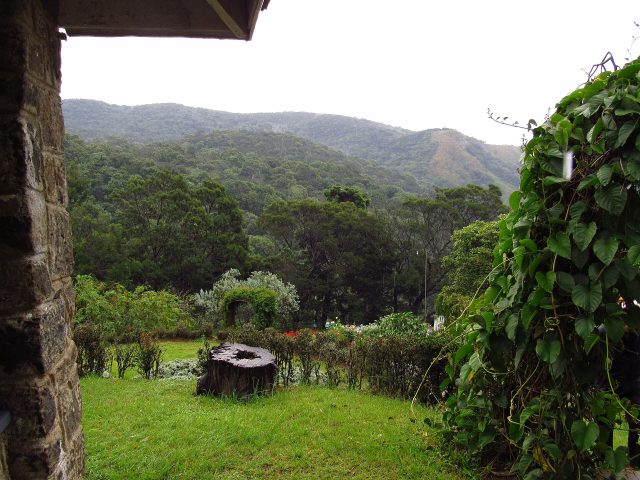
The course itself is a study in contrasts. Unlike the sunbaked fairways of coastal Sri Lanka, the grass here is soft underfoot, kept lush by the cool climate and regular rainfall. The greens and fairways were originally planted with turf imported from England, and even now, the meticulous upkeep reflects the standards of British clubs. The terrain is undulating, with each hole offering a different perspective—one moment you’re looking out over Lake Gregory, its still waters reflecting the surrounding hills; the next, you’re facing a steep incline lined with orderly rows of tea bushes. The wind is a constant companion, bending shots in unexpected directions, while the thin mountain air can make a drive feel longer than it should.
The clubhouse is where the past feels most tangible. Built in the Victorian style, it has the kind of grand verandas and high ceilings that evoke a bygone era. Inside, the walls are lined with black-and-white photographs of mustachioed British officers mid-swing, their clubs raised against a backdrop of colonial bungalows. Trophies from long-ago tournaments gather dust on shelves, and the furniture—dark wood, leather armchairs—has the patina of age. The bar serves tea in porcelain cups, accompanied by biscuits, just as it might have a century ago. In the evenings, the hum of conversation blends with the clink of glasses, as locals and visitors alike linger over whiskey or gin, swapping stories of the day’s play.
Golf here is as much about the setting as the game. The course is woven into the landscape, so that every swing comes with a view—whether it’s the emerald slopes of Pidurutalagala, Sri Lanka’s highest peak, or the red-tiled roofs of old British villas peeking through the trees. The conditions demand patience; the wind can turn a perfect shot into a frustrating one, and the elevation means clubs don’t behave as they would at sea level. But that’s part of the charm. Regulars know the course’s quirks intimately, and they’re usually happy to share advice with newcomers, whether it’s how to read the grain of the green or which club to use on the notoriously tricky seventh hole.
The club isn’t just for golfers. Non-players often wander the grounds, soaking in the atmosphere. The manicured lawns are perfect for a leisurely stroll, and the clubhouse veranda is an ideal spot to watch the game unfold while sipping tea. Some visitors come for lessons, others to rent clubs and try their hand at a round, but even those who have no interest in golf find something to appreciate. The history is palpable, from the weathered scorecards in the pro shop to the way the light filters through the trees in the late afternoon.
In recent years, the club has become a popular venue for weddings and corporate events, its colonial elegance providing a picturesque backdrop. But its real appeal lies in its ability to transport visitors to another time. Nuwara Eliya was built as a retreat for the British, a place where they could pretend, if only for a while, that they were still in the motherland. The golf club was central to that illusion, and in many ways, it still is. Walking its fairways or sitting on the clubhouse terrace, it’s not hard to imagine the officers and civil servants who once gathered here, their voices mingling with the sound of clubs striking balls.
For travelers, the club offers a different side of Sri Lanka—one far removed from the beaches and temples that dominate most itineraries. There are no palm trees here, no golden sands, no ancient ruins. Instead, there’s the quiet beauty of the highlands, the sense of stepping into a living postcard from the colonial era. Whether you play a round or simply wander the grounds, the Nuwara Eliya Golf Club is a reminder of how the past lingers in unexpected places. It’s not just a golf course; it’s a piece of history, preserved in the hills like a secret waiting to be discovered.