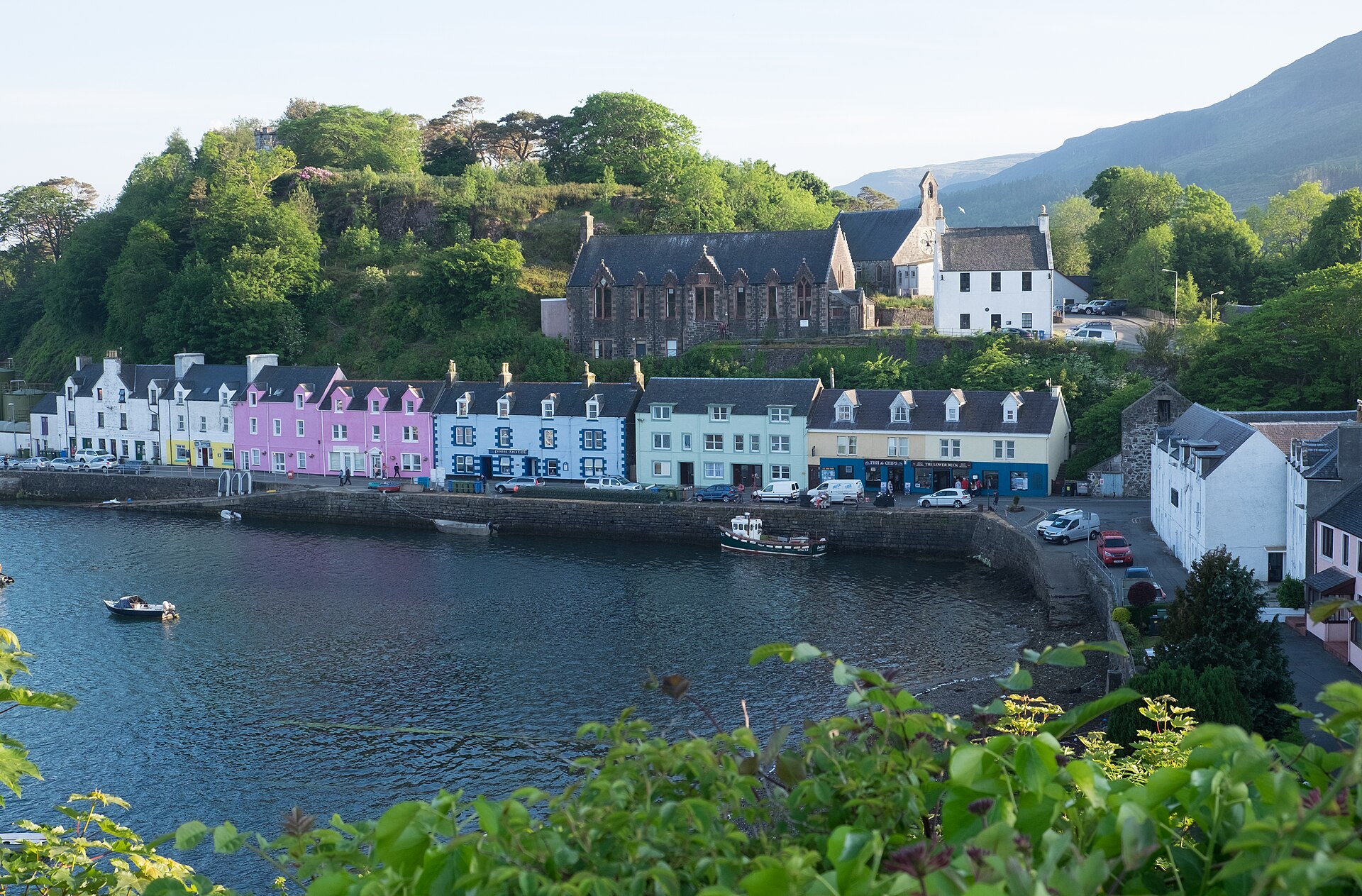
Portree’s harbour is the kind of place that makes you slow down without realising it. There’s nothing grand about it—no towering cranes, no neon signs competing for attention. Instead, it feels quietly alive: a cluster of pastel-coloured houses huddled close to the water, narrow lanes winding between them, and fishing boats rocking gently with the tide. It’s not a place you come to for a checklist of sights, but somewhere to linger, to watch the light change over the bay or duck into a tiny shop selling hand-knit socks and jars of local honey.
The harbour’s story is woven into Portree’s own. For centuries, this was a fishing village, its fortunes tied to the sea. By the 18th century, it had grown into a trading hub, with herring, salmon, wool, and livestock passing through its docks. Sailboats once crowded the waterfront, and the harbour saw fishermen unloading their catch, merchants haggling over prices, and sailors preparing for long voyages. Today, the old warehouses have been repurposed into cafés and shops, but the past is still there: in the weathered stone walls, the rusted mooring rings, and the way the buildings lean slightly, as if tired from centuries of salt and wind.
The architecture here tells its own story. The houses, painted in soft blues, pinks, and yellows, stand so close to the water that at high tide, they almost seem to float. Their facades are simple. Many date back to the 19th century, when Portree became a retreat for artists and writers drawn to the Scottish Highlands. Some still have their original wooden shutters or faded shop signs from businesses long gone.
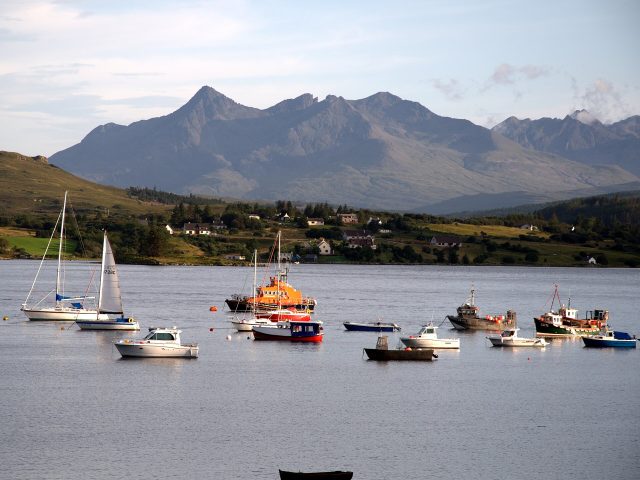
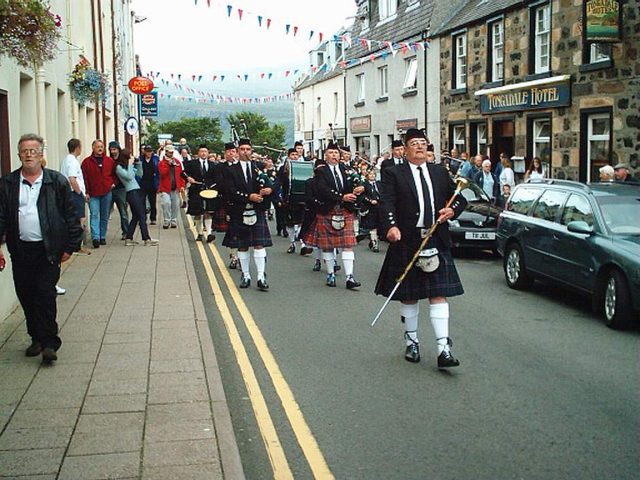
The water is a gateway to the rest of Skye. Boats leave for nearby islands like Raasay or Rona, where seals bask on rocks and ancient Celtic crosses stand against the wind. On clear days, the Cuillin mountains rise in the distance. In summer, the harbour has small markets, where locals sell handmade crafts and musicians play traditional tunes. Winter brings the sound of waves lapping against the pier and the scent of peat smoke drifting from chimneys.
One of the things you notice first about Portree is the light. It’s softer here, diffused by the sea air. Mornings bring a golden glow over the water. Evenings are quieter, the harbour lights reflecting on the still surface. If you’re lucky, you might catch a rainbow after one of the frequent showers—on Skye, the weather is as much a part of the landscape as the mountains or the sea.
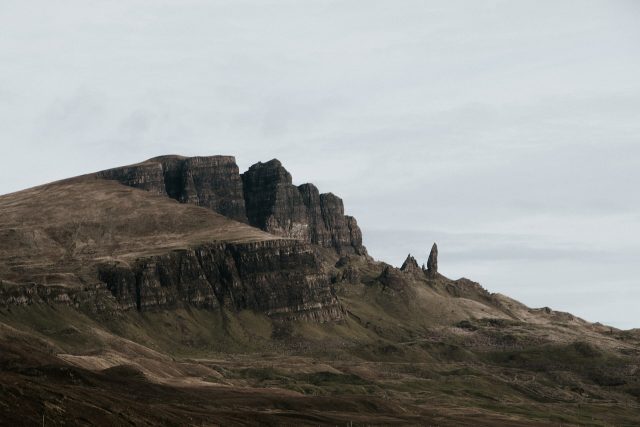
The harbour is a starting point for exploring the island. From here, you can drive to Dunvegan Castle or to the cliffs of the Storr, where seabirds nest in the crags. But many people never make it that far. Instead, they wander the narrow streets leading away from the water, past stone walls and hidden gardens, where the scent of burning peat lingers in the air.
What makes Portree’s harbour special is the way it all fits together. The rain, when it comes, softens the edges of the buildings and mutes the sounds. Locals go about their day: fishermen mending nets, café owners serving bowls of steaming soup, children skipping stones across the water.
If you ever find yourself on Skye, spend a day here—walk the harbour, browse the little shops, have a cup of tea in a café with a view of the bay. Places like this don’t need to shout. They’re where the real Scotland still exists: in the way the light hits the water, in the stories etched into the old stone walls, in the quiet moments that stay with you long after you’ve left.