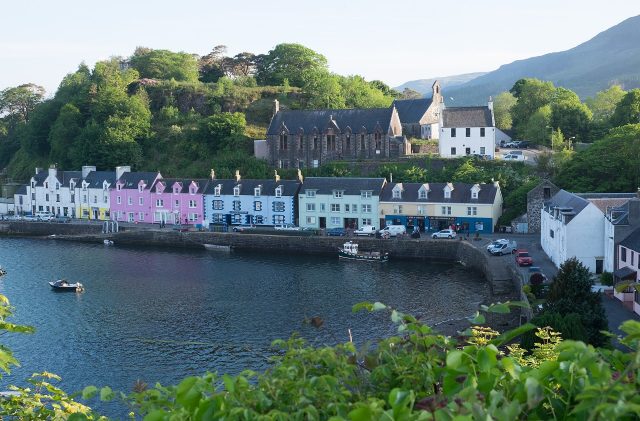
Portree’s Skye Museum is one of those quiet places where history doesn’t just sit behind glass—it breathes. Tucked away in the island’s largest settlement, the museum occupies an old stone warehouse built in the early 1800s, when Portree was a bustling port connecting Skye to the wider world. The building itself feels like a relic, with its thick walls, creaking floorboards, and low ceilings that seem to press down just enough to make you feel the weight of the past. There’s no grand entrance or flashy displays here, just a collection of ordinary objects that tell the story of how people lived, worked, and endured on this windswept island.
The exhibits are arranged in a way that mirrors the rhythms of island life. One section focuses on fishing, which for centuries was the backbone of Skye’s economy. You’ll find weathered boats, patched nets, and tools worn smooth by generations of hands. There are also personal items—pocketknives, oilskin jackets, even a sailor’s diary with entries about storms and near-misses at sea. These aren’t just artifacts; they’re fragments of lives spent battling the unpredictable waters of the Minch and the Atlantic. The museum doesn’t romanticize the work, either. A display of salt-crusted boots and rusted hooks makes it clear how harsh and uncertain life at sea could be.
Another room is dedicated to weaving, a craft that once defined Skye’s reputation. The island was known for its tweed, and the museum preserves some of the old looms that produced it. The patterns woven into the fabric aren’t just decorative—they carry meanings tied to Gaelic culture, with designs that might represent a family’s history or a particular landscape. Nearby, you’ll see tools from another essential trade: farming. Scythes, wooden ploughs, and hand-forged nails hint at the backbreaking labor required to coax crops from Skye’s thin soil. It’s a reminder that survival here depended on both land and sea, and that every family had to master multiple skills just to get by.
The museum also delves into the island’s clan history, which shaped Skye long after the rest of Scotland had moved on. This was one of the last strongholds of Gaelic culture, where loyalty to a chief still meant something tangible. The displays include tartans, clan badges, and documents outlining old land disputes—some of which turned violent. There’s a collection of weapons, too: broadswords, pistols, and a few rare claymores, their blades darkened with age. These aren’t just relics of battle; they’re symbols of a social order where honor and kinship were everything. The museum doesn’t shy away from the darker side of this history, either. A section on the Highland Clearances and the Great Famine of the 1840s shows how quickly that world could unravel. Letters from emigrants, yellowed with age, describe the heartbreak of leaving, while photographs of abandoned cottages speak to the emptiness left behind.
What makes the museum feel alive, though, is the way it’s run. There are no ropes keeping you from getting too close to the exhibits, and the staff—many of whom are locals with deep roots on the island—don’t just recite facts. They’ll hand you a piece of tweed to feel its weight, or point out the initials carved into a fisherman’s tool by someone’s great-grandfather. They’ll tell you about the smugglers who once hid contraband in Portree’s caves, or the ghost stories still whispered about sailors lost at sea. These aren’t the polished narratives you’d find in a textbook; they’re the kind of stories passed down over kitchen tables, where the line between history and legend blurs.
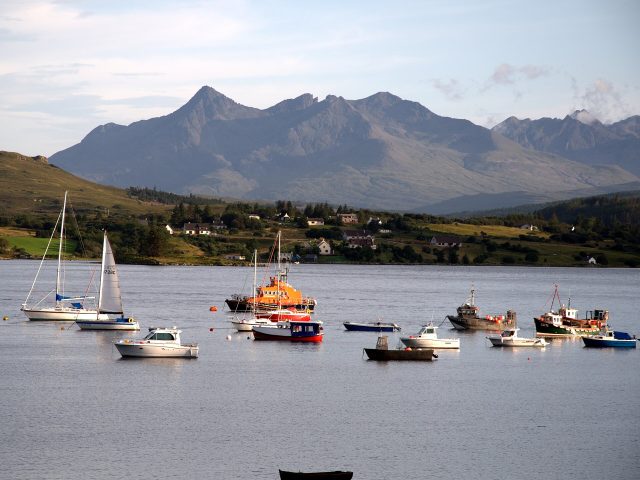
The museum doesn’t try to impress with scale or spectacle. Instead, it does something rarer: it makes the past feel immediate. You leave with the sense that the people who lived here weren’t so different from those who still do—they just had fewer modern conveniences. The same winds still howl across the Cuillins, the same tides still shape the coastline, and the same stubbornness is required to call this place home. That’s the real draw of the museum: not the artifacts themselves, but the way they connect you to the island’s enduring spirit. It’s not a place for grand gestures or dramatic revelations. It’s simply a record of how life was lived, and how it still is.