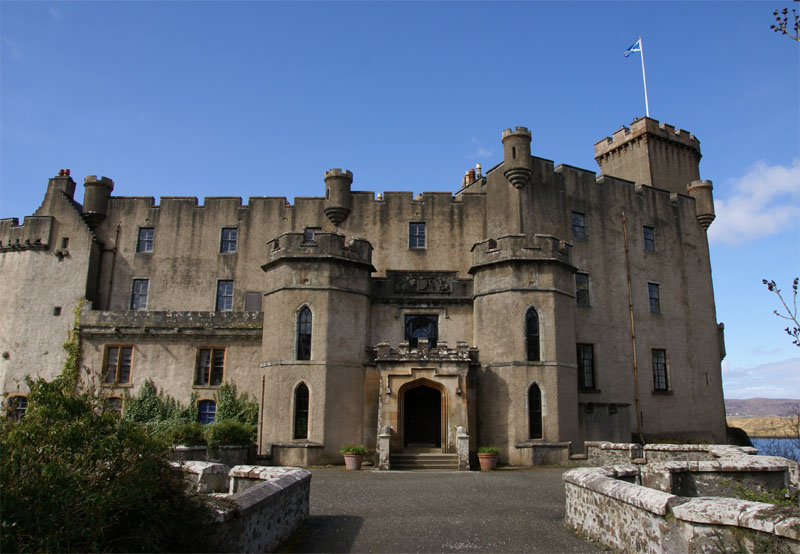
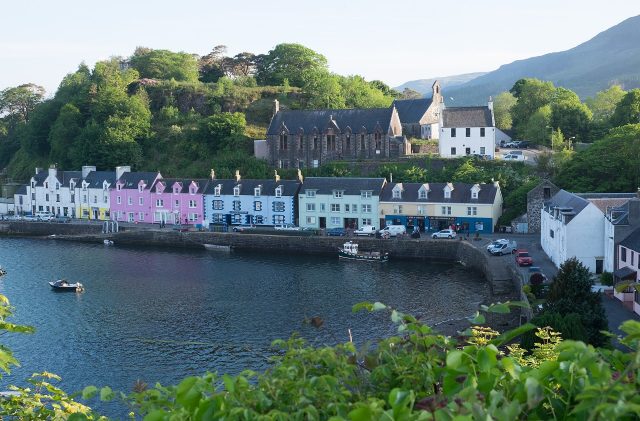
Perched on a rocky shore where the land meets the restless waters of Loch Dunvegan, the castle has stood for eight centuries as a silent witness to the rise and fall of clans, the shifting tides of power, and the quiet dramas of family life. Unlike many fortresses that have been hollowed out into museums, Dunvegan remains a living home. The MacLeods, one of Scotland’s oldest and most storied clans, still reside within its walls, and while parts of the castle are open to visitors, the sense of habitation lingers in the air—half-finished cups of tea left on side tables, the faint creak of floorboards underfoot, the occasional glimpse of a family portrait that hasn’t been dusted in decades.
The architecture tells its own story, a patchwork of eras stitched together by necessity and ambition. The oldest part, Dunvegan’s keep, dates back to the 13th century, a squat, formidable tower built to withstand sieges and storms. Over the centuries, the castle expanded outward, its defenses softened by time and changing fortunes. What was once a fortress surrounded by water on three sides became a fortified manor, then a grand residence with Gothic flourishes and Renaissance touches. The result is a building that feels less like a single structure and more like a conversation between generations—each addition a response to the needs of its time, whether for protection, comfort, or prestige.
Inside, the past is preserved in layers. Heavy oak beams sag slightly under the weight of centuries, their dark grain worn smooth by generations of hands. Plaster ceilings, once ornate, now bear the faint scars of time, their intricate patterns dulled but not erased. The Great Hall, with its long table and flickering firelight, still feels like the heart of the castle, a place where decisions were made and alliances forged. Here, the clan’s relics are displayed like trophies of a bygone era: a tattered banner, a rusted sword, a silver cup passed down through the ages. These objects are more than artifacts; they are fragments of a story that refuses to end.
Among them, the Fairy Flag holds a place of its own. According to legend, it was a gift from the fairies to a MacLeod chief who saved one of their children. The flag, a fragile scrap of silk, was said to possess the power to turn the tide of battle—but only three times. It has already been unfurled twice, and now rests under glass, its magic dormant but not forgotten. Some dismiss the tale as mere folklore, a medieval marketing ploy to bolster the clan’s reputation. Others swear by its power, pointing to the MacLeods’ survival through centuries of feuds and wars as proof. Whether myth or reality, the flag adds a layer of mystery to Dunvegan, a whisper of the unseen that lingers in the stone corridors.
Beyond the flag, the castle is a treasure trove of history. The library holds manuscripts that trace the clan’s lineage back to the misty origins of the Scottish Highlands, their pages filled with names and dates that once meant life or death. The armory bristles with weapons that saw real battles, their edges still sharp enough to draw blood. The silver collection, gleaming under the dim light, includes goblets gifted by kings and nobles, each one a token of loyalty or a bribe for favor. These objects are not just relics; they are witnesses. They have seen betrayals and triumphs, heard whispered confidences and roared defiance, and now they sit in silence, their stories waiting to be rediscovered.
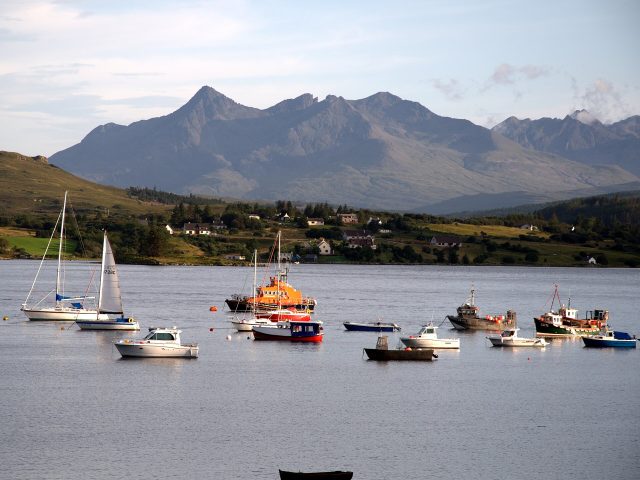
Outside the castle walls, the landscape feels just as steeped in history. The land slopes gently toward the loch, where the water shifts from glassy calm to churning gray depending on the weather. The MacLeods once held sway over much of Skye, and their influence lingers in the names of hills and glens, in the old paths that crisscross the moors. A walk along the shore might reveal the ruins of a crofter’s cottage, its stones long since reclaimed by the earth, or a standing stone, its purpose forgotten but its presence undeniable. The air carries the scent of salt and heather, and the wind carries the sound of waves breaking against the rocks—a rhythm as old as the castle itself.
What makes Dunvegan different from other historic sites is its refusal to become a relic. There are no costumed guides here, no staged reenactments, no gift shop hawking plastic swords. The castle is not a theme park version of the past; it is the past, still breathing. The floors creak underfoot, the fireplaces crackle with real wood, and the scent of old books and damp stone is not artificially piped in. Even the gardens, with their carefully tended herbs and flowers, feel like a living extension of the castle’s history. These were not just decorative spaces but practical ones, where plants were grown for medicine, food, and dye. The knowledge of how to use them was passed down through generations, a quiet tradition that continues in small ways even now.
For many visitors, the appeal of Dunvegan lies in this sense of continuity. It is a place where the line between past and present blurs, where the stories of the MacLeods feel as immediate as the sound of footsteps in the hallway. You don’t need to be a history buff to feel the weight of the place. There is something about standing in a room where real lives were lived, where real decisions were made, that transcends the need for dates and facts. It is the difference between reading about a battle and standing on the ground where it was fought—the difference between knowing a story and feeling it.
The castle is still very much a family home, and that intimacy is part of its charm. Some rooms are off-limits to visitors, their doors closed but not locked, as if the inhabitants might return at any moment. The gardens are tended with care, the paths swept clean of leaves. In the summer, the scent of roses mingles with the salt air, and the sound of laughter from a family gathering drifts through the open windows. It is easy to imagine the MacLeods here, not as figures from a history book but as people—arguing over politics, celebrating a birth, mourning a loss. The castle has seen it all, and it carries those memories in its stones.
Dunvegan is not just a destination; it is an experience. It doesn’t offer grand spectacles or polished narratives. Instead, it offers something rarer: a sense of connection. To the land, to the people who shaped it, to the stories that refuse to fade. Whether you come for the history, the legends, or simply the quiet beauty of the place, Dunvegan leaves its mark. It is a reminder that the past is not as distant as we think—that in some places, it is still alive, waiting to be discovered.