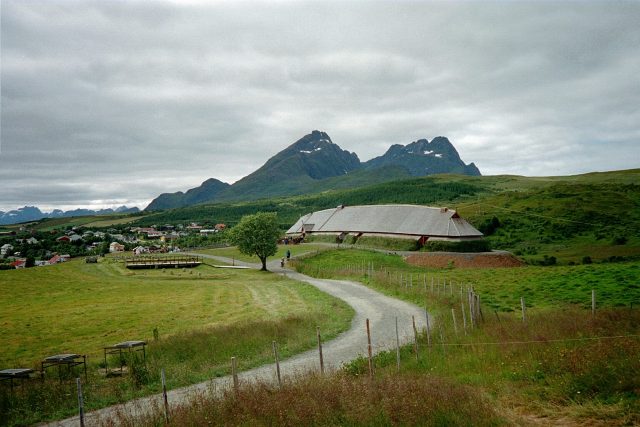
Båstad’s harbor is where Norway reveals itself in its most unfiltered form—raw, quiet, and a little mysterious. There are no crowds here, no bustling promenades lined with cafés or souvenir shops like in Oslo or Bergen. Instead, the scene is simple: a narrow fjord framed by steep cliffs, a handful of fishing boats tied to the dock, and houses scattered across the hillside as if they were built in a hurry and then forgotten for decades. This isn’t a harbor that boasts grand history or striking architecture. Its charm lies in its unassuming nature, in the way it carries on with life at its own slow, steady pace. If you find yourself here, even briefly, it feels less like visiting and more like stepping into a rhythm that has existed for generations.
The harbor itself is small but well-sheltered, carved into the shoreline by natural rock formations that shield it from wind and waves. The water is always cold, even in summer, but so clear you can see the stones on the seabed and the occasional fish drifting lazily beneath the surface. The dock is made of weathered wood, darkened by salt and time, yet sturdy enough to have served fishermen for years. A few boats are usually moored here—old fishing vessels with peeling paint, the occasional motorboat belonging to locals, and sometimes a yacht stopping for the day. Together, they create an atmosphere that feels suspended in the mid-20th century, when fishing was still the lifeblood of these coastal communities.
Båstad isn’t a town in the traditional sense. It’s more of a loose collection of houses, maybe a few dozen in total, spread along the fjord and up the surrounding hills. Most are wooden, painted in the classic Norwegian red, white, or yellow, their steep roofs designed to shed snow in winter. Some stand right at the water’s edge, while others cling to terraces carved into the rock. The architecture is practical, not decorative—built to withstand long winters and harsh winds rather than to impress. Yet that very simplicity gives the place its character. Narrow windows, sod-covered roofs, and sturdy foundations speak of a way of life that has always worked with the land, not against it.
The history of Båstad is tied to the sea. For centuries, it was one of many small fishing villages along this coast, where cod, herring, and halibut sustained the community. Even now, when Norway is one of the wealthiest countries in the world, you can still find people in Båstad for whom the sea isn’t just scenery—it’s a way of life. That said, the number of full-time fishermen has dwindled. Younger generations move to cities, and those who stay often work in tourism or cater to the few visitors who come seeking solitude. The harbor remains a working place, but its role has shifted, becoming as much about quiet reflection as it is about livelihood.
What makes Båstad’s harbor special isn’t any single attraction, but the way it invites you to slow down. There are no guided tours, no must-see landmarks, no scripted experiences. Instead, it offers the chance to sit on the dock, watching the water and the mountains, or to walk along the shore, listening to the cry of gulls and the rhythm of the waves. In summer, kayakers might paddle through; in winter, ice fishermen dot the frozen edges of the fjord. But no matter the season, the harbor retains a sense of stillness, a place where you can step away from the noise of the modern world.
The landscape around Båstad is classic Norway—fjords, cliffs, waterfalls, and endless forests. The roads are narrow and winding, often hugging the edge of steep drops, so driving here requires patience. But that’s part of the appeal. The routes take you past tiny villages where life seems untouched by time, past farms where sheep graze on hillsides, past lakes so clear they mirror the sky. If you’re here in winter, you might catch the northern lights, though they’re fainter here than in Tromsø or the Lofoten Islands. Still, on a clear night, the sky can glow with an eerie, shifting light, adding another layer to the sense of remoteness.
Life in Båstad moves at its own pace. Mornings often begin with a local heading down to the harbor to check on a boat or sip coffee by the water. During the day, you might see a few visitors who’ve driven in from nearby towns, but by evening, they’re usually gone, and the harbor returns to its quiet state. Sunset is particularly beautiful here—the light turns the water gold and pink, and the air carries the scent of salt and pine. If you’re lucky, you might hear someone playing guitar or singing an old Norwegian folk song. The locals still gather, especially on weekends, keeping traditions alive in a place where time feels less like a rush and more like a companion.
This isn’t a destination for those seeking luxury or entertainment. There are no five-star hotels, no Michelin-starred restaurants, no designer boutiques. But if you’re tired of the hustle and want to experience Norway as it truly is—not the postcard version, but the quiet, everyday reality—then Båstad’s harbor is one of those rare places where you can do just that. There’s nothing here but the sea, the mountains, a handful of houses, and people who understand the value of silence. That’s why those who visit once often return. Not for sights or attractions, but for the sense of peace that’s so hard to find elsewhere.