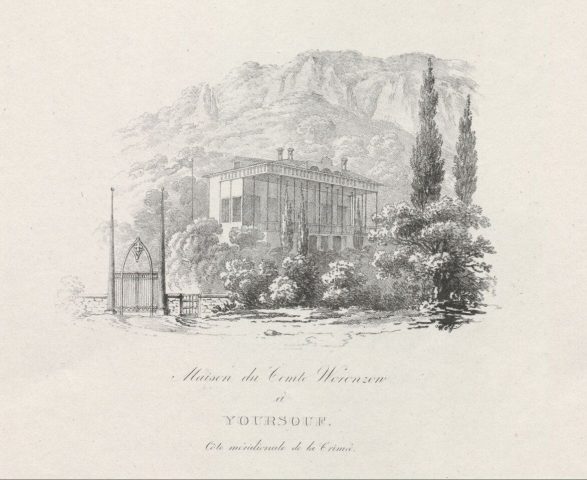
Gurzuf’s park, often called Gagarin Park after the Soviet cosmonaut, feels like a quiet corner of the Crimean coast where time moves at its own pace. Unlike the bustling promenades of nearby resorts, here the only sounds are the rustling of leaves and the distant murmur of the sea. The park sprawls across a hillside, descending toward the shore in a way that makes it seem as if it has always been part of this landscape—peaceful, intimate, and just a little mysterious.
Its story begins in the mid-19th century, when these lands belonged to Prince Alexander Golitsyn, a man of refined tastes and a passion for horticulture. He envisioned more than just a garden; he wanted a place where nature and architecture could exist in harmony. To bring his idea to life, he brought in skilled gardeners and landscape architects, who transformed the wild slope into a carefully designed space. Over time, winding paths, fountains, grottoes, and pavilions took shape, many of which still stand today, bearing witness to the prince’s original vision.
After the revolution, the park became state property, and in the Soviet era, it was incorporated into a sanatorium named after Yuri Gagarin. The cosmonaut did visit Gurzuf in the 1960s, and though the park now carries his name, locals and visitors still refer to it simply as Gurzuf Park, as if to remind everyone that its history stretches far beyond any single era or figure.
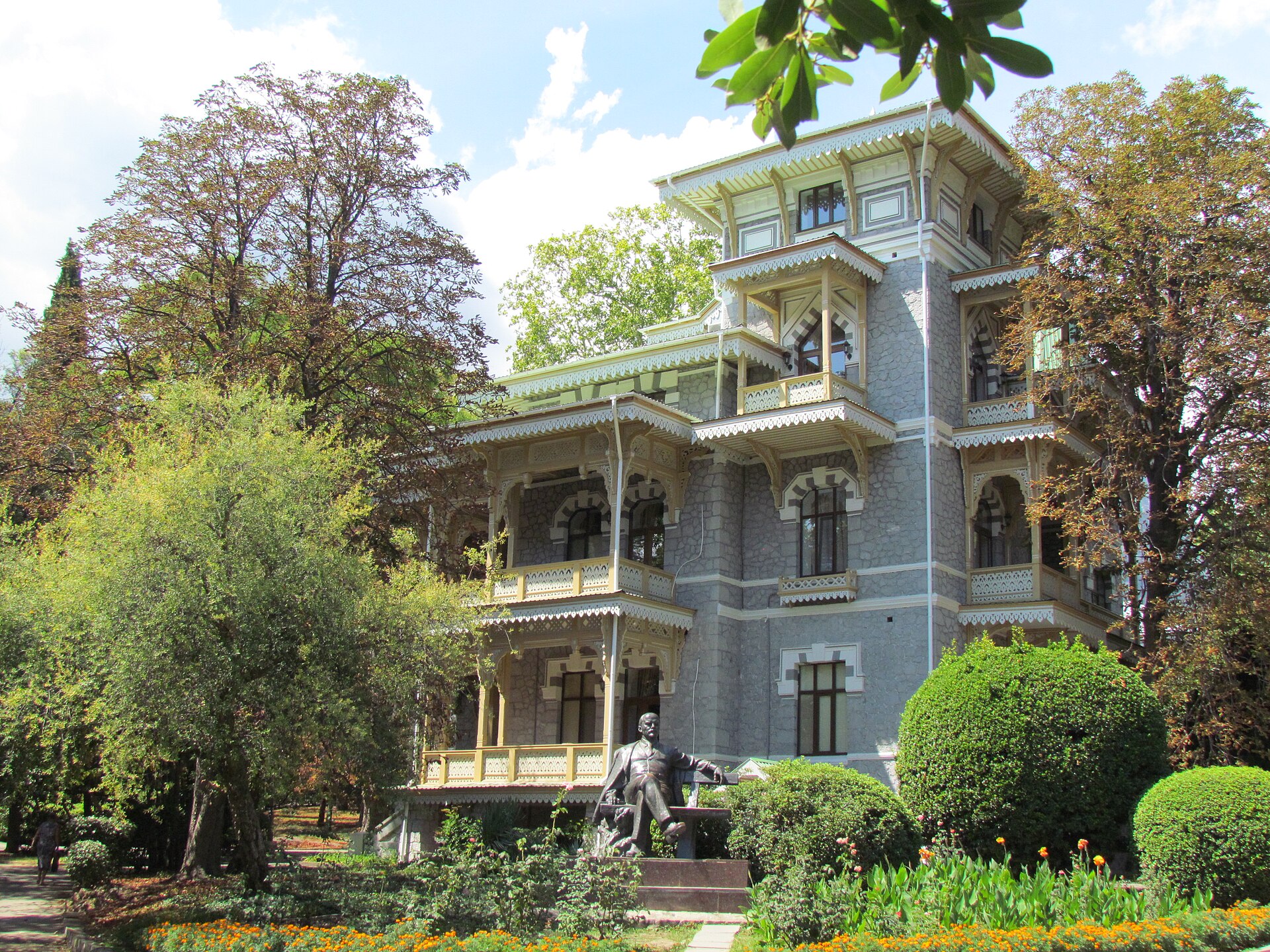
The park’s architecture is a blend of styles and influences, reflecting its layered past. Classical colonnades stand alongside romantic ruins, while small bridges arch over ravines, connecting different parts of the grounds. One of the most striking features is the Roman Grotto, an artificial cave lined with stone and cooled by a small waterfall. On a hot day, the air inside is refreshingly cool, and the space feels suspended in time. Nearby, a rotunda offers a sweeping view of the sea and the iconic Adalary Rocks, a symbol of Gurzuf.
The vegetation here is remarkably diverse. Alongside native Crimean pines, you’ll find exotic plants brought by Golitsyn from around the world—palms, magnolias, cypresses, and plane trees, all thriving in the mild coastal climate. Spring is especially beautiful, when rhododendrons and wisteria bloom, filling the air with fragrance. Summer brings welcome shade, while autumn paints the park in warm golds and reds.
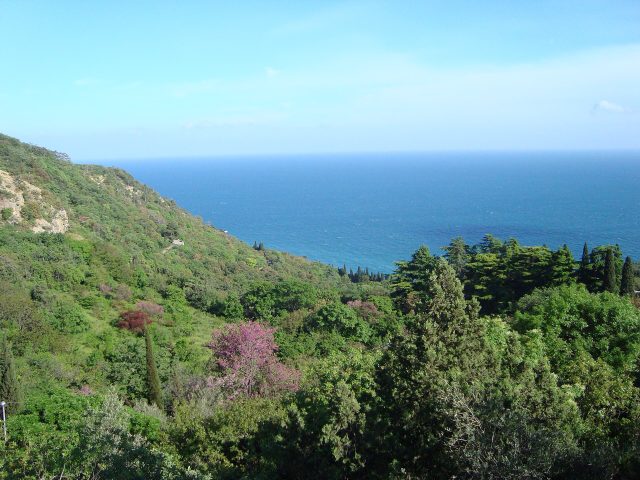
What makes Gagarin Park truly special is its connection to the sea. From various vantage points, the view of the bay is stunning, particularly at sunset, when the water glows in shades of pink and orange. A staircase leads down to the shore, where the pebbled beach invites a swim or a quiet moment listening to the waves. The water is clear, and though the shore is rocky, as it is throughout Gurzuf, that only adds to its charm.
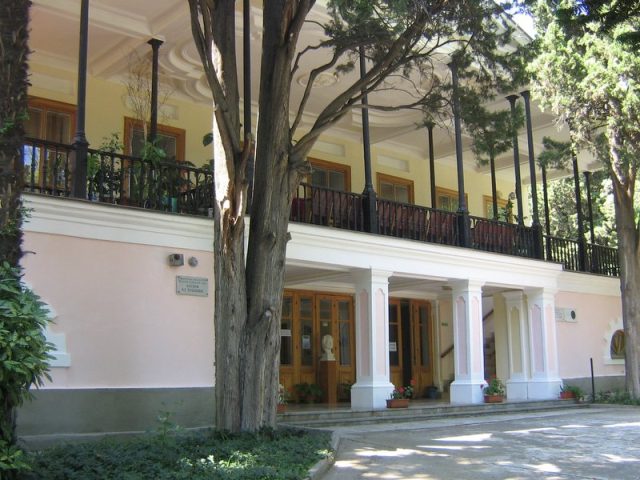
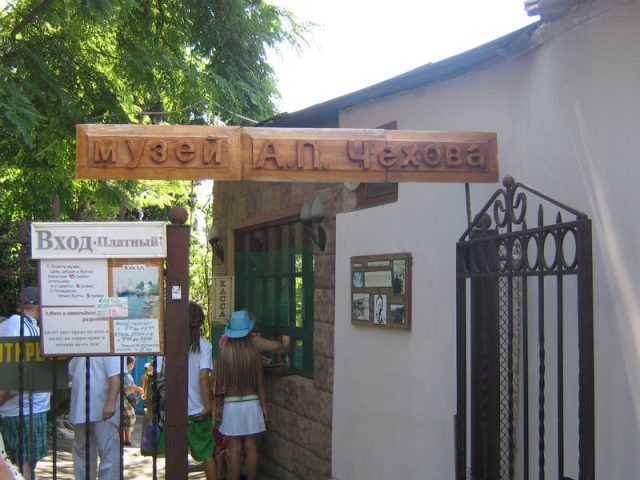
The park has long been a gathering place for artists and thinkers. Anton Chekhov, who came to Crimea for his health, is said to have walked these paths, finding inspiration in the quiet corners. In Soviet times, the park hosted concerts and literary evenings, a tradition that continues today. On any given summer day, you might stumble upon an impromptu art exhibition or a musician playing under the trees.
Today, the park remains open to everyone, even as it sits at the heart of Gurzuf’s resort area. Unlike the crowded promenades of Yalta or the grand estates of Alupka, this place retains a sense of tranquility. There are no tour groups rushing through, no loud attractions—just benches under the trees, where you can sit with a book and lose track of time. The only interruptions are the cries of gulls or the sound of the sea.
Gagarin Park is a place where history and nature intertwine so seamlessly that it’s hard to imagine this hillside was ever anything but a garden. It doesn’t have the formality of Livadia or the symmetry of Vorontsov Palace. Instead, it offers something quieter: hidden corners, unexpected views, and the feeling of stepping into a world that’s entirely your own. That might be why people keep coming back—not for grand sights or entertainment, but for the simple peace it offers.