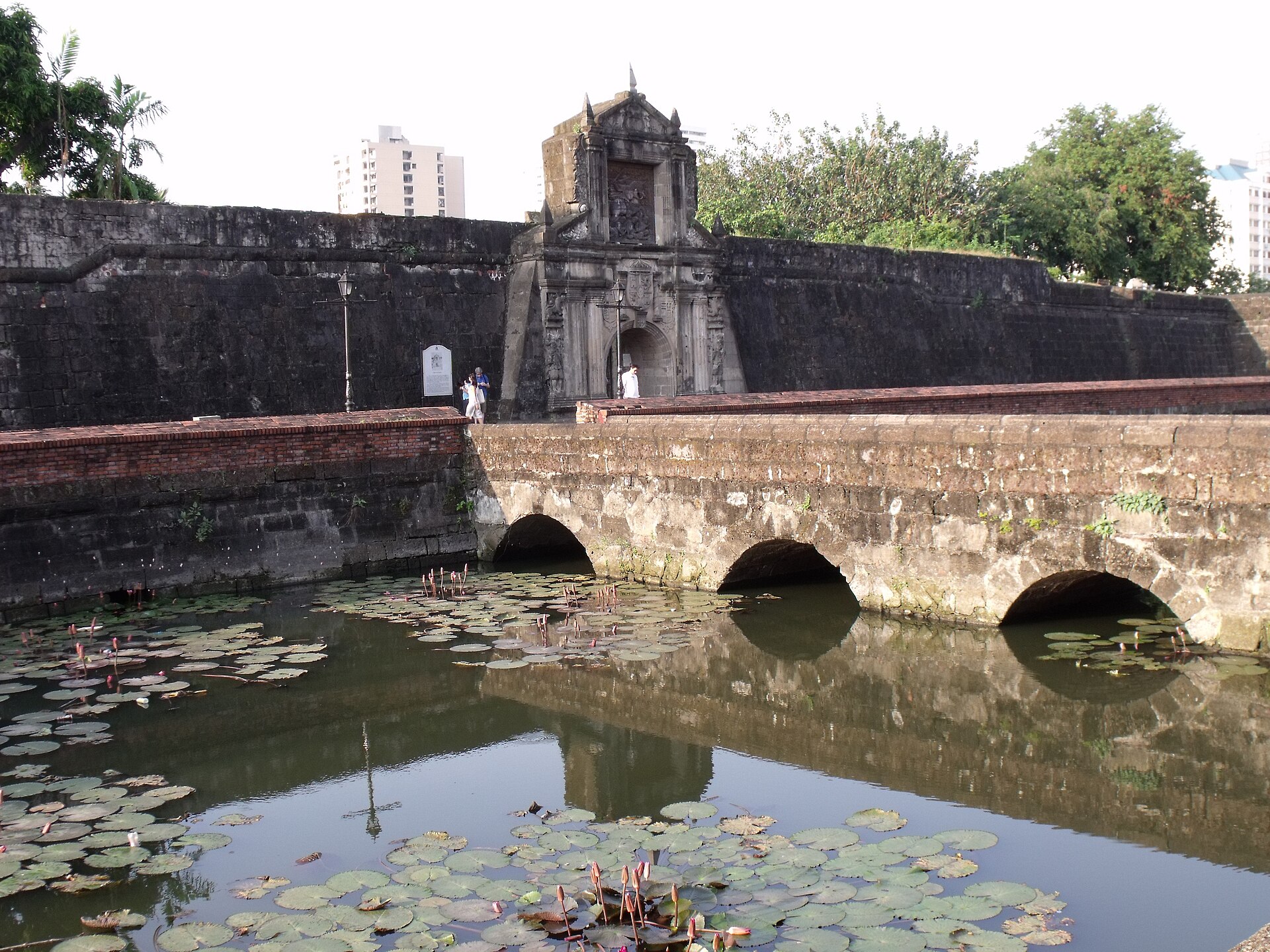
Fort Santiago sits at the edge of the Pasig River in Manila’s Quiapo district, a place where the weight of history feels almost tangible. The air here is different—thicker, somehow, as if the centuries of stories embedded in its walls have settled into the very atmosphere. It’s not just a fortress; it’s a witness. To Spanish rule, to revolution, to war and occupation, and finally, to the slow, uneven process of becoming something new. Walking through its gates, you step into layers of time, each one leaving its mark on the stone and soil.
The fort was built in the late 1500s, not long after the Spanish established Manila as the capital of their colonial ambitions in the Philippines. Miguel López de Legazpi, the conquistador who claimed the islands for Spain, ordered its construction first as a wooden palisade, then later as a more permanent stone structure. The location wasn’t chosen by accident. The Pasig River was the lifeblood of the city, a highway for trade and travel, and controlling its mouth meant controlling access to Manila itself. For the Spanish, Fort Santiago was both a shield and a statement—a way to keep out pirates, rival European powers, and, eventually, the very people they ruled.
The architecture tells its own story. The main gate, with its carved Spanish coat of arms, still stands as a reminder of colonial authority, though the ironwork is now rusted and worn. Beyond it, the courtyard opens up, wide and sunlit, where cannons once pointed toward the river. The ramparts, though crumbling in places, offer a view of the water and the city beyond, the same sight that sentries would have watched centuries ago. Inside, the casemates—thick-walled chambers originally designed for storage—were later repurposed as prison cells. The air in these spaces is cooler, heavier, as if the suffering of those who were held here has seeped into the stone.
The most famous of those prisoners was José Rizal, the writer and nationalist whose execution in 1896 became a turning point in Philippine history. The cell where he spent his final days is now part of the Rizal Shrine, a small but powerful museum dedicated to his life and legacy. The room is sparse, just as it was when he was held there, with only a few personal items on display—a pair of glasses, a pocket watch, the last letters he wrote to his family. His final poem, *Mi Último Adiós*, is here too, written in his own hand. Rizal wasn’t a soldier, but his words became weapons, and his death ignited the revolution that would eventually end Spanish rule. The shrine doesn’t glorify martyrdom; it simply presents the facts, letting the weight of history speak for itself.
World War II brought a different kind of violence to Fort Santiago. When the Japanese occupied Manila, they turned the fort into a prison and interrogation center. The Battle of Manila in 1945 left much of it in ruins, with artillery fire scarring the walls and reducing parts of the structure to rubble. After the war, restoration efforts were careful not to erase these marks of destruction. Today, bullet holes and shell craters remain visible, a stark contrast to the carefully preserved Spanish-era architecture. Memorials scattered throughout the fort honor those who died during the occupation, their names etched into plaques that few visitors stop to read. The stories they tell are quieter now, but no less important.
What’s striking about Fort Santiago today is how it manages to feel both frozen in time and very much alive. The inner courtyard, with its fountains and patches of grass, is a popular spot for locals to sit and escape the chaos of the city. On weekends, families picnic under the trees, while students sketch the old cannons or take photos for school projects. In the evenings, the fort takes on a different mood. The lights along the pathways cast long shadows, and the sound of the river blends with the hum of the city beyond the walls. Sometimes, musicians play near the entrance, their guitars and voices carrying over the water. It’s a place where history and everyday life overlap, where the past isn’t just remembered but lived alongside the present.
For Filipinos, Fort Santiago is more than a historical site—it’s a place of national memory. It’s where the country’s struggles for independence are most vividly preserved, where the ideals of figures like Rizal are kept alive. For visitors, it offers a way to understand the Philippines beyond the usual tourist narratives. The fort doesn’t just tell the story of colonialism and revolution; it shows how those forces shaped the country’s identity, for better and for worse. There’s no grand narrative here, no neat resolution. Just the slow accumulation of events, each one leaving its mark on the land and the people who call it home.
Walking through Fort Santiago, you can spend hours tracing the paths of soldiers, prisoners, and revolutionaries. The narrow alleys between the casemates, the worn steps leading up to the ramparts, the quiet corners where the light barely reaches—each one feels like a piece of a larger puzzle. Some visitors come during reenactments, when actors in period costumes bring the past to life with staged battles or dramatic readings of Rizal’s writings. But even without these performances, the fort has a way of making history feel immediate. You don’t need a guide to hear the echoes here; you just need to pay attention.
In a city as fast-paced as Manila, Fort Santiago is a rare place of stillness. It doesn’t demand your attention the way the bustling streets of Quiapo do, with their vendors and traffic and constant motion. Instead, it invites you to slow down, to look closer, to listen. The stories it holds aren’t always easy ones—they’re stories of conquest, of suffering, of resistance. But they’re also stories of resilience, of a people who refused to be erased. That’s what makes the fort more than just a collection of old stones. It’s a reminder that history isn’t just something that happened in the past. It’s something that shapes the present, in ways both seen and unseen.