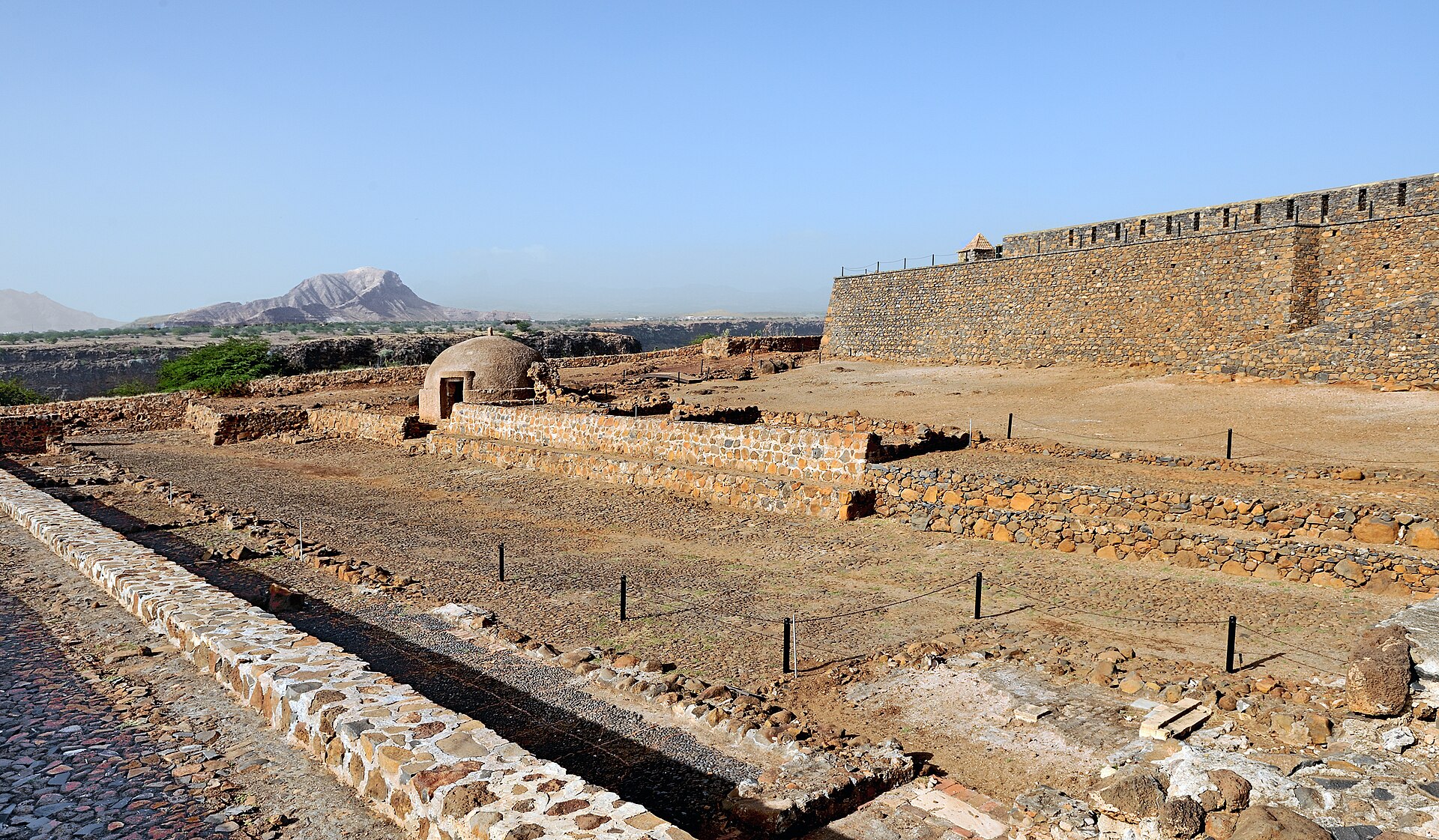
Fort Real de São Filipe overlooks Praia, the capital of Cape Verde. Built in the late 16th century, it was one of the first fortifications on Santiago Island, guarding the city against pirates and foreign fleets. Praia was a key stop on trade routes linking Europe, Africa, and the Americas, and the fort secured this crossroads. Its stone walls, worn by Atlantic winds and salt, still hold traces of an era when colonial trade and naval power were decided here.
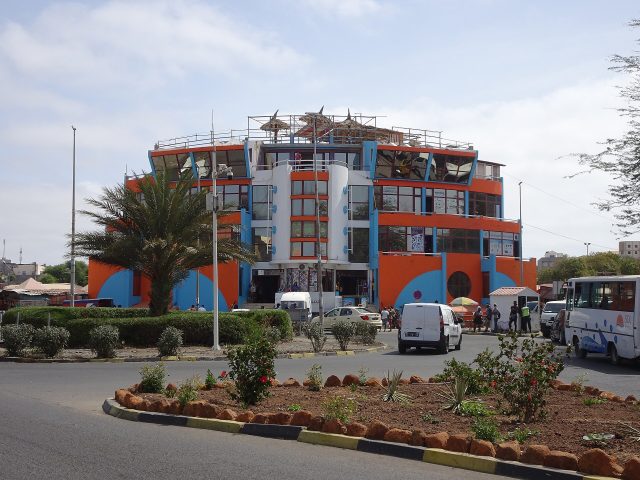
The fort follows classic Portuguese military design: thick walls of volcanic rock, bastions, and gun slits for muskets. Inside, you can see remnants of barracks, powder magazines, and a well—enough to sustain a garrison. Though its military role ended long ago, the fort’s position offers one of Praia’s best views. Below, the city blends modern buildings with older neighborhoods, while the ocean stretches beyond, a force that once protected and threatened these shores.
São Filipe’s past mirrors Cape Verde’s. In the 17th century, the archipelago became a battleground for European powers. Dutch, French, and English privateers attacked Santiago, and the fort’s defenders held firm. By the 18th century, it became a prison for political dissidents. During World War II, it served as an observation post under Portuguese rule. Every stone here carries stories of resilience—of soldiers enduring sieges, heat, and isolation.
Today, the fort feels like a piece of old Praia frozen in time. The city has changed—dusty roads are now paved, the port expanded—but the fort remains. Walk its ramparts, look into empty chambers, and picture the soldiers stationed here, whether under the sun or during storms when waves crashed against the cliffs.
The fort is quiet, almost melancholic. The wind rustles through dry grass, seagulls cry. Locals come to escape the city’s noise; tourists photograph the cannons still mounted on the walls. On clear days, the view is striking—the horizon blurs where ocean meets sky, a reminder that Cape Verde has always been a crossroads.
São Filipe isn’t a typical museum. No exhibits, no plaques, no guides. Its history lives in small details: rusted gate hinges, cracks in the walls, the scent of salt and sunbaked stone. That’s what makes it compelling. It doesn’t tell a story—it just exists, part of the island’s landscape and memory.
For anyone curious about Cape Verde’s history, the fort offers a glimpse into the archipelago’s development. Its walls bear marks of colonial rule, Praia’s rise as a capital, and Santiago’s role in the slave trade and maritime commerce. Cape Verde was never isolated—it was shaped by forces beyond its shores.
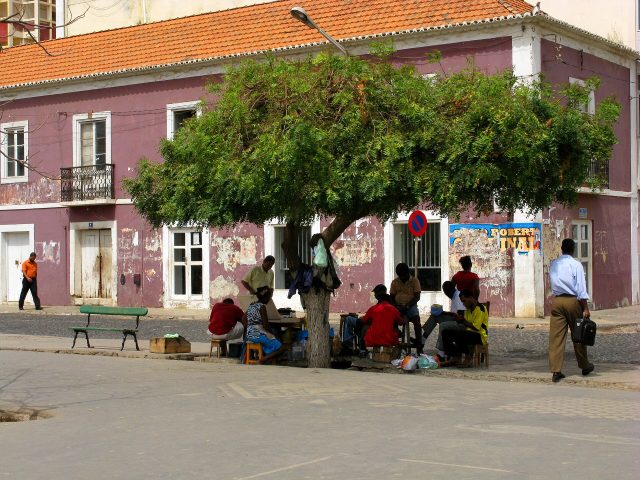
The fort is part of daily life in Praia. Children play hide-and-seek among its ruins. Older residents sit on benches, watching the city below. It’s a place where the past and present meet—a quiet corner where time feels tangible.