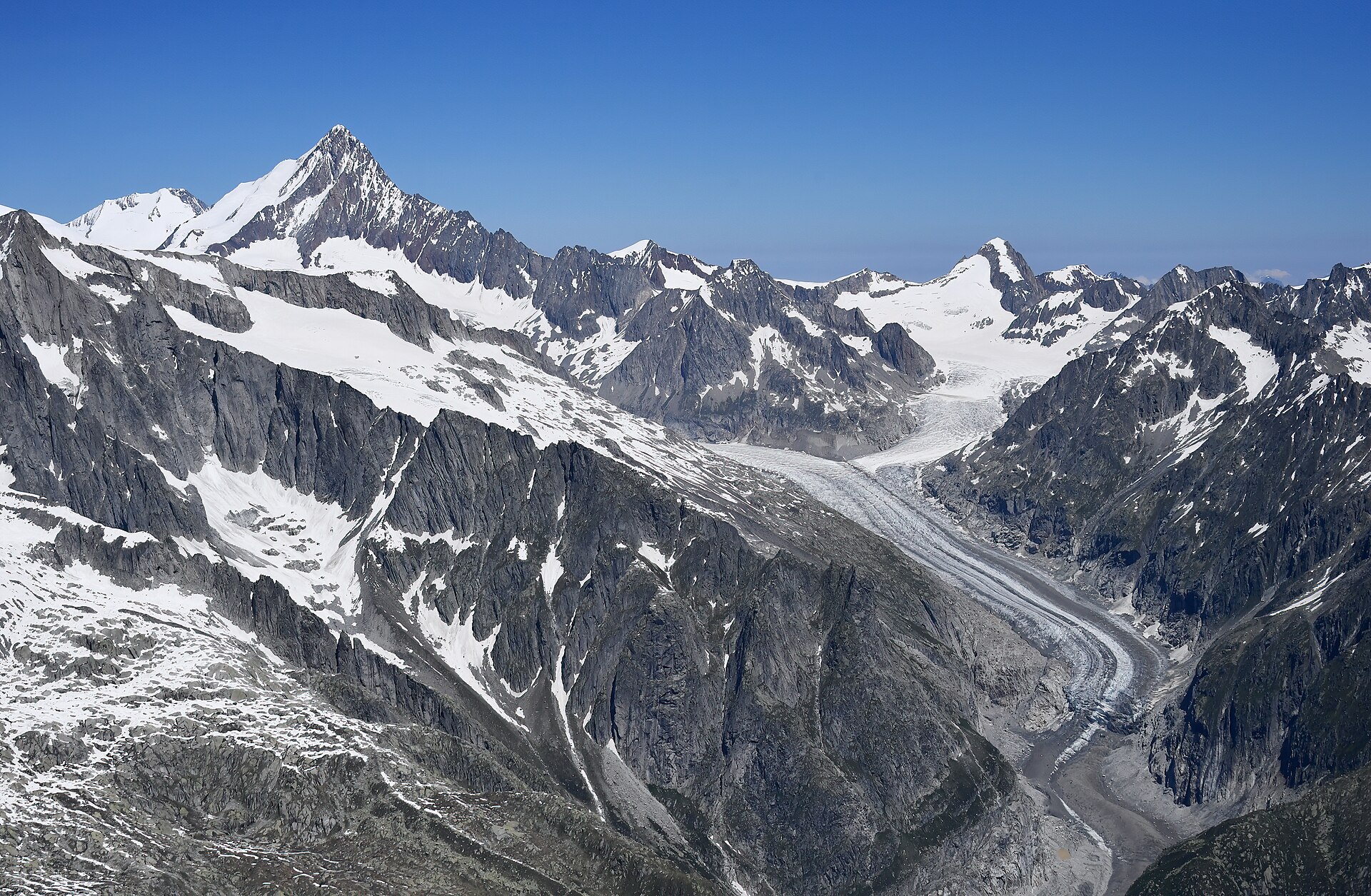
The Fiesch Glacier is one of those rare places in Switzerland where nature doesn’t just exist—it breathes. Tucked away in the Valais canton, surrounded by the jagged peaks of the Alps, the glacier feels like a world apart, where time moves at its own unhurried pace. It may not be as vast as the Aletsch Glacier, but its smaller scale makes it more intimate, more approachable. There are no crowds here, no tourist hordes clogging the trails. Instead, there’s silence, broken only by the whisper of wind through the valleys and the occasional cry of chamois leaping across the rocky slopes.
The glacier’s story is woven into the history of the valley itself. In the 19th century, it stretched far wider, feeding rivers with meltwater and shaping the landscape. Back then, glaciers were seen as eternal, unchanging forces of nature. But by the mid-20th century, it became clear how quickly they were retreating. Today, the Fiesch Glacier stands as a quiet reminder of how fragile high-altitude ecosystems really are. Its tongue of ice, creeping down the mountainside, looks almost alive—slowly melting under the sun yet still commanding a sense of grandeur.
The best way to reach the glacier is on foot, and the journey is as rewarding as the destination. The trail begins in the village of Fiesch, where narrow lanes lined with traditional chalets lead upward into the valley. The hike takes about two hours, but every step feels worth it. Along the way, alpine meadows burst with wildflowers in summer, while marmots dart between the rocks. The air is crisp and clean, so clear you can hear the distant chime of cowbells and the rush of meltwater streaming down from the ice.
When the glacier finally comes into view, it’s almost startling. One moment, you’re winding through a rocky path; the next, the ice appears as if someone has pulled back a curtain. Its surface is uneven, crisscrossed with crevasses and moraines—scars left by the glacier’s slow, relentless movement. On sunny days, the ice glitters, reflecting light in a thousand tiny crystals. When the sky is overcast, it takes on a muted blue-gray hue, like a frozen sea. In summer, thin streams carve intricate patterns into the ice, while in winter, snow blankets the glacier, blending it seamlessly into the surrounding slopes.
Beyond its natural beauty, the Fiesch Glacier is an important site for scientific research. Glaciologists regularly study it, measuring ice loss and tracking climate shifts. For locals, the glacier has always been a part of life—providing water for pastures, shaping weather patterns, and even dictating the routes of seasonal cattle drives. Now, it serves as a symbol of change, a visible marker of how quickly the world is transforming. Yet it remains a place where you can feel connected to something ancient and powerful, something both resilient and vulnerable.
There’s a distinct atmosphere around the glacier, one of solitude and raw nature. Unlike Switzerland’s bustling tourist hubs, this is a place where you can truly be alone with the mountains. In summer, hikers, photographers, and those seeking quiet reflection make the journey. Winter brings fewer visitors, but the trails open up for ski touring and snowshoeing. No matter the season, the glacier leaves an impression of a place where humans are merely guests, and nature is the true host.
The village of Fiesch, where the hike begins, is worth exploring in its own right. It’s a classic alpine settlement, with wooden and stone houses clustered along narrow streets. Small cafés serve local cheeses and steaming hot chocolate, while the pace of life feels slower, as if time has lingered here from a bygone era. In summer, cows graze on the meadows; in winter, the village becomes a cozy retreat, where the warmth of a fireplace and stories from longtime residents offer a glimpse into how the valley has changed over the years.
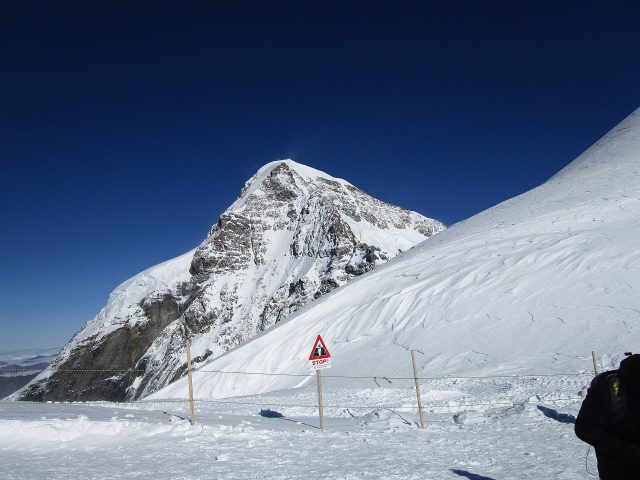
The Fiesch Glacier isn’t a place you can fully capture in words. You have to see it, feel the cold air on your skin, and perhaps even feel a flicker of awe at its scale. It doesn’t offer attractions or conveniences, but it gives something far more meaningful—the chance to pause, look around, and realize how small our daily worries are compared to the enduring presence of the mountains. There are no signs or barriers here, just ice, rock, and sky. And maybe that’s the real magic of it.