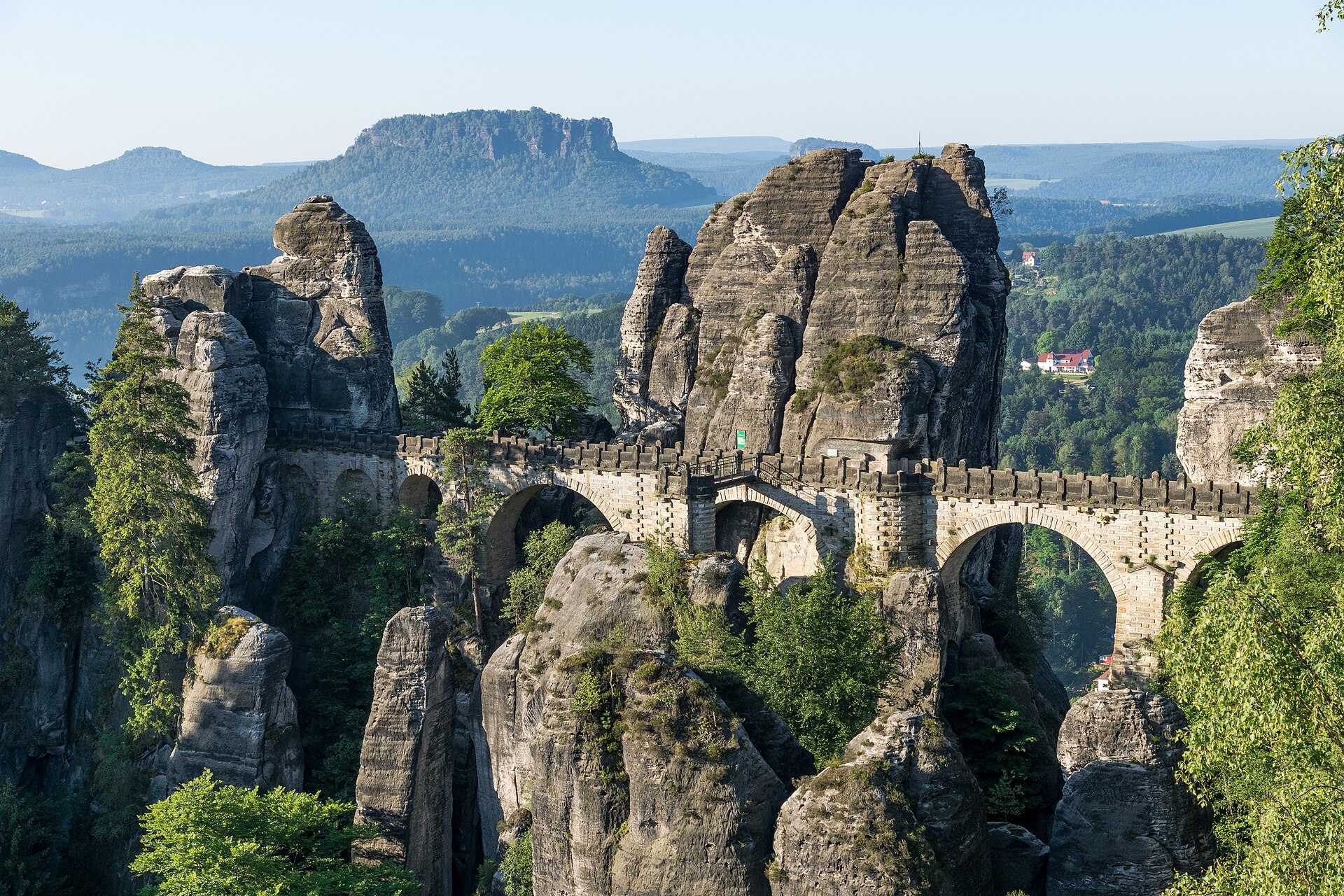
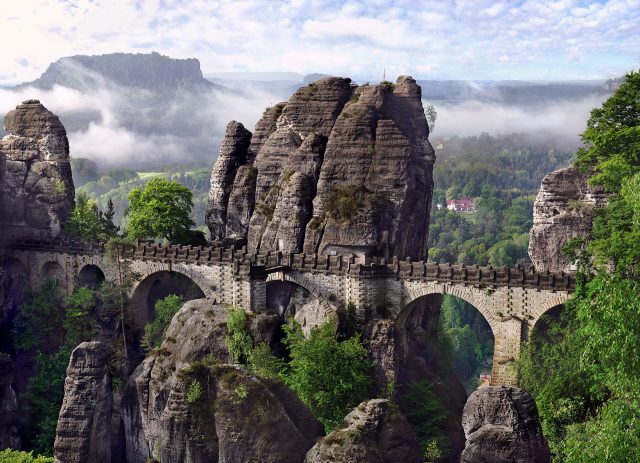
Ferdinandstein isn’t just a rock rising above the Elbe Valley in Saxon Switzerland—it’s where nature and history merge into something almost mythical. This sandstone outcrop, crowned with a small viewing platform, has become one of the defining landmarks of the region, drawing those who seek more than just scenery. The name, meaning Ferdinand’s Stone, harks back to the Romantic era, when places like this were revered by artists, poets, and travelers searching for inspiration in the raw beauty of the wild.
The rock itself was shaped over millions of years, formed from ancient seabeds and sculpted by wind and water into its dramatic contours. Steep cliffs and narrow crevices give Ferdinandstein its distinctive appearance, a process that continues even now. The sandstone slowly erodes, revealing new layers, while hardy plants cling to the near-vertical surfaces, thriving in the cracks where few others could survive.
Reaching the top doesn’t require expert climbing skills, but it’s not an effortless stroll either. The trail begins at the base and winds upward through the forest, with occasional metal railings or stone steps to help along the way. The climb is worth it. From the summit, the Elbe Valley unfolds in all directions—river bends weaving between forested hills and rocky outcrops. On clear days, the view stretches to the horizon, where the sky blurs into the greens and grays of the landscape.
This place has long been tied to the rise of tourism in Saxon Switzerland. In the 19th century, as travel became accessible beyond the aristocracy, natural landmarks like Ferdinandstein gained popularity. Painters from the Dresden Romantic school visited, captivated by the stark beauty of the cliffs, while early hikers began mapping routes through the region. The first wooden viewing platforms appeared then, later replaced by sturdier structures that still stand today.
What makes Ferdinandstein special now is its quiet. There are no crowded cafes or souvenir stands, just trails, rocks, and forest. Pines and beeches grow around the base, while the Elbe rushes past below, carving its path through villages and castles. The seasons transform the scene—spring brings soft green foliage, while autumn turns the trees gold and crimson, their colors mirrored in the river’s surface.
Ferdinandstein is also part of Saxon Switzerland National Park, one of Germany’s oldest. The park protects a landscape where cliffs rise beside deep gorges and forests give way to open meadows. Rare birds like peregrine falcons and black storks nest here, and in the rocky crevices, you might spot a chamois, the graceful animal that has become a symbol of the region. For nature lovers, a visit to Ferdinandstein can be the start of a longer journey through the park, where every turn in the trail reveals something new.
Despite its popularity, the place retains a sense of untouched wilderness. Perhaps because it’s only accessible on foot, it rarely sees casual visitors. Those who make the climb usually come with purpose—whether for the views, the silence, or simply the pleasure of walking a path that leads upward. That’s the quiet magic of Ferdinandstein: it doesn’t try to impress with grandeur. Instead, its understated natural beauty makes it a place worth returning to.
If you find yourself here, take your time. Wander the surrounding trails, descend to the Elbe’s edge, or climb one of the neighboring peaks. Each offers its own charm, but Ferdinandstein lingers in the memory. It’s a place to pause, catch your breath, and feel how seamlessly humans can fit into a landscape without disrupting it.