Saxon Switzerland is a corner of Germany where sandstone cliffs rise like sculptures, deep gorges cut through ancient forests, and the Elbe River winds lazily between hills. Swiss artists in the 18th century saw something familiar in these rugged shapes and gave the region its name. The comparison was poetic, not literal.
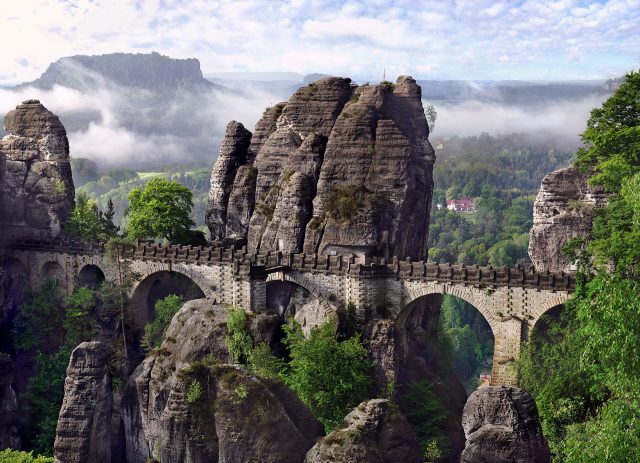
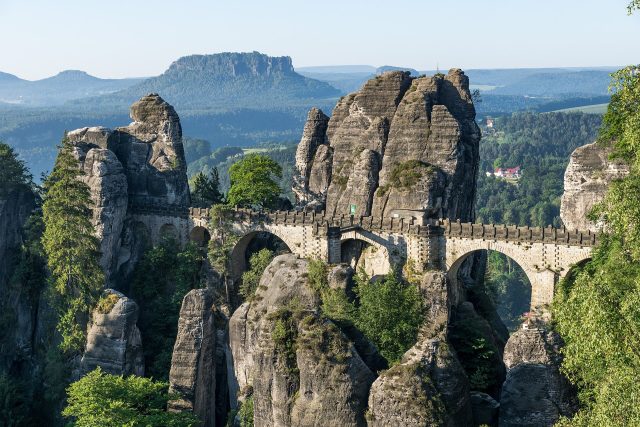
The park’s most striking feature is Bastei. This natural stone bridge connects two cliffs, offering views of the Elbe’s curves and the woods below. Wooden staircases and 19th-century trails lead visitors to the top. Back then, inns and viewing platforms appeared, and locals started guiding hikes and boat rides. The landscape became a destination.
But Bastei is only one part of the story.
Dozens of trails crisscross the park. Some follow gentle valleys, while others climb steep rock faces. The Polenztal Gorge route passes waterfalls and sheer cliffs. The path to Neurathen Fortress mixes hiking with history. Built in the 13th century, the fortress once guarded trade routes along the Elbe. Now, ivy covers its crumbling walls, and its towers stand as silent reminders of the past.
What sets Saxon Switzerland apart is its quiet. Unlike crowded parks, you can find a spot where the only sounds are leaves rustling and a stream rushing. Kirnitzschtal Valley, with its dense forests and brooks, feels far from cities. Summer brings cool shade, autumn turns the woods gold and red, and winter covers the rocks in frost. Few visit in the cold, so the trails belong to those who don’t mind the chill.
The Elbe River shapes the park. It flows slowly, carving wide bends and quiet inlets. Cycling and walking paths run along its banks, while boats drift across the water. In summer, people swim in the river, though the current stays strong. Autumn paints the shores in color, and morning mists blur the line between water and sky.
The region has inspired artists for centuries. Carl Maria von Weber used local legends of forest spirits and rocky crags in his opera *Der Freischütz*. Caspar David Friedrich, a Romantic painter, often visited to capture the misty landscapes that defined his work. Today, small museums in the park’s villages honor these artists and others who found creativity here.
Saxon Switzerland doesn’t feel like a tourist trap. There are no large hotels or resorts—just guesthouses, inns, and campsites. Local restaurants serve potato dumplings, game stews, and Dresden stollen. Cafés on viewpoints offer coffee with a view.
This is a place for those who want more than scenery. The quiet, the stillness, the sense of stepping outside time—it stays with you. The river’s rhythm and the wind through the trees replace the noise of daily life. Maybe that’s why travelers keep returning, drawn by something deeper than the landscape itself.