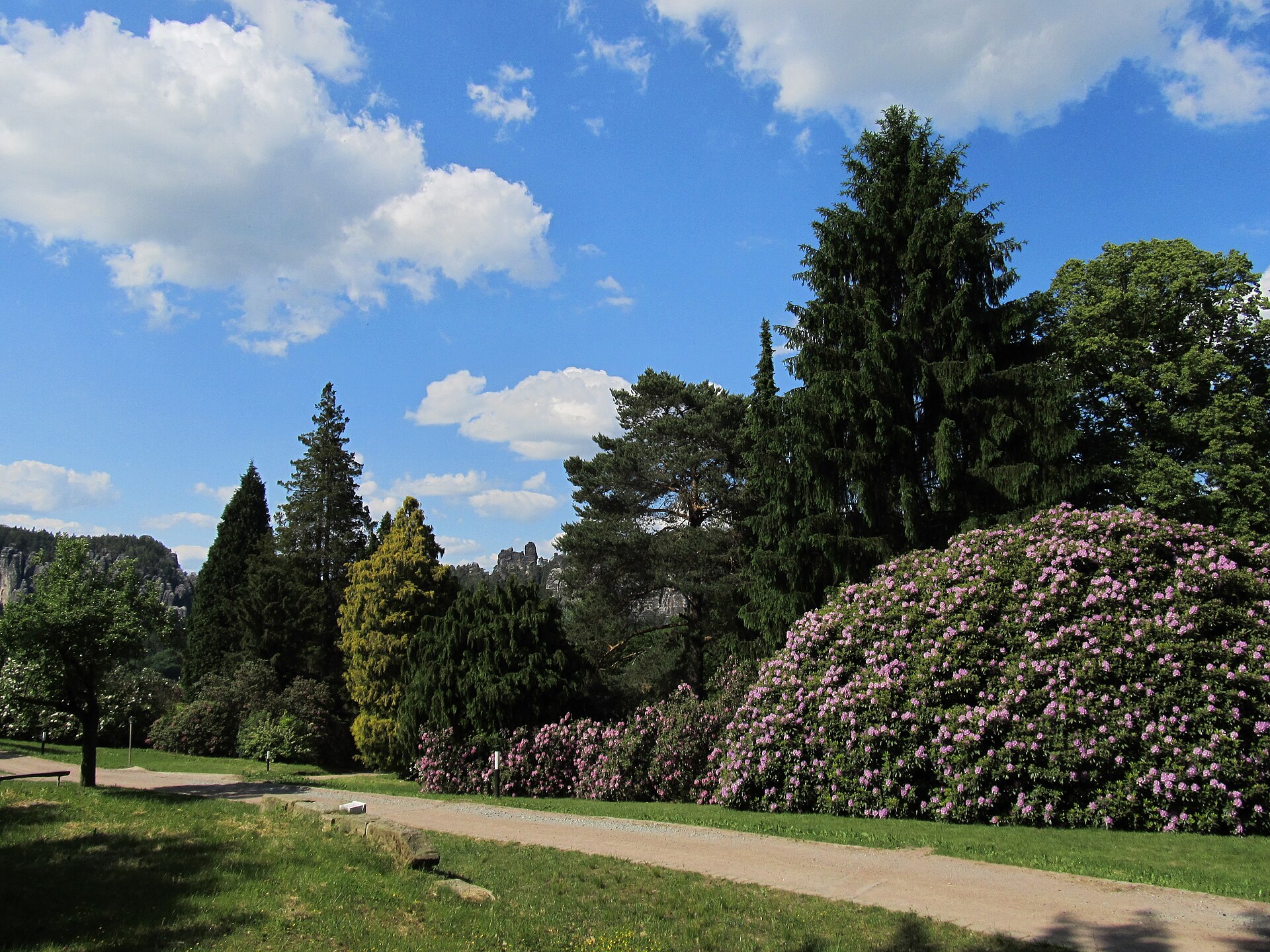
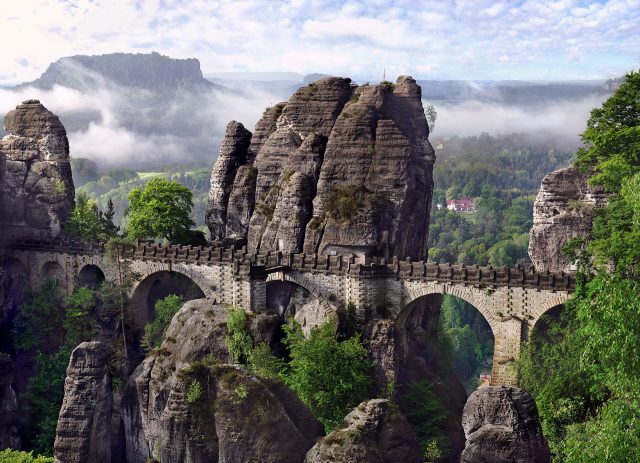
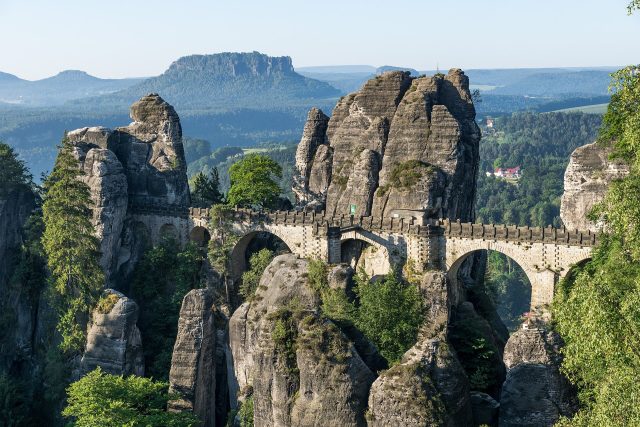
Bastei is one of those rare places where the landscape feels like it was painted by nature itself, not just imagined by an artist. Rising sharply above the Elbe Valley, the sandstone cliffs here form a labyrinth of jagged towers and sheer walls, often called "rock cities" by locals. While the nearby Bastei Bridge draws most visitors, the summit of Bastei itself offers something far more intimate—a view uncluttered by crowds or man-made structures. From here, the Elbe winds through the valley below, its banks lined with forests and the occasional cluster of houses, while the cliffs stretch endlessly into the distance.
The geological story of Bastei began millions of years ago, when this region was submerged beneath an ancient sea. Over time, the relentless forces of water and wind sculpted the sandstone into the dramatic formations we see today. Unlike the towering peaks of the Alps, these cliffs are modest in height, but their sheer faces and intricate shapes create a sense of grandeur all their own. The Elbe, slow and wide here, carves its way through the valley, its waters reflecting the changing light of the sky. On the opposite bank, vineyards cling to terraced slopes, and small towns nestle between the hills, their red roofs adding a touch of warmth to the otherwise wild scenery.
Bastei has long been a symbol of Saxon Switzerland, though many visitors rush past it in favor of the more famous bridge. Those who take the time to climb to the summit, however, are rewarded with a perspective that feels untouched by time. There are no railings, no viewing platforms—just the raw beauty of the cliffs, their surfaces weathered by centuries of wind and rain. In clear weather, the view extends all the way to the Czech border and beyond, where the distant ridges of the Lusatian Mountains rise on the horizon. In winter, the rocks glisten with frost, while in summer, the air is thick with the scent of pine and wild herbs.
The hike to the top of Bastei is not particularly difficult, but it’s not a leisurely stroll either. The trails wind through the forest and up the cliffs, sometimes requiring a bit of scrambling over rocky steps or wooden ladders. The paths are well-marked, but sturdy shoes are a must—the sandstone can be slippery, especially after rain. Once you reach the summit, there are no safety barriers, so you’ll need to watch your step. But the effort is worth it. The silence up here is profound, broken only by the rustling of leaves or the distant call of a bird. The view, too, is unlike anything else—vast, unobstructed, and deeply peaceful.
The area around Bastei is full of other natural wonders worth exploring. Nearby, the Felsenlabyrinth is a maze of boulders and narrow passages where it’s easy to lose your way if you stray from the marked paths. The Polenztal Valley, just a short walk away, offers a different kind of beauty, with the river cutting through steep cliffs and creating the feel of a hidden gorge. Locals say that sandstone was once quarried here, and if you look closely, you can still spot the remnants of old workings half-hidden in the forest.
Bastei is a place that rewards patience. There’s no need to rush, no pressure to capture the perfect photo or follow the crowd. You can simply sit on a rock, listen to the wind in the pines, and watch the light shift across the cliffs. The best times to visit are early morning, when mist still clings to the valley, or late afternoon, when the setting sun bathes the rocks in gold. It’s in these quiet moments that the true magic of the place reveals itself—why artists and writers of the 19th century were so drawn to these landscapes.
Saxon Switzerland is known for its dramatic rock formations, but Bastei stands out even among them. Perhaps it’s because the area has remained largely untouched by modern development. There are no souvenir shops, no noisy cafes, just the raw beauty of the cliffs and the quiet rustle of the forest. That’s the real appeal of Bastei—it doesn’t try to impress or entertain. It simply exists, offering each visitor a chance to step into a landscape that feels both ancient and timeless. Whether you come for the views, the solitude, or the sense of history etched into the rocks, Bastei leaves an impression that lingers long after you’ve descended from the summit.